

We always remember an afternoon like this. A spring or summer day in childhood: long hours with nothing to do, the air still and quiet. The scent of soap and freshly laundered clothes inevitably gives way to the smell of something simmering on the stove. The clock counts its seconds steadily as it turns within the kingdom of order constructed by a mother.
In her 1979 essay Women's Time, Julia Kristeva writes that "Cyclical and monumental temporality are the two modalities of women's time." Women's experience, she argues, cannot be fully contained within modernity's linear model of "historical time." The straight lines of efficiency, progress, and teleology bend here into circles—seasons changing, bodies transforming—and into layers of sediment: height marks pencilled onto a doorframe, greeting cards kept in drawers, children who seem unchanged until one day they appear suddenly grown.
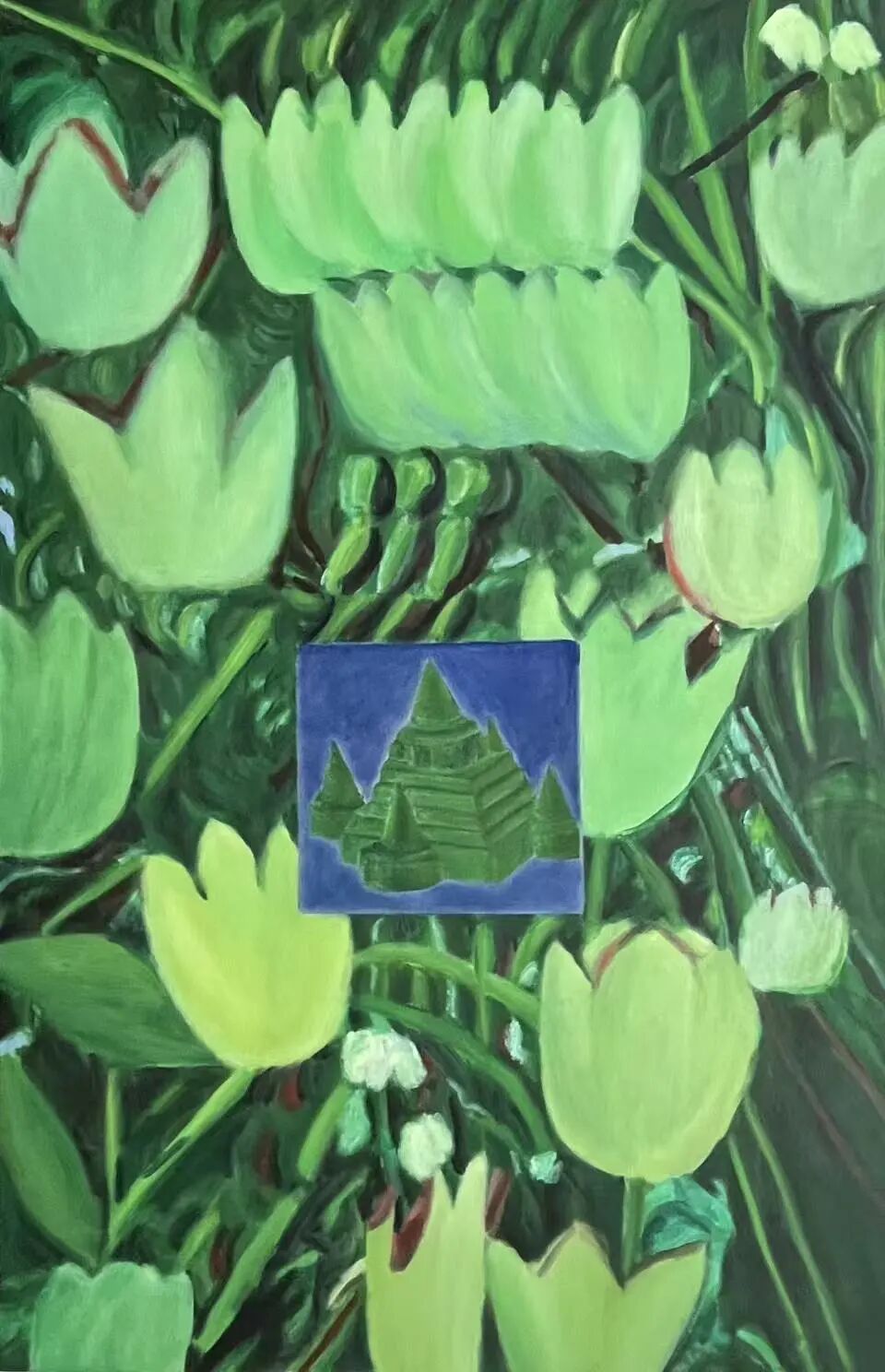

There is always a sensitivity to growth in the works of Toba Yang. In Order/ désordre, plants appear through near acts of copying and pasting, like redundant information produced by a running system, or the stubborn proliferative instinct of life itself. A geometric structure maintains a stable and legible man-made order, while the plants continue to deviate from its prescribed trajectory, generating new forms through repetition and error.
The arrival of a child often unfolds in much the same way. A new life enters the household, and the boundaries and schedules once carefully arranged begin to loosen. Life reorganises itself through countless small and repetitive labours.
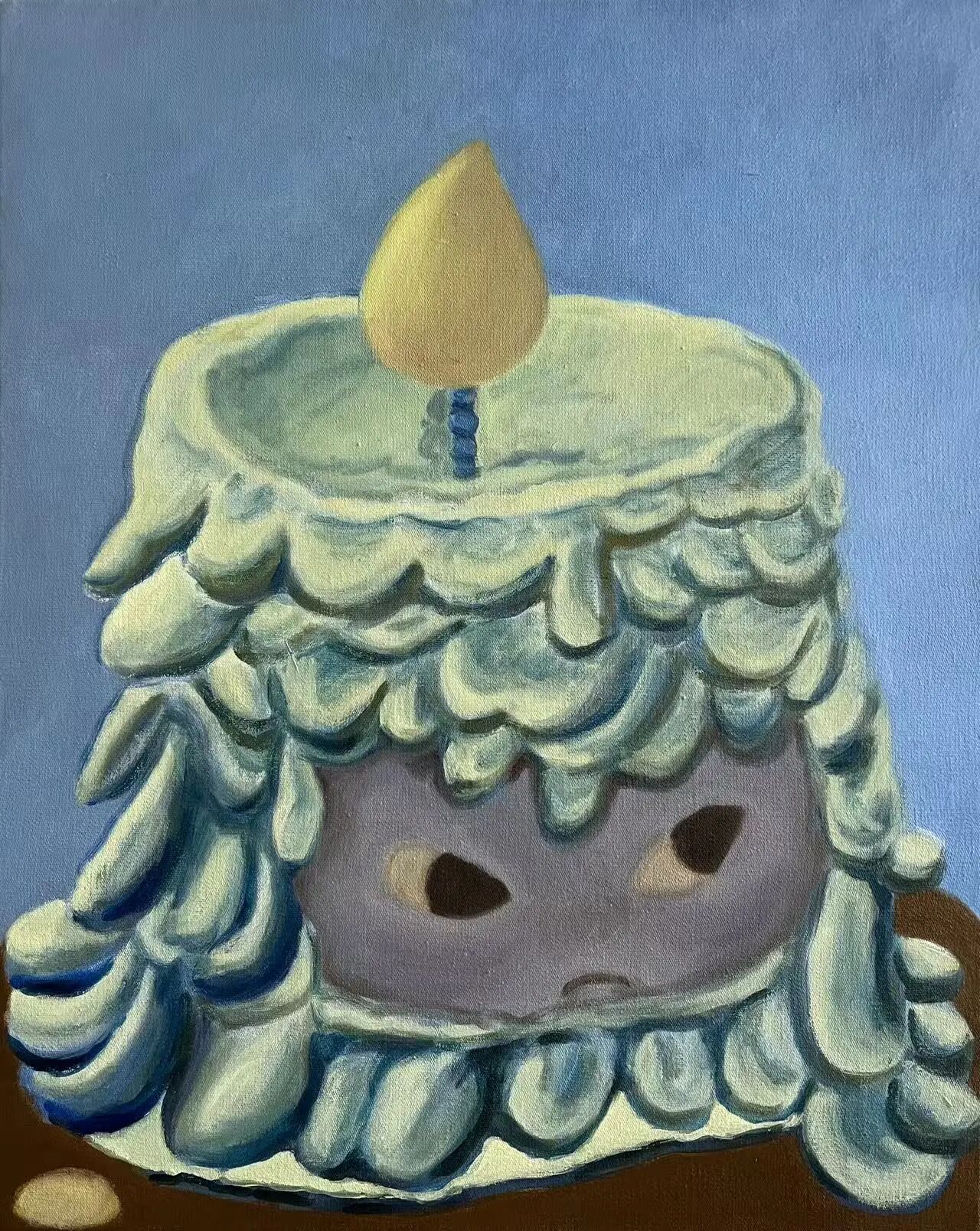

Cake iii reveals a more complicated texture of this relationship. Frosting accumulates until it nearly engulfs the figure. Candles stand atop the head, as though something is being celebrated. Yet the pale lavender-grey face appears slightly deprived of air. Sweetness gradually acquires weight; love, responsibility, and expectation pile upon one another, forming an almost suffocating sense of fullness. There is no dramatic conflict here, only the precise articulation of a familiar experience: that one can feel exhausted in the most blessed moments, and find it difficult to breathe within the greatest abundance of love.

Donald Winnicott's notion of the "good enough mother" replaces the fantasy of the perfect mother. In his view, motherhood is not a state of perpetual stability or inexhaustible giving, but a process of constant adjustment, failure, and repair, through which mother and child grow together. The most important relationships are often formed within these seemingly ordinary repetitions.
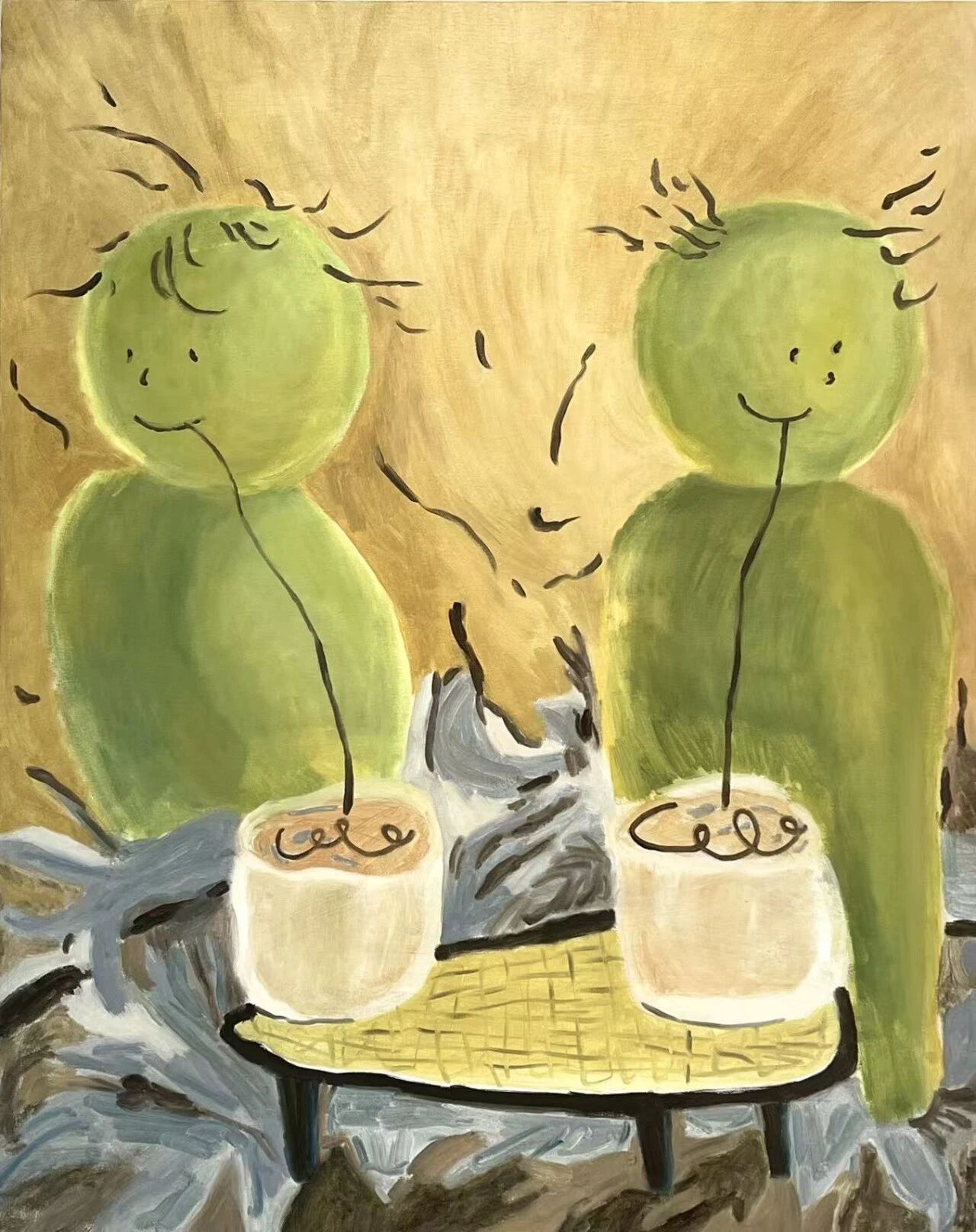
Jus, from the series Two Good Friends, depicts a gentle form of sharing. Two small figures drink from the same cup through long straws; energy enters their bodies and radiates outward through strands of hair. Life here is not a one-way movement of giving and depletion, but a process of mutual completion. One life shapes another, while being transformed by it in return.
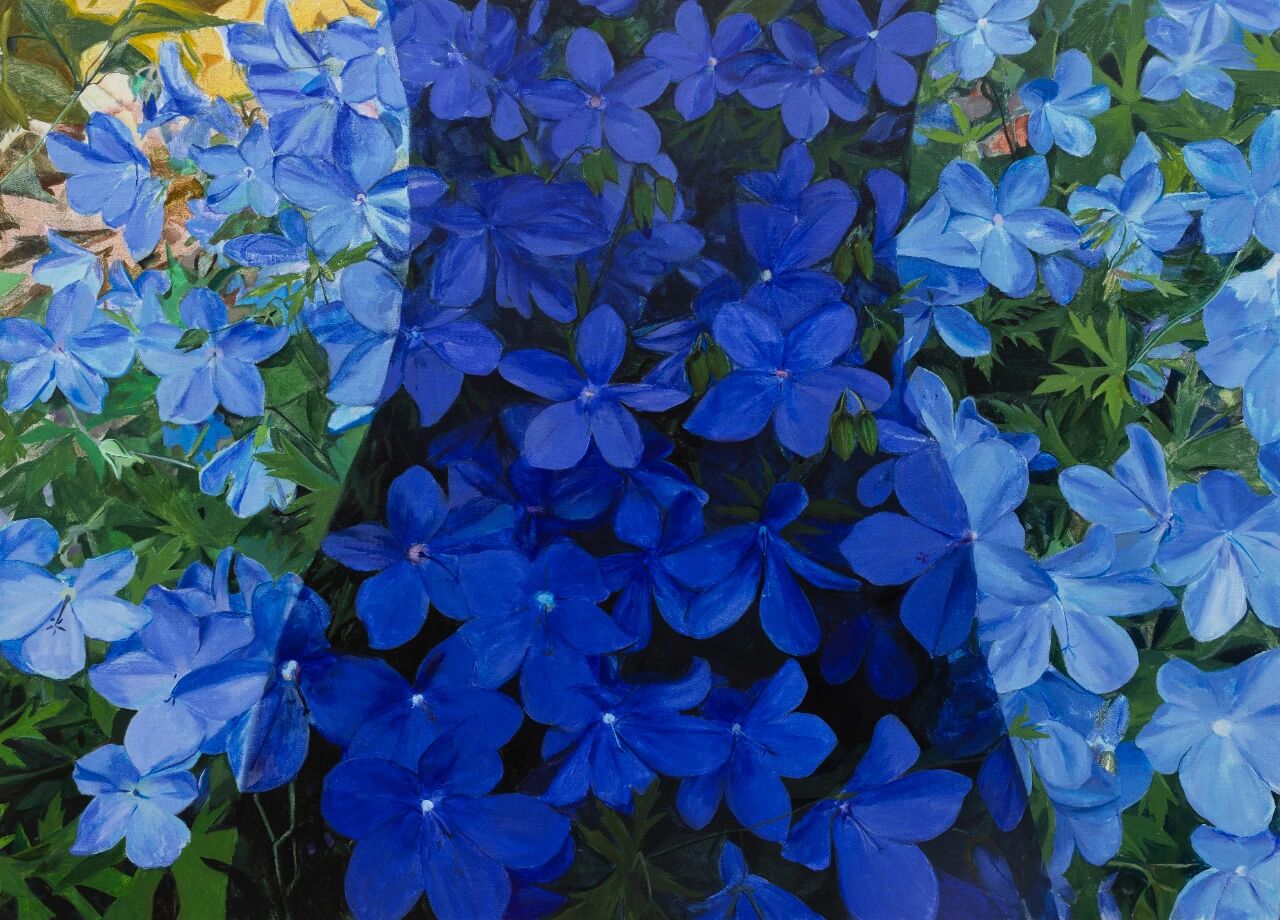

If Toba's paintings trace an ever-proliferating order of life, Yuan Yuan's recurring flowers seem closer to an imagination of the body itself. In Flower Shadow, Himalayan cranesbill almost entirely occupies the pictorial field, while traces of the human figure are quietly embedded among the plants, as if one had entered a sacred realm made of leaves and petals. Flowers become a space capable of containing the body, memory, and imagination—a cocoon constructed by plants. Veiled within it, a faint human silhouette appears precisely where the torso would be, scattering the pelvis, spine, and womb—the architectural elements of gestation—throughout this dark and suggestive field.

When Bracha Ettinger proposed the concept of the "matrixial space," she sought to rethink the very origins of subjectivity. Life, in her account, does not begin with separation but with co-existence. Our earliest experience is one of sharing space and boundaries with another life, gradually coming into being through mutual influence. Subjectivity is therefore never entirely autonomous; it retains an enduring openness toward the other.
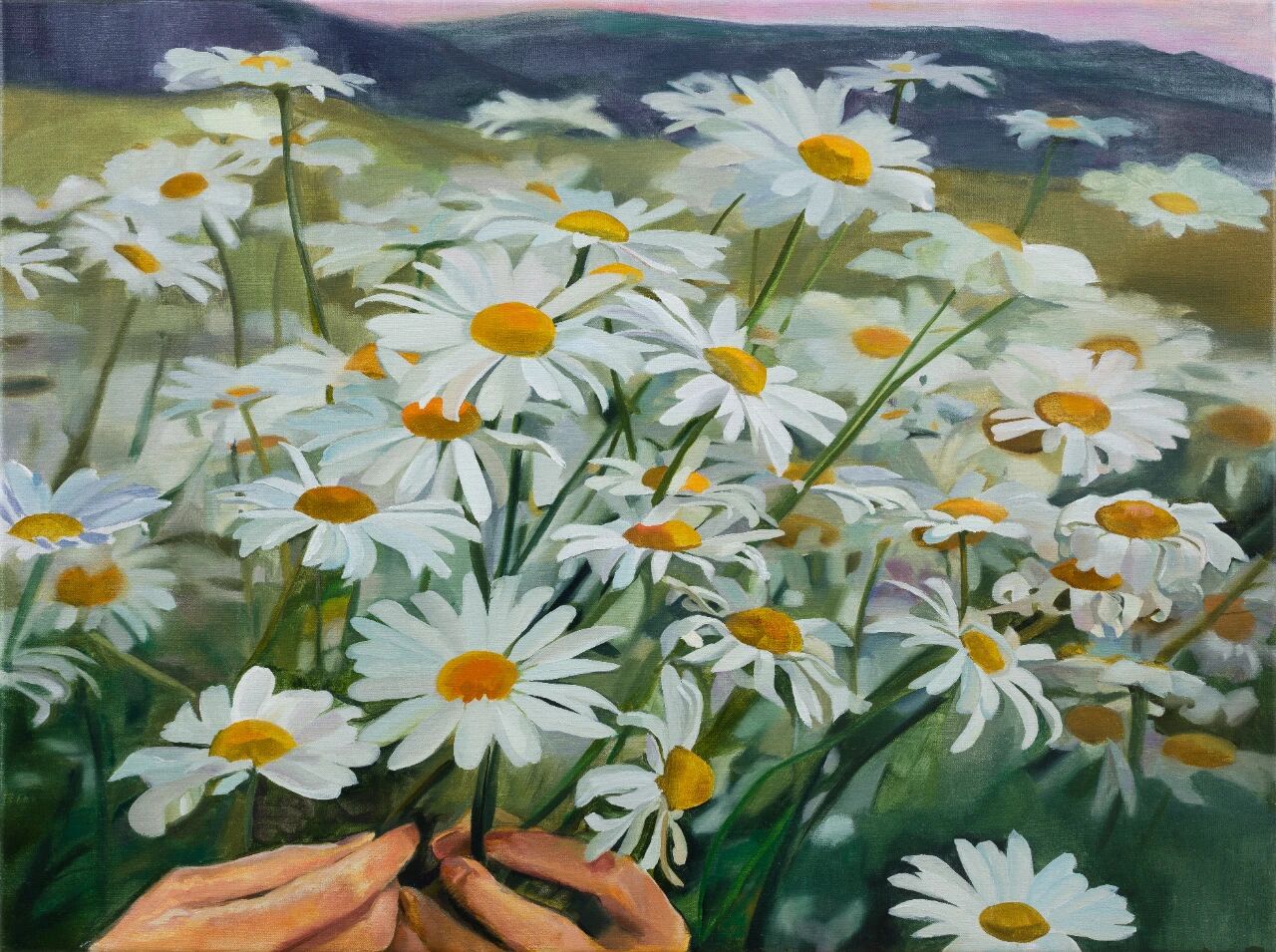
This open body recurs throughout Yuan Yuan's work. In Daisy Mountain, hands and flowers exchange places; soft petals replace flesh, and the body itself becomes vegetal. The blooming and withering of flowers, the growth and dormancy of plants, compose a rhythm far longer than social time. Here, the body is not a sealed fortress but a terrain that can be traversed, shared, and reimagined.
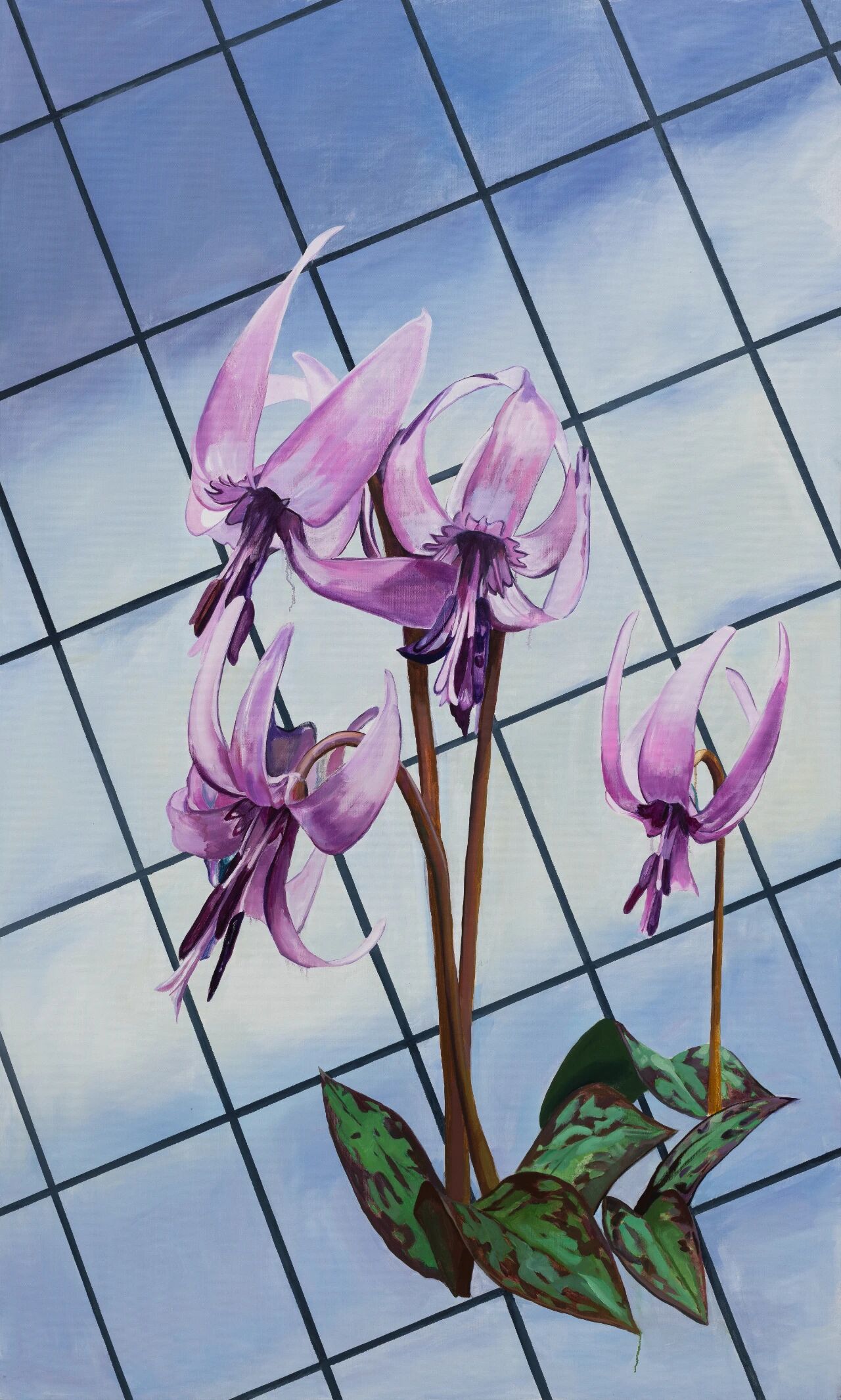


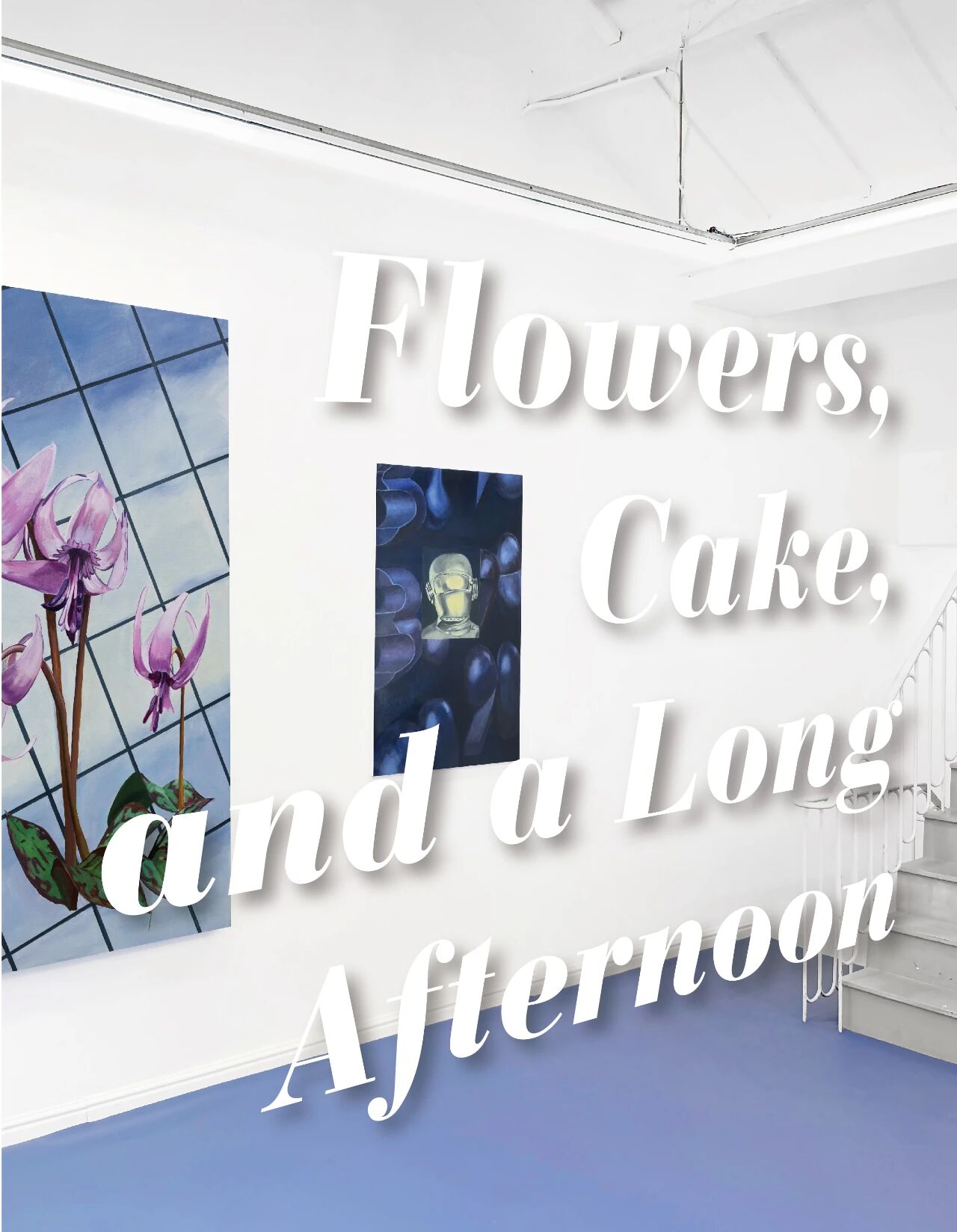
In Eexternal, erythronium flowers float before the cold surface of a glass curtain wall. The rigid black grid embodies the standardized order of the contemporary city, while the delicate petals resemble a form of life that cannot be entirely absorbed into it. The mirrored surface reflects the sky, yet fails to reveal the truth of individual experience. Those vivid, vulnerable, ever-changing parts of ourselves often remain concealed beneath social identities, continuing nevertheless to insist upon their own manner of blossoming.
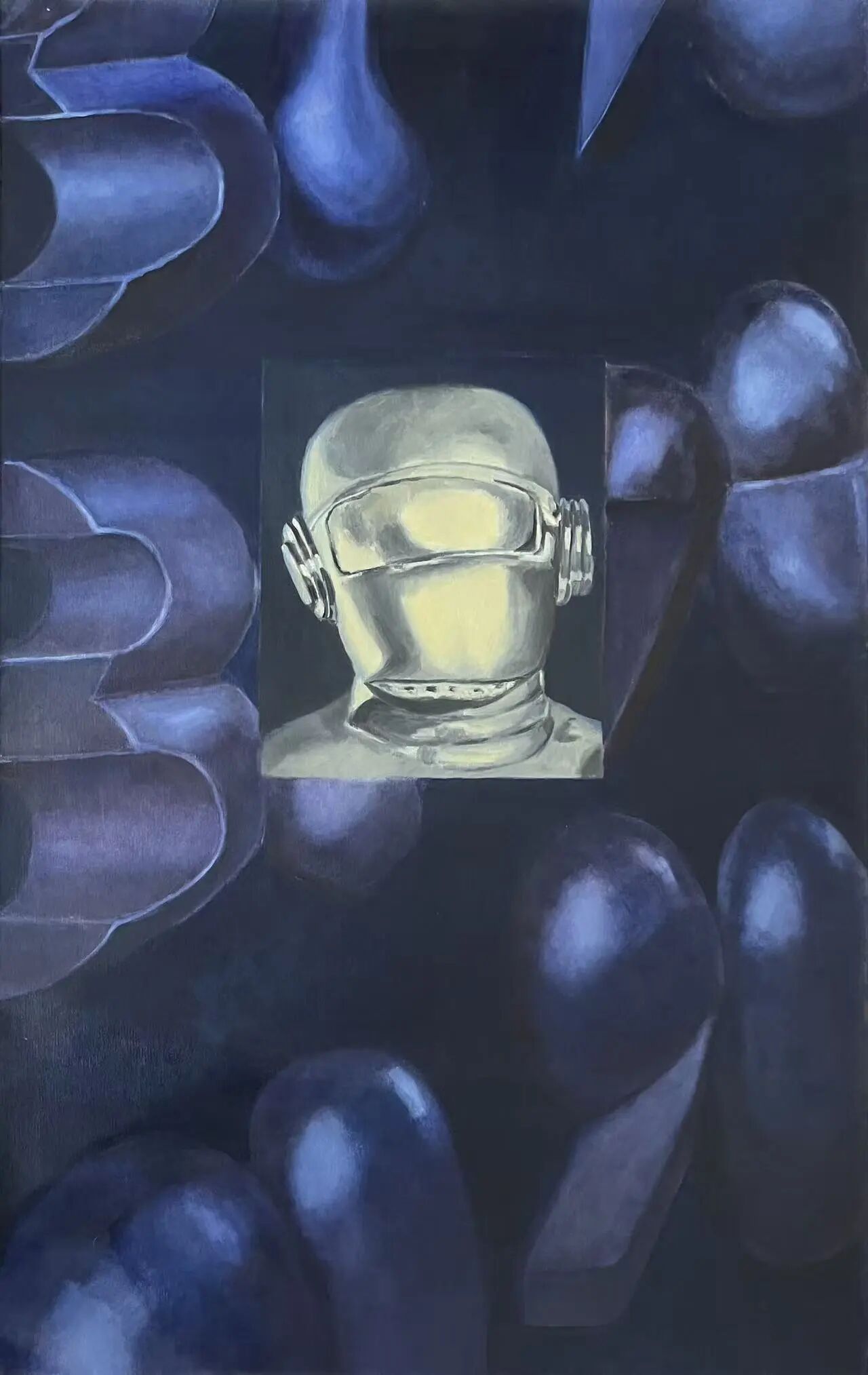
To Be Decoded tells a corresponding story. At the centre of the composition, a figure wearing a helmet-like device appears suspended within a process of receiving and processing information, searching for new coordinates between introspection and perception. Once an established understanding of the self is disrupted, one is compelled to reread one's relationship with the world, and to confront moments that are ambiguous, hesitant, and resistant to immediate explanation.
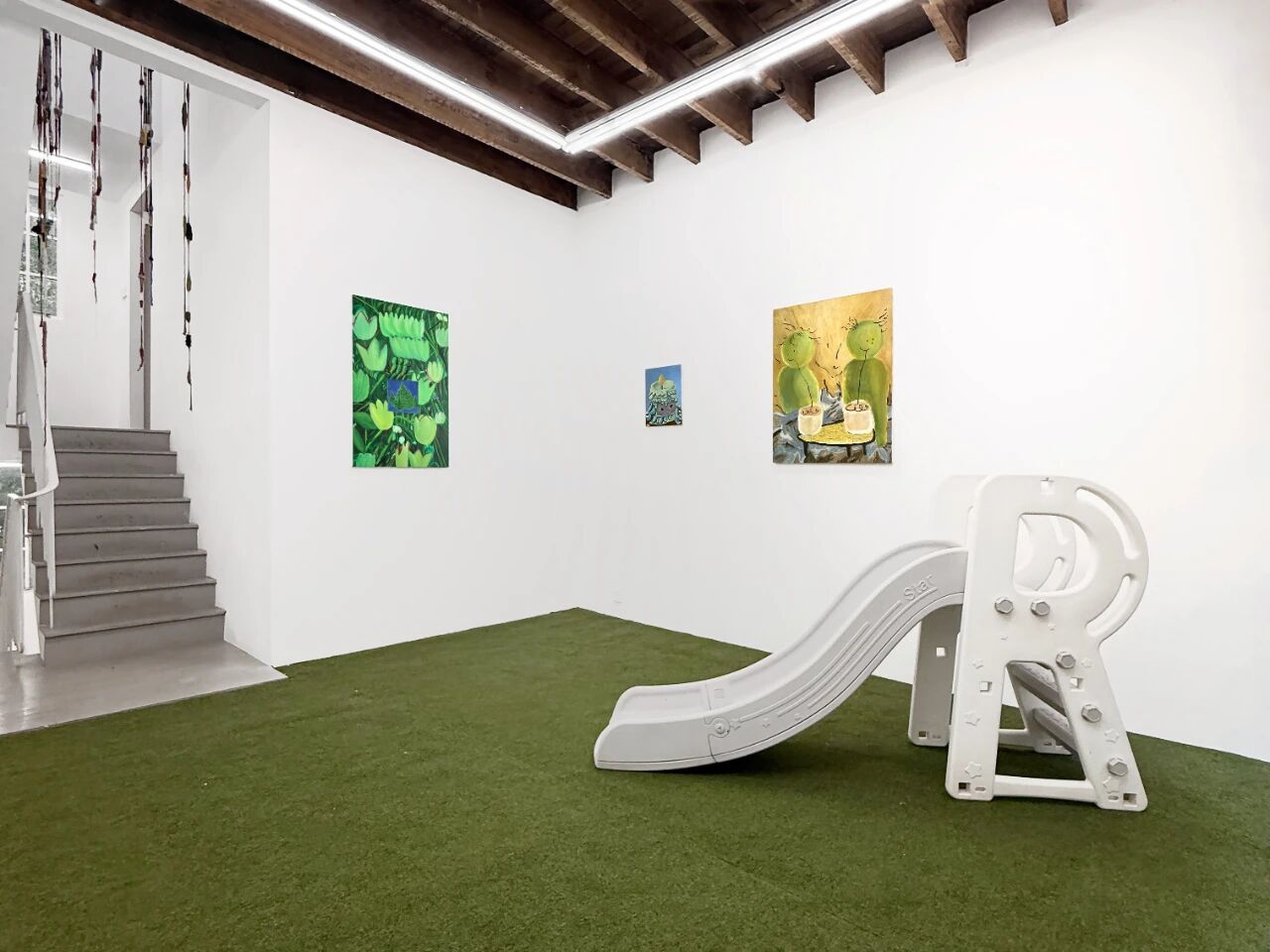
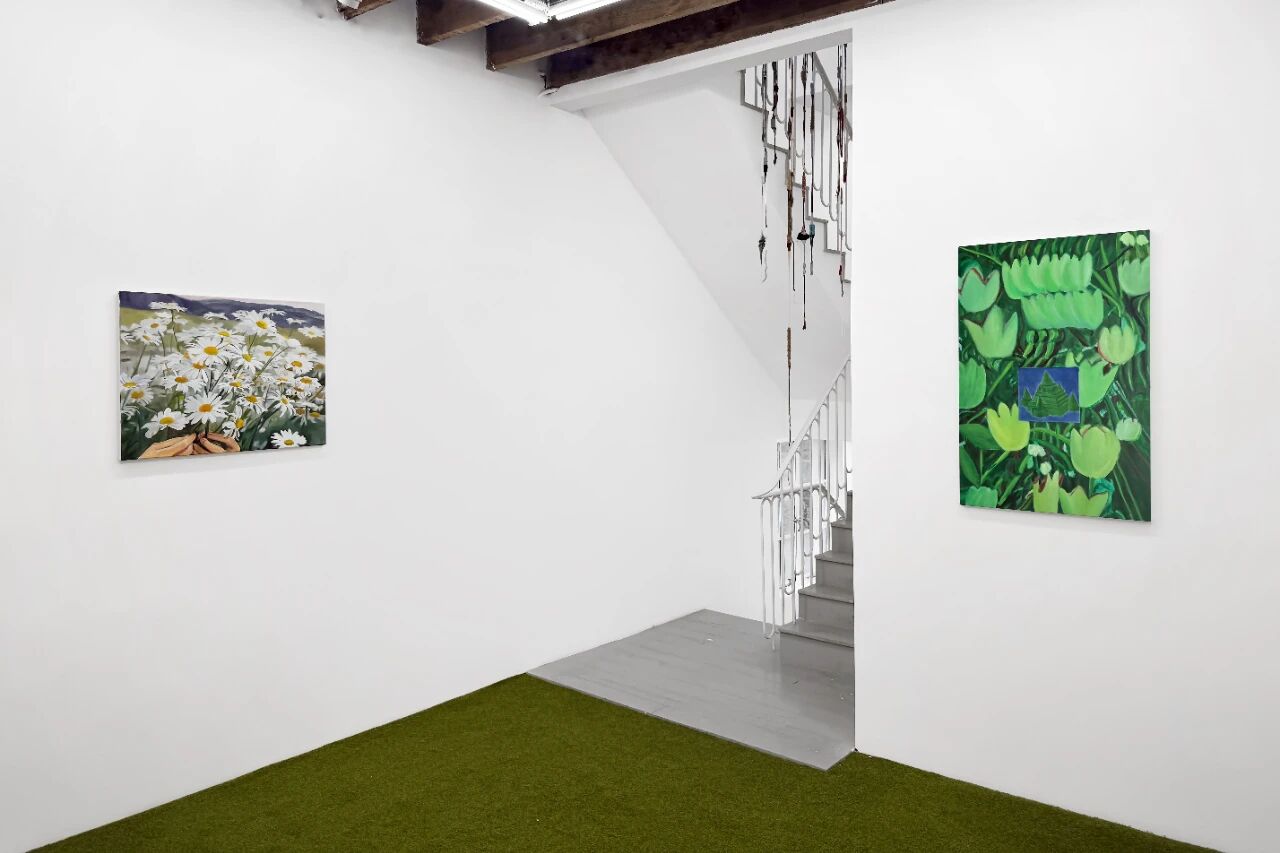
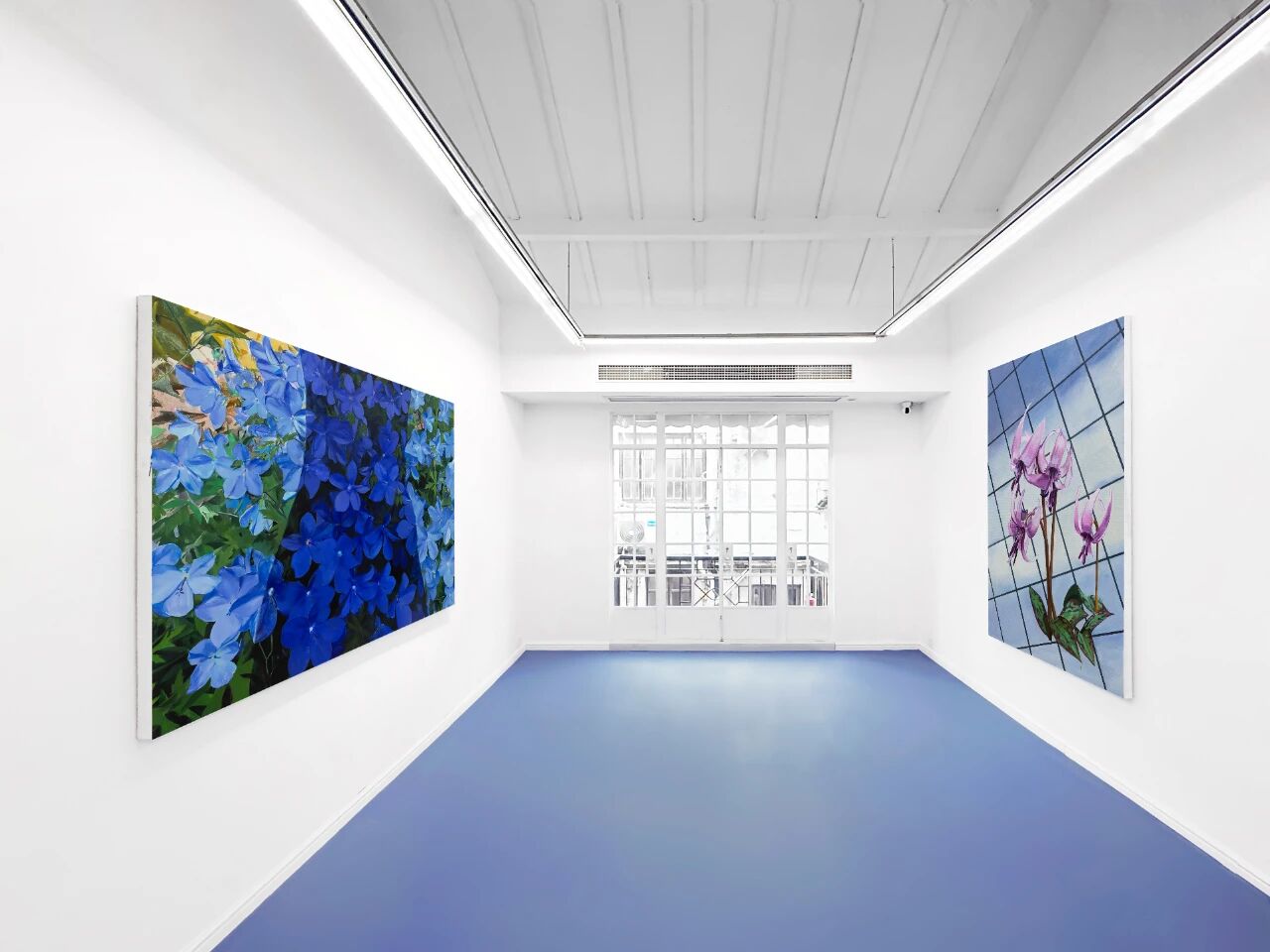
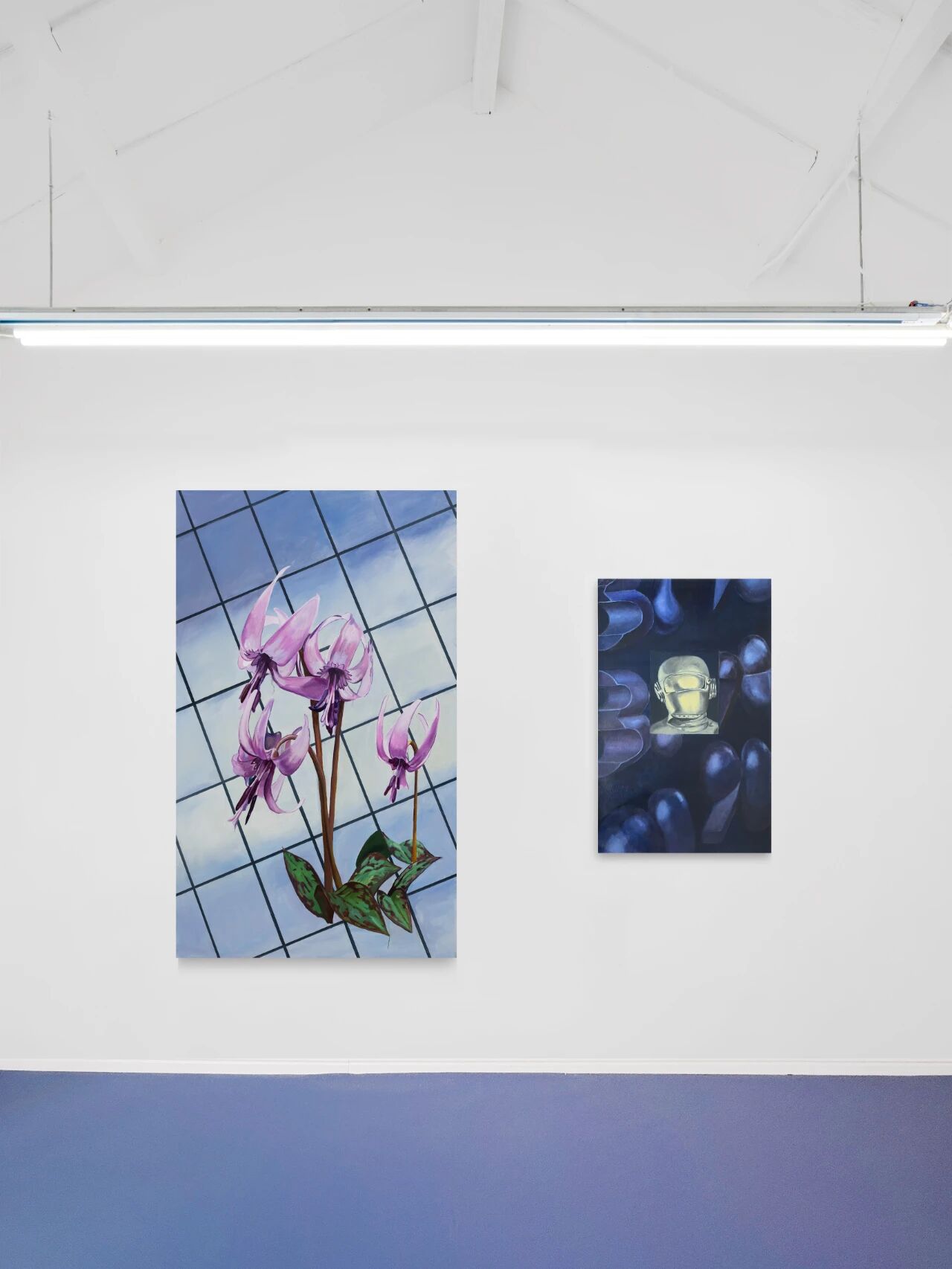
Installation view of Of Woman Born, June 13, 2026 - July 26, 2026, Nan Ke Gallery, Shanghai © Courtesy of Nan Ke Gallery
Ascending from the brightly coloured, playful second floor of the exhibition to the quiet, blue-tinged space above, where stillness carries an undertone of melancholy, the paintings of Toba Yang and Yuan Yuan emerge as two complementary annotations on the condition of motherhood: the child, and the self. Like a pair of legs, these two elements support the very possibility of maternal existence.
For motherhood, what matters rarely happens in a singular, decisive moment. Instead, it accumulates within fragmented time, like fine shavings of ice gathering imperceptibly into a mound. The paintings of Toba and Yuan Yuan offer a way of imagining such moments. In the subtle shifts of colour within layered frosting or the slow growth of plants, we may find ourselves remembering that long afternoon in which the identity of "mother" seems, somehow, to be condensed.
June 27, 2026