“Goodbye, Mom. Tonight, I’m setting sail.”
As the theme song of Happy Planet, a hit children’s television series from the early 2000s, The Moon Boat became a distant childhood memory for a generation of Chinese people born in the 1990s: lighthearted yet carrying an undertone of melancholy. When the melody—once jokingly described as the “children’s Bohemian Rhapsody”—begins to echo again through Tong Mo’s solo exhibition Sunny Days, it seems to tear open a wormhole in time, transporting us back to the moment when we sat before bulky desktop computers, waiting to press the Enter key and enter the Happy Planet.
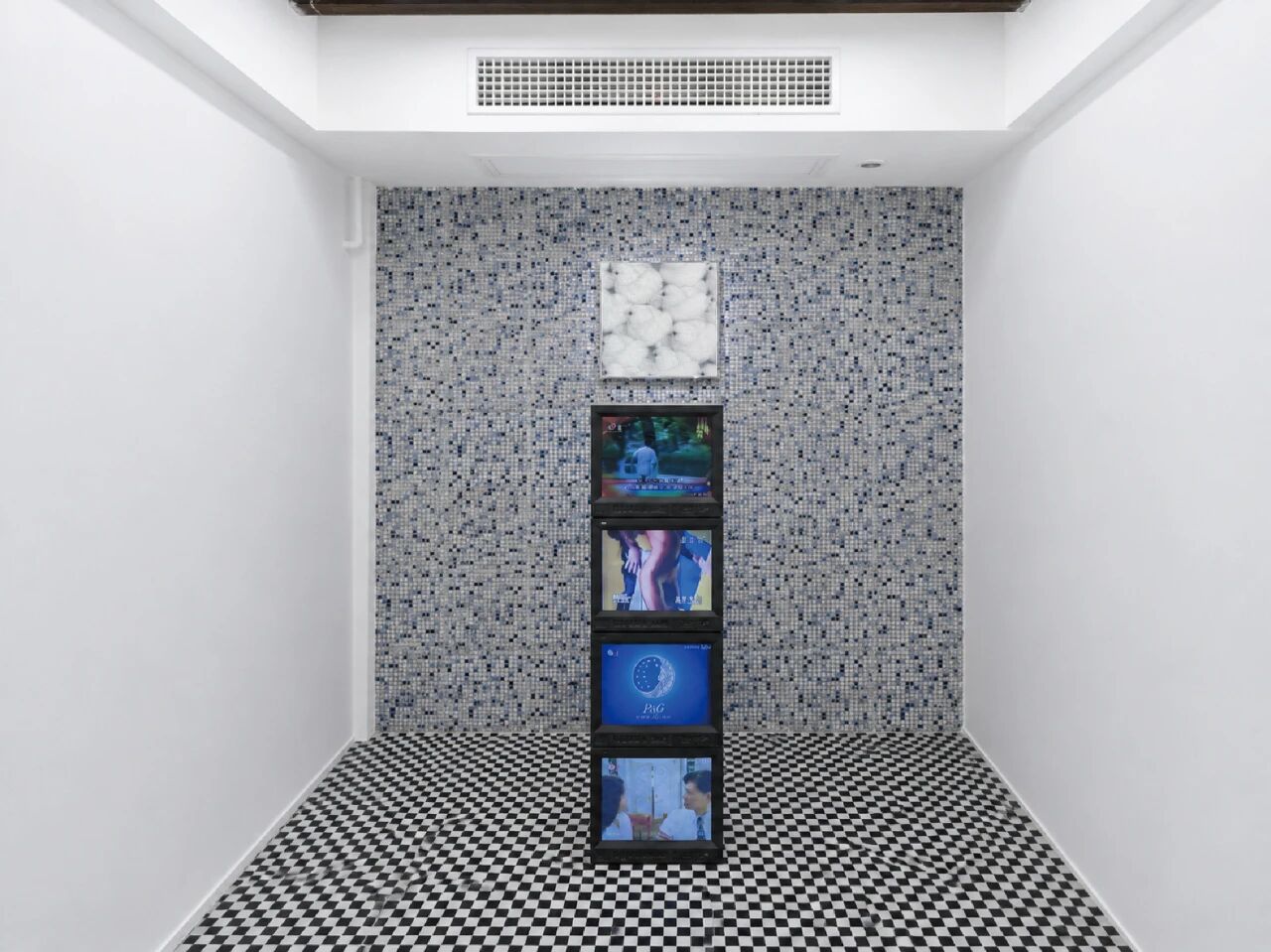
Born in 1999, Tong Mo arrived with the final generation before the millennium. His paintings are permeated by an attention to the past, often rendered through blurred brushstrokes that create a distinctly nostalgic texture. In his earlier work, he focused on an era he himself had never experienced. Drawing from family photo albums, he found weddings, collective labor, and scenes of everyday life from the 1970s, recreating through hazy surfaces a collective memory that seems to exist somewhere within the consciousness of us all. In this solo exhibition, however, he turns toward experiences that he himself actually lived through—a childhood that emerged alongside Happy Planet.
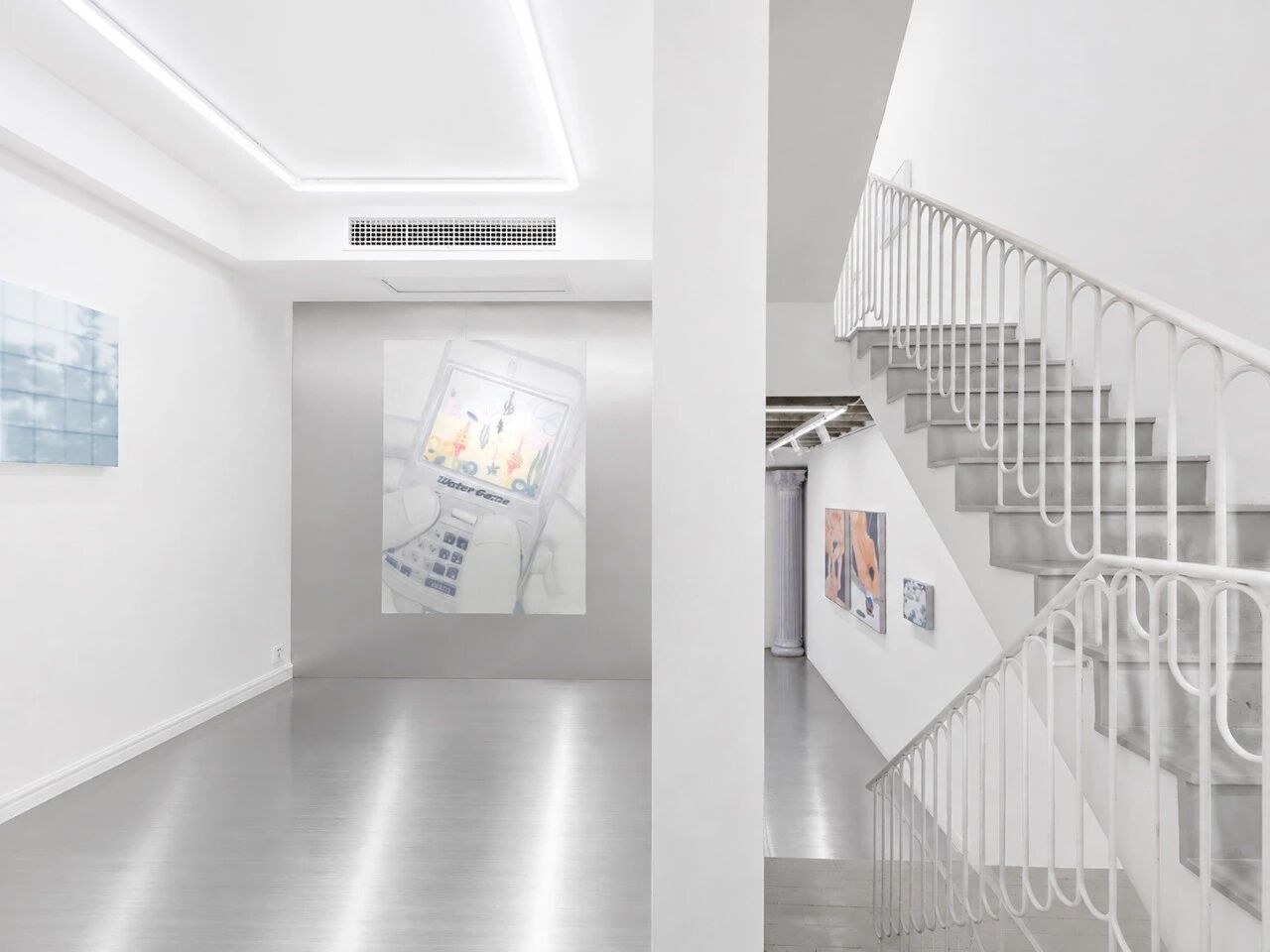
In the exhibition, curator Otto Neu further develops this atmosphere through expansive silver surfaces. The futuristic sets of Happy Planet were themselves representative of the “futuristic” visual aesthetic that was popular at the time. Now that the future we once imagined has, in many ways, already arrived, those once-anticipated fantasies have become objects of nostalgia for the past.
At the center of the second-floor gallery, a low display table is scattered with colorful old objects. On closer inspection, these are not meticulously made antiques collected for their age, nor objects gathered according to today’s fashionable taste for “vintage” collecting. Instead, they are ordinary household items and toys that quietly entered everyday life two decades ago.
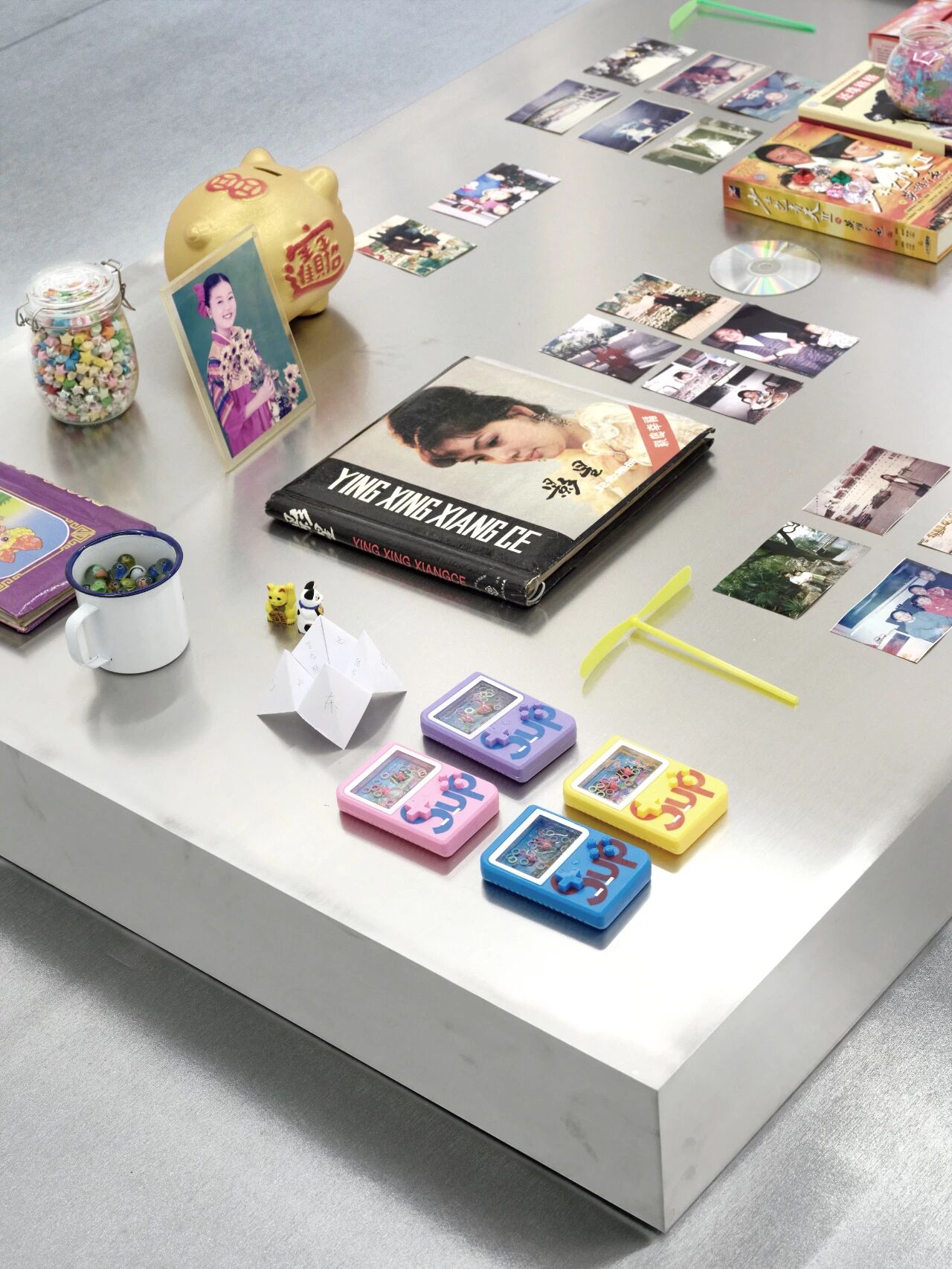
Discs, plastic bamboo helicopters, lotus-shaped birthday candles: it is easy to imagine the ordinary scenes in which we once used them, not so long ago. They feel so tangible, yet at the same time strangely distant, as if belonging to another lifetime. Within this brief span of time, they condense enormous changes in society, technology, and everyday life, as well as the far more intense growing pains that accompanied them. Childhood has become impossibly remote, transformed into something resembling a story that happened to someone else.

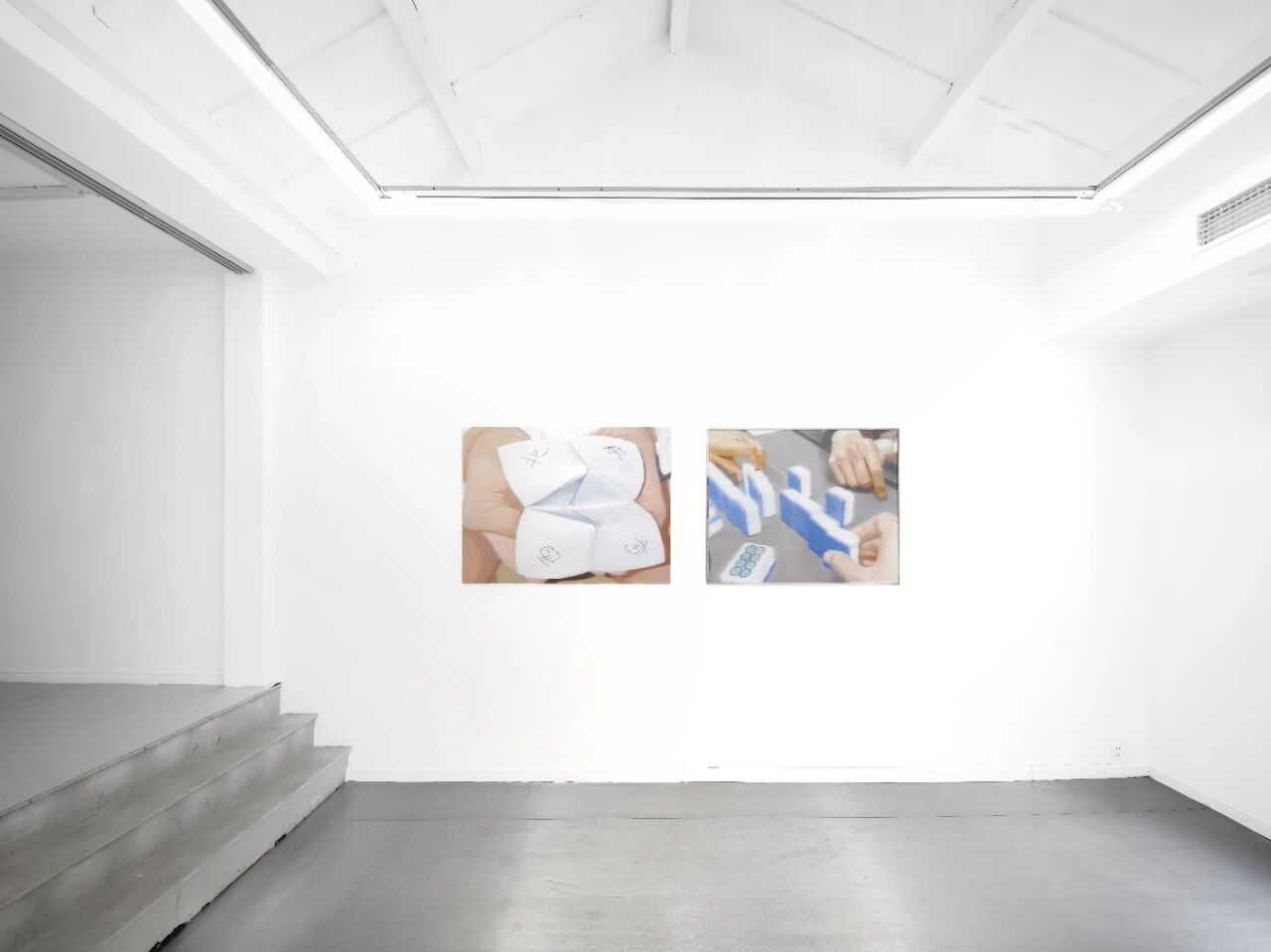
Tong Mo’s paintings reveal an even richer and more detailed collection of shared childhood experiences. Works such as Origami Cranes and Draw a Watch on the Wrist bring back memories that have been covered over by contemporary life, triggering them again in the instant we encounter the images and giving us a fleeting physical sense of recognition. These ways of playing did not belong exclusively to those born in the 1990s, nor did they begin with that generation. They can be traced much further back, shared across several generations over the course of half a century, until the non-digital childhood finally disappeared almost entirely in the years following the millennium.
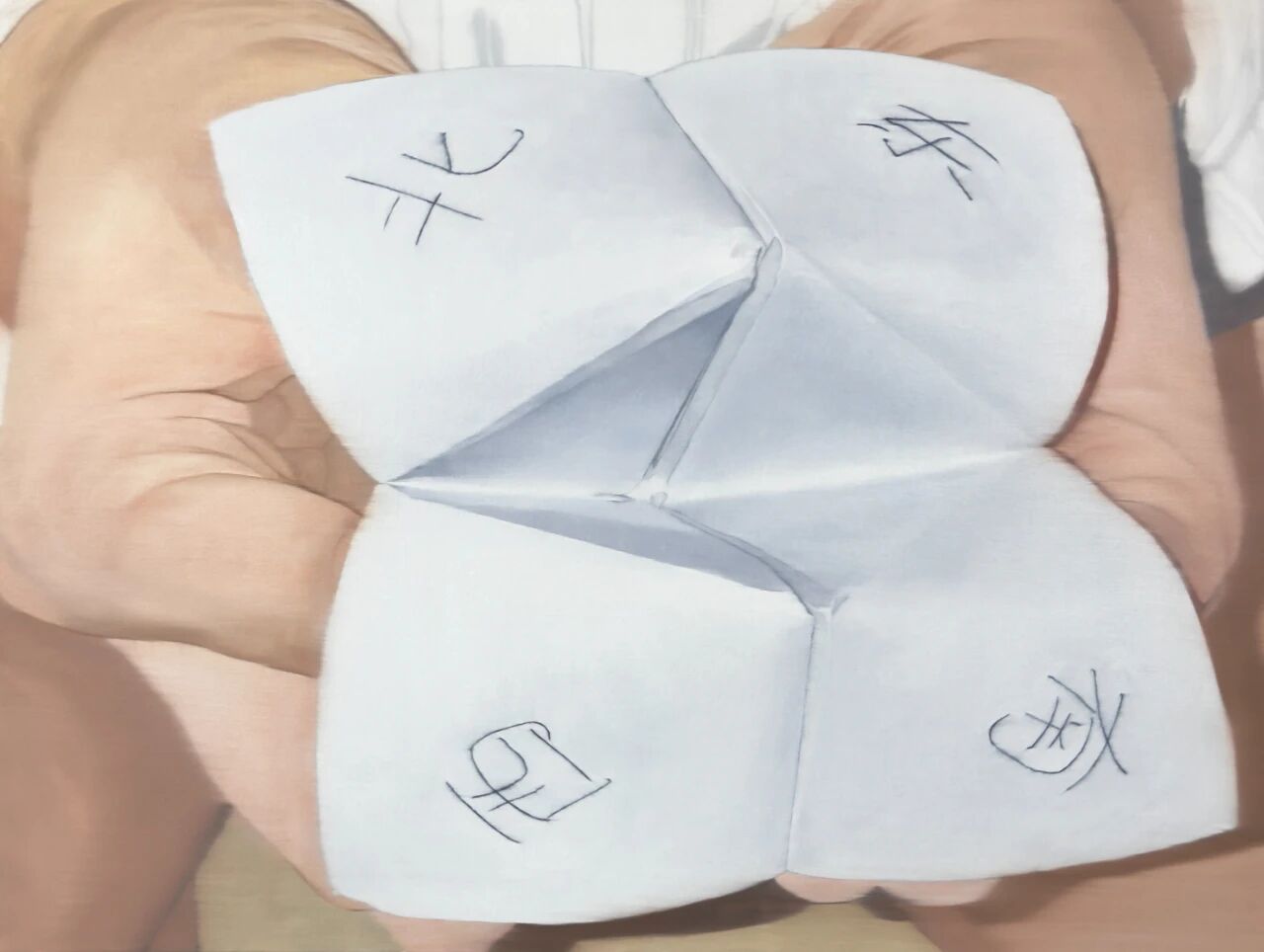
Cootie Catcher, 2025
90h x 120w cm
© Courtesy of the artist
Cat’s-Cradle, Marbles, Pull-Grass Game, and Cootie Catcher evoke another dimension of childhood: the experience of face-to-face social interaction. As depicted in the exhibition’s titular work, Sunny Days, we once dragged our bodies through the world in groups, running together, climbing up and down whatever we could find; or sitting on embankments, sprawled across the grass, doing nothing in particular. This degree of physical presence has gradually receded as social networks have developed at extraordinary speed. Our devices have given us access to an infinitely expansive world, while at the same time gradually numbing our physical sense of the world immediately around us—and of the friends beside us.

Draw a Watch on the Wrist, 2026
60h x 60w cm
© Courtesy of the artist
In memory, childhood always seems infinitely beautiful. Think of those summer afternoons when, amid the complications of the present, we remember secretly watching Happy Planet with an ice-cold Coca-Cola and an electric fan humming nearby. The pure sweetness of memory wraps itself around the complicated struggles we actually experienced as children, like a layer of sugar coating.
When the theme song The Moon Boat carries its indescribable melancholy through an upbeat melody, the difficulties of childhood quietly revealed beneath the sweetness of Happy Planet are unmistakable. In Tong Mo’s paintings, the grey-white tones that slowly emerge from beneath the surface may express more than the longing of nostalgia. They also seem to speak to the inherently complicated texture of childhood itself, and to the sense of powerlessness contained within it.
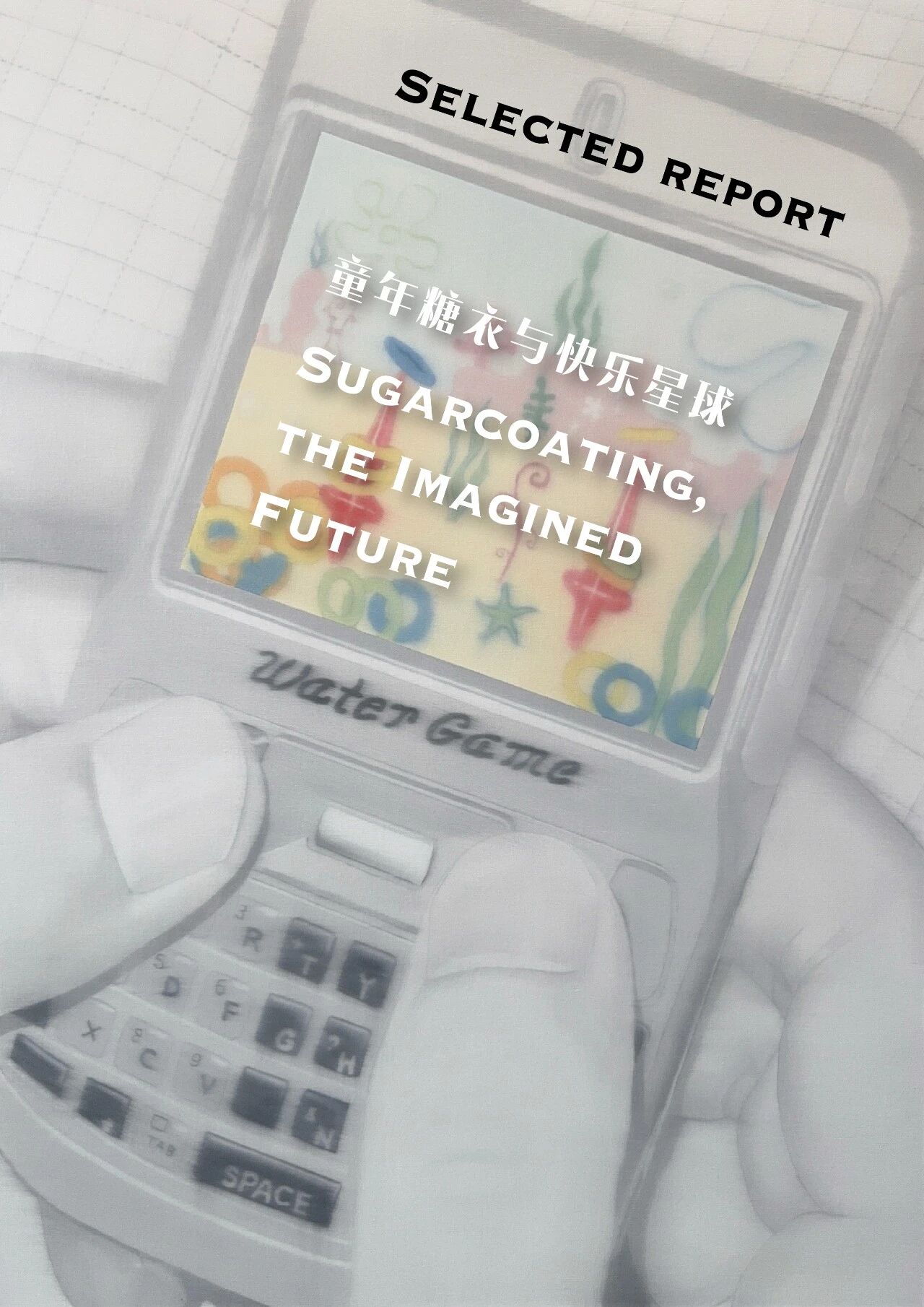
In Water Game, outside the brightly colored screen of the water-gun and ring-toss game lies a colorless world. It seems to suggest that, for children, their troubles are never as weightless as adults might imagine. It is precisely this contrast that reveals the importance—and preciousness—of happiness.
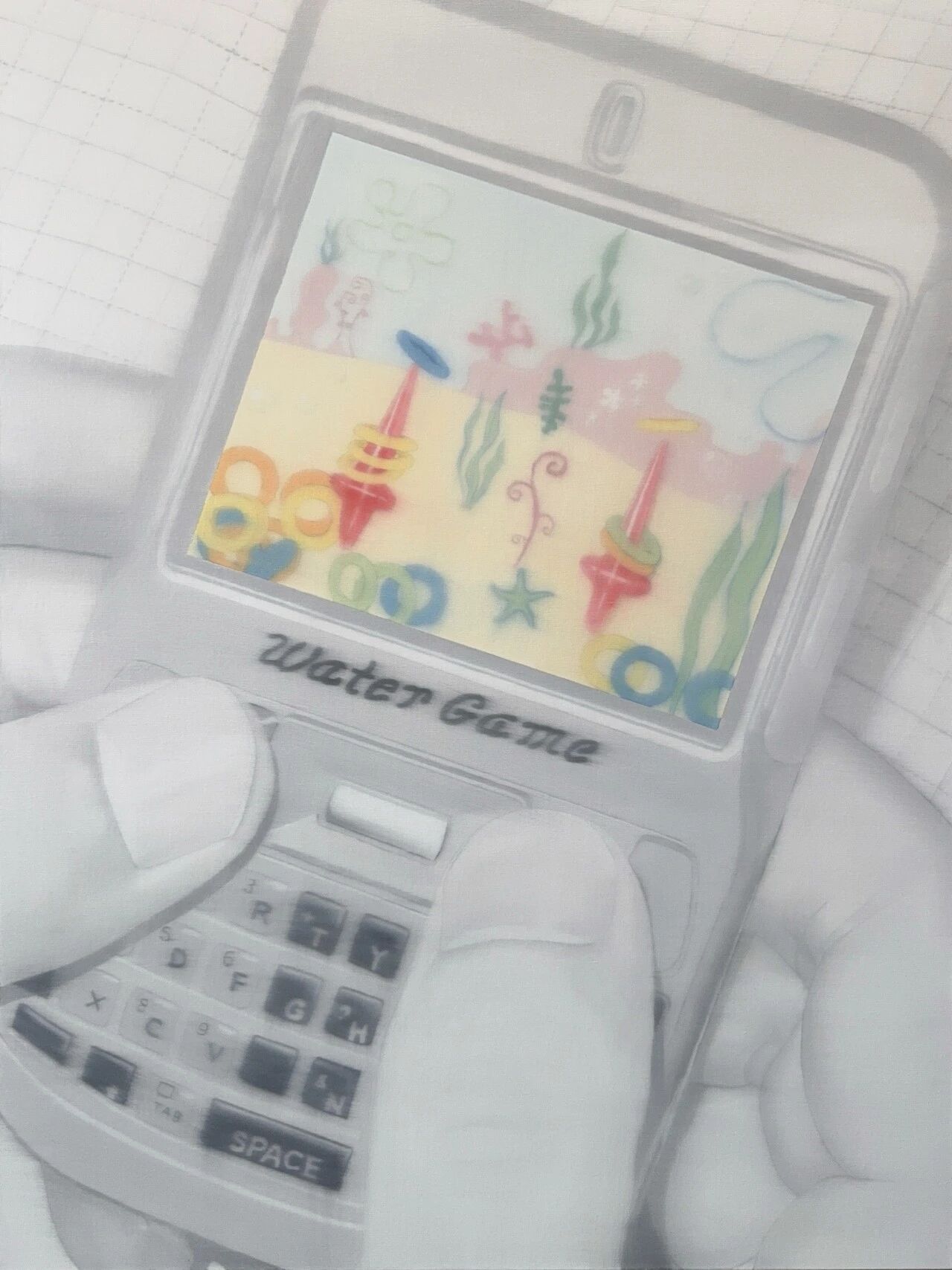
Water Game, 2025
160h x 120w cm
© Courtesy of the artist
At the end of Happy Planet, the protagonist turns away from the help of his friends on the planet and calmly accepts his disappointing grades. In doing so, he begins to take responsibility for himself, saying goodbye to a childhood filled with imagination, where everything could still become a game. The children watching the story from the other side of the screen grow up alongside him, while the silver world of the future gradually fades into a yellowed memory.
And when the phrase “What is the Happy Planet?”—a viral reference originating from the fifth season of the original series—resurfaced in recent years, those children, by then fully grown, could no longer quite understand the new context surrounding a phrase that once felt so familiar. Tong Mo’s exhibition creates a brief illusion: a moment in which childhood returns, becoming a layer of sweetness that gently wraps itself around the complicated taste of reality. Sharper, more sour, more bitter, more painful—we call it growing up.