

https://www.vogue.com.cn/living/brand_news/news_11g1a10144f9e5a5.html
In Angela Carter’s Nights at the Circus, the protagonist, Fevvers, is flamboyant, outspoken, and at times even vulgar. Carter gives her a pronounced East London accent and earthy vernacular, making her voice as unabashedly alive as her body. Through a narrative in which a journalist subjects a woman to an interrogative gaze, Carter raises the question at the heart of the story: if a sanctuary free from prejudice truly existed, what would matter most in a woman’s inner life?
In the exhibition, however, as distinctly East Asian faces emerge one after another, “reserved, resilient, gentle” becomes an immediate impression. At first, this seems to establish a contrast with the novel’s exuberance. Yet within the dreamlike atmosphere of Lingrou Xie’s paintings, the frank exposure of faces, gazes, and minute expressions also resonates with what remains as the “circus” of the story sheds its layers of spectacle. Stripped of her corset, towering hair, and extravagant performance, the real Fevvers seems capable of becoming an embodiment of any woman.
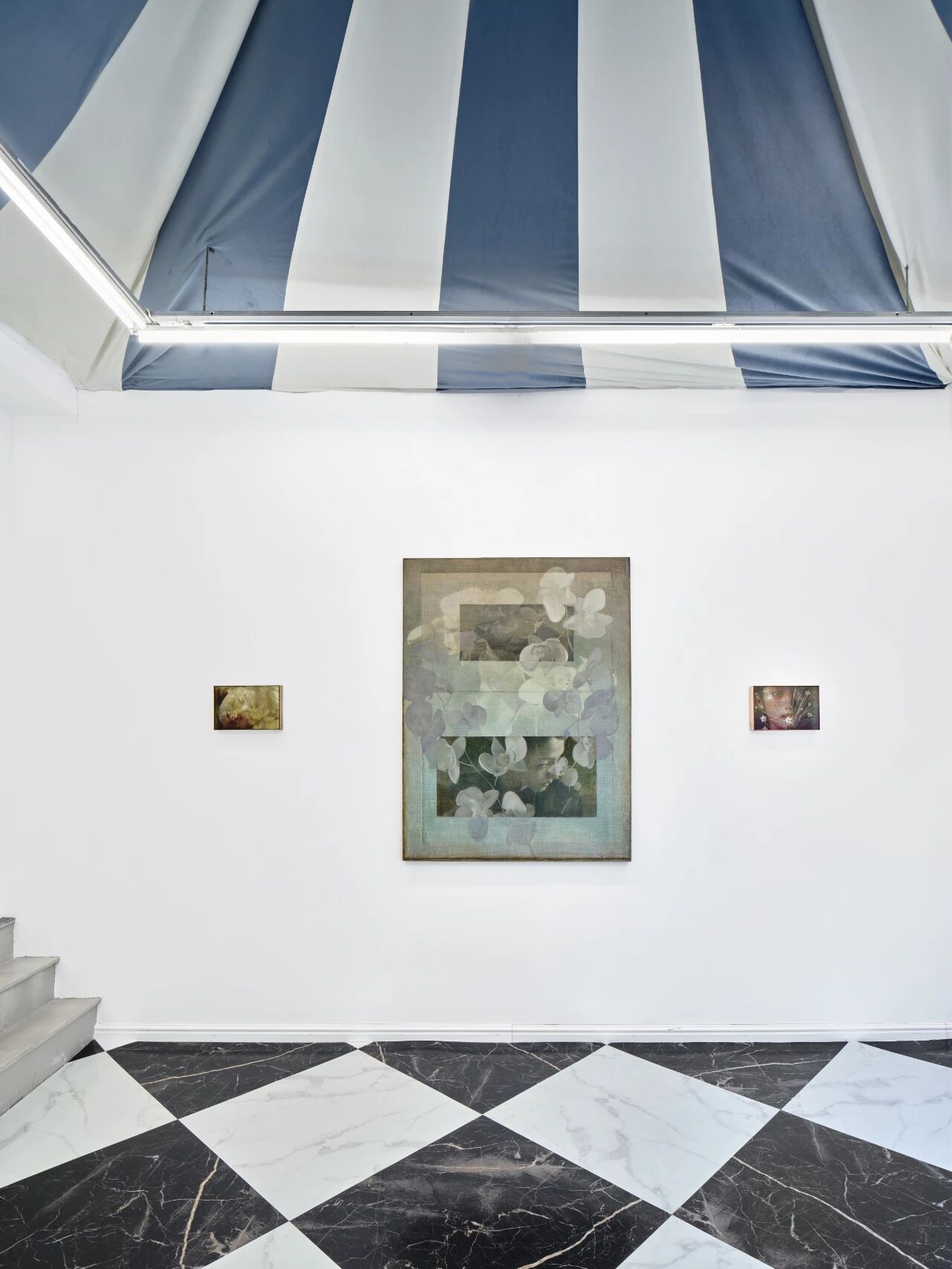
Installation view of Nights at the Circus, Sept.20, 2026 - Nov.10, 2026, Nan Ke Gallery, Shanghai © Courtesy of Nan Ke Gallery
Placed together, these three words—reserved, resilient, gentle—sound like a familiar compliment. On closer inspection, however, each contains different expectations and circumstances. How do we recognise a woman’s reserve, and how do we judge her resilience? When gentleness becomes a quality for which women are continually praised, does it also begin to delimit how they may live and respond to others? These questions lie within the adjectives, surfacing alongside the faces in the paintings.
Reserve concerns, first of all, the manner of expression. Someone who does not fully display their emotions can easily be understood as shy, submissive, or even incapable of expressing themselves. When used to characterise East Asian women, such judgments may reinforce, and be reinforced by, a particular cultural imagination: restraint is taken as an inability to speak, silence as an absence of opinion. Yet expression also resides in pauses, evasions, and what is held back. A person may choose not to surrender all their feelings to the gaze before them. Whether that withholding arises from fear, habit, or an autonomous decision can rarely be determined from appearances alone.
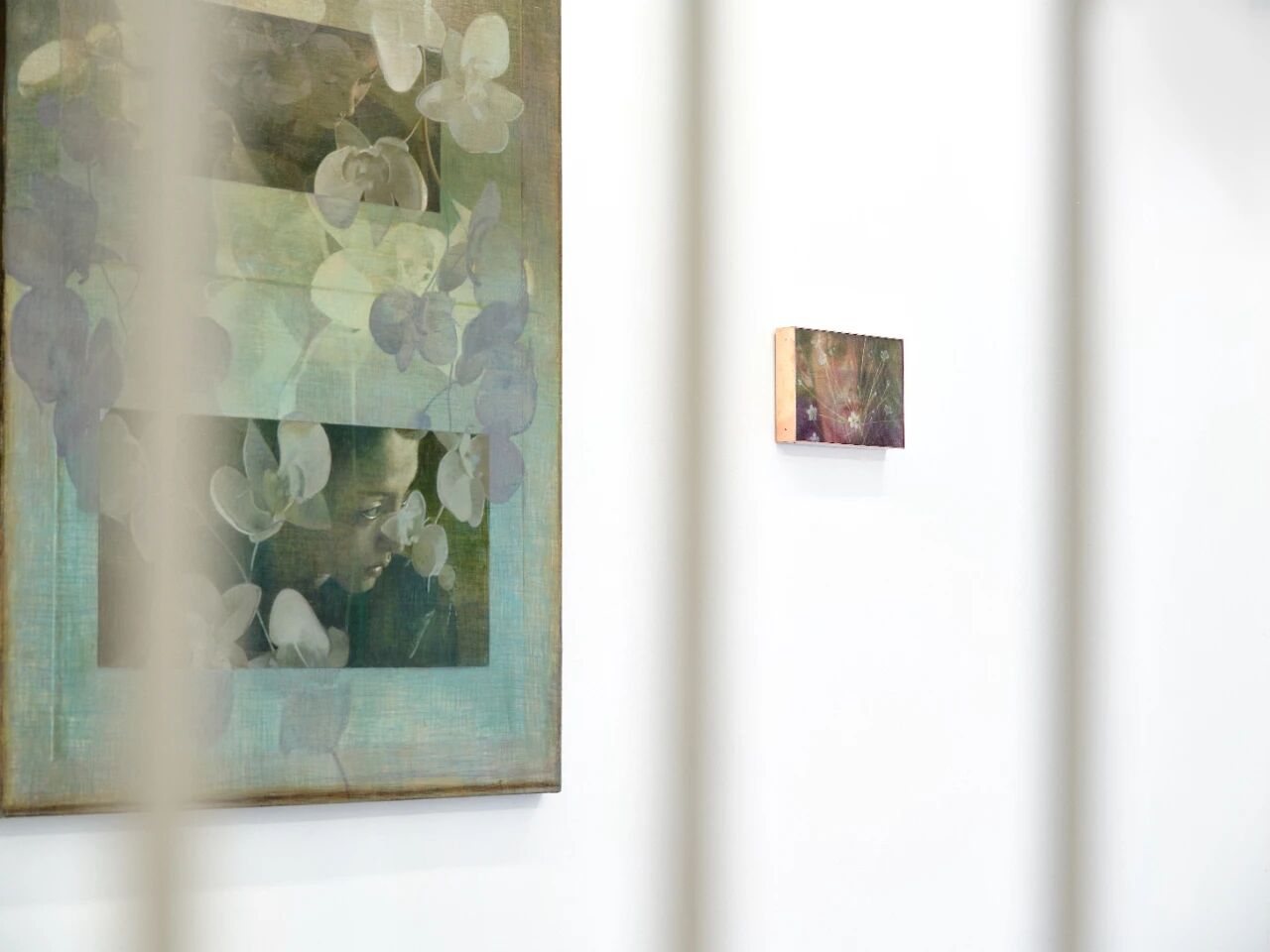
Installation view of Nights at the Circus, Sept.20, 2026 - Nov.10, 2026, Nan Ke Gallery, Shanghai © Courtesy of Nan Ke Gallery
Xie’s paintings make this uncertainty visible. The faces she depicts have not disappeared entirely: eyes, lips, and subtle expressions still draw our attention, while the narratives surrounding the figures have grown sparse. We can see emotion, but can scarcely know its cause; we can sense hesitation or concentration, but cannot place it within a complete story. Here, reserve takes a specific visual form: some information remains, while the rest stays beyond the painting. What the figures offer the viewer is insufficient to support an unequivocal judgment.

Lingrou Xie
A slightly sidelong gaze, 2026
Oil on canvas
140h x 105w x 3.8d cm
© Courtesy of the artist
In A slightly sidelong gaze, two horizontal rectangles contain different fragments of women’s faces. Pale petals and stems extend beyond the rectangular borders and across the faces, drawing the eye back and forth between the figures and the plants. The rectangles recall a cinema screen or a photograph, suggesting that recognising the source of an image might allow us to recover the scene to which the figure belongs. Yet the flowers continually interrupt this process of recognition, while intervals within the painting break the continuity between moments that might otherwise connect. A glance is preserved apart from its story, inviting a more sustained gaze while retaining something that cannot be exhaustively explained.
Resilience gives this withholding a different weight. Familiar accounts of male endurance speak of hardship deliberately borne, an opportunity awaited, and eventual achievement. Women’s endurance has also long been praised, but is often situated within narratives of care, sacrifice, and suffering. Women are commended for their ability to bear hardship, sustain a family, and continue giving under difficult circumstances. Similar forms of persistence are assigned different directions: one person’s endurance may lead towards their own goals, while another’s is expected to secure the lives of others.
In this sense, women’s resilience needs to be recognised anew. It resides in the daily work of adjusting relationships and navigating adverse circumstances, as well as in the effort to preserve one’s own desires, judgments, and ways of living. Such efforts may leave no record of heroic deeds. Sometimes they amount only to a hesitant refusal, words poised on the edge of speech, or a fleeting pursuit of something loved in the margins of everyday life. Nor should resilience become a reason to demand that women continue to endure. When refusal becomes more legitimate and less difficult, this strength has a chance to serve the woman herself.

Lingrou Xie
Tide, 2026
Oil on canvas
90h x 120w x 3.6d cm
© Courtesy of the artist
In Xie’s paintings, “resilience” takes the form of faces that remain recognisable even as leaves, water, and layers of colour pass through them. In Tide, a horizontal band of waves crosses the rectangle containing the figure, while plants encroach from below, as though vast forces and immediate pressures were arriving together. Yet amid these overlapping images, her posture and expression retain a simple but steadfast presence. Wind, Wind introduces the possibility of imagining the soul. Its two frames draw on a rumour associated with the early days of photography: that a camera could capture the soul. This rumour lends the image a capacity beyond recording appearances, as though the shutter might also preserve something invisible within the body.
It recalls the question the journalist asks when he encounters Fevvers again towards the end of Nights at the Circus: “Have you a soul?” Fevvers is pleased by the question, perhaps because it finally touches on her inner life as a person. Once eager to examine her body and verify her story, the journalist now begins to confront those aspects of her that observation alone cannot explain. The two frames seem to hold a wish: that a fleeting appearance might leave behind something more than outward form. At the same time, they give us pause. Once a face has been preserved, how much of its inner experience can we truly approach through it?
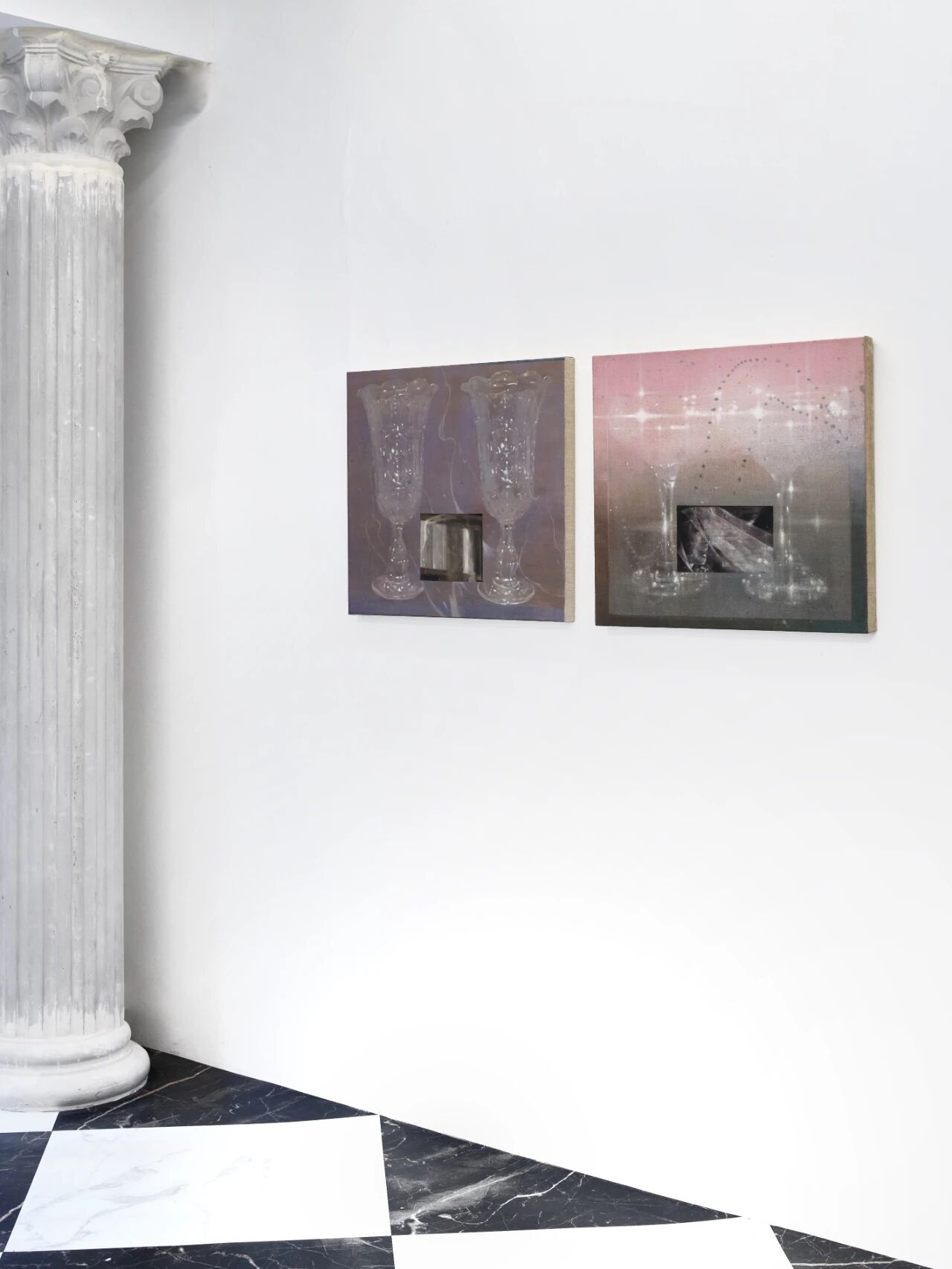
Installation view of Nights at the Circus, Sept.20, 2026 - Nov.10, 2026, Nan Ke Gallery, Shanghai © Courtesy of Nan Ke Gallery
This inquiry into inner life also extends to the weight the artist gives to colour. In Vision, the Air of the Soul, Xie connects her imaginings of the soul with questions about the meaning of life: who determines what is light and what is heavy? She initially developed the painting in dense, weighty colours, but ultimately felt that “it was better to paint it lightly.” This shift makes colour part of the inquiry itself. As the familiar associations between heaviness and depth, lightness and superficiality begin to loosen, lightness, too, can hold questions that resist an answer. The painting need not use heavy colour to establish the gravity of what it carries; thoughts about existence and meaning can also linger within gentle hues.

Lingrou Xie
Vision, the Air of the Soul, 2026
Oil on canvas
90h x 150w x 4.8d cm
© Courtesy of the artist
Gentleness, too, reveals its complexity within these overlapping relationships. It is a capacity for closeness and care, and one of the compliments women most readily receive and find hardest to escape. As praise gradually becomes a demand, gentleness comes to mean avoiding discomfort for others, concealing anger, understanding and caring, and minimising one’s own needs. A woman may be loved for her gentleness, yet also be expected to remain indefinitely available to others. Whether she wishes to give, and what she herself needs, can easily disappear within that praise.
The combination of flowers and women’s faces carries similarly familiar expectations. Flowers enhance beauty while suggesting softness, delicacy, and transience, making the female figure a pleasing sight to contemplate. Xie preserves the appeal of this pairing, while giving the foliage further roles within the painting. In Among Leaves, stems cross the eyes, brows, and lips. The figure’s expression remains clear, yet the process of reading it is interrupted. The plants soften the face while also making it difficult to grasp in its entirety. Forms conventionally used to complement the figure gradually alter how we look at her.

Lingrou Xie
Among Leaves, 2026
Oil on canvas
30h x 20w x 4d cm
© Courtesy of the artist
A distance thus opens between the appearance of gentleness and the figure’s inner experience. Soft colours and weightless petals are insufficient evidence of a person’s submission; a quiet face does not necessarily mean that she has no objection to the world around her. The branches and leaves sustain this distance. We can perceive beauty, but cannot infer from that beauty alone what the figure is willing to accept or able to endure. The qualities viewers habitually read into images of women must here be examined anew.
The metaphor of the circus returns, then, to the relationship between viewer and viewed. Fevvers commands the stage with her enormous body and boisterous speech, while the women in Xie’s paintings enter our field of vision through fragments, pauses, and expressions that hold something back. Their modes of expression are far apart, yet the expectations audiences bring to them are similar: we continually hope to obtain certain knowledge of a person from a visible image. The journalist seeks to establish the truth of Fevvers’s wings; we, too, may try to determine what kind of woman we are looking at through a pair of eyes, a cluster of flowers, or a familiar face from a film.
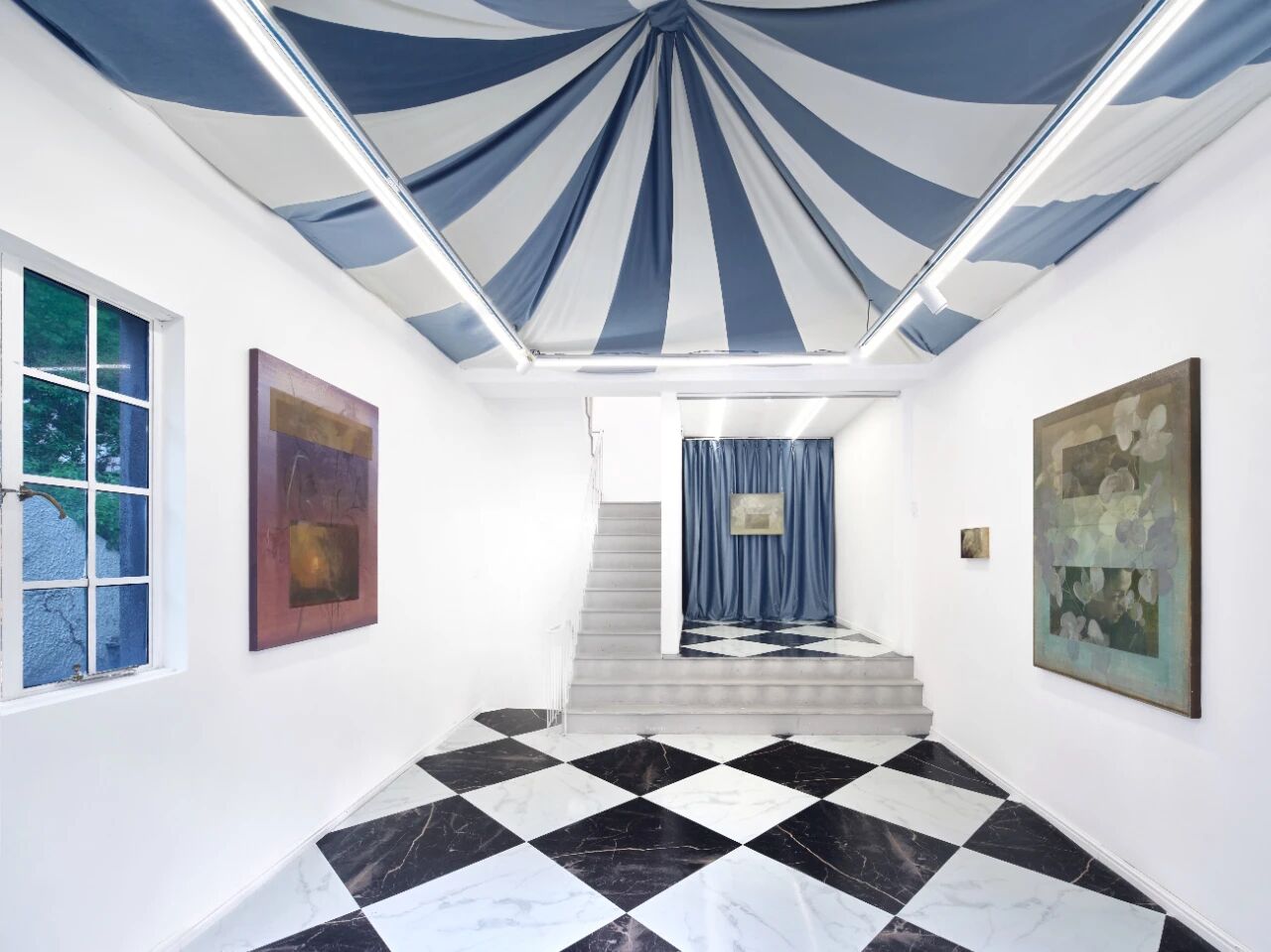
Installation view of Nights at the Circus, Sept.20, 2026 - Nov.10, 2026, Nan Ke Gallery, Shanghai © Courtesy of Nan Ke Gallery
Of course, obscuration within a painting does not in itself mean that the figure has gained freedom. Fevvers can tell and revise her own story, whereas these silent faces are selected, painted, and recomposed by the artist. They may still be admired as beautiful, melancholy, or mysterious women. “Reserved, resilient, gentle” can therefore offer a point of entry into these paintings, but can scarcely stand as a final judgment about women. In Xie’s images, faces and gazes remain among the leaves and flowers, allowing us to sense their presence without explaining everything. We need to linger longer to discover, beneath those familiar adjectives, feelings and choices we have yet to understand.
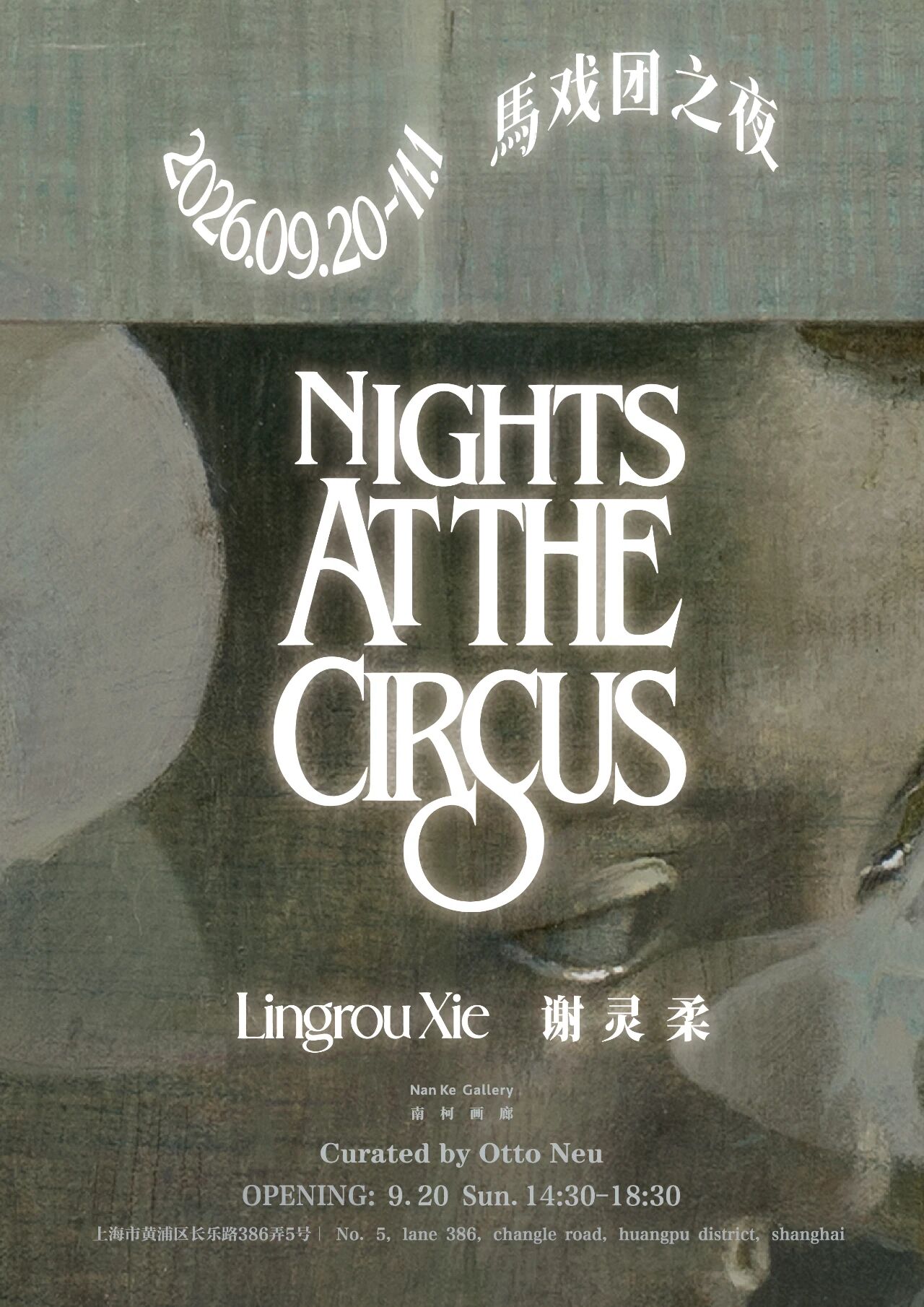
Nights at the Circus
Duration:2026.9.20-2026.11.1
Artist: Lingrou Xie
Curator: Otto Neu
Add: No.5, lane 386, changle road, huangpu district, Shanghai, Nan Ke Gallery
