

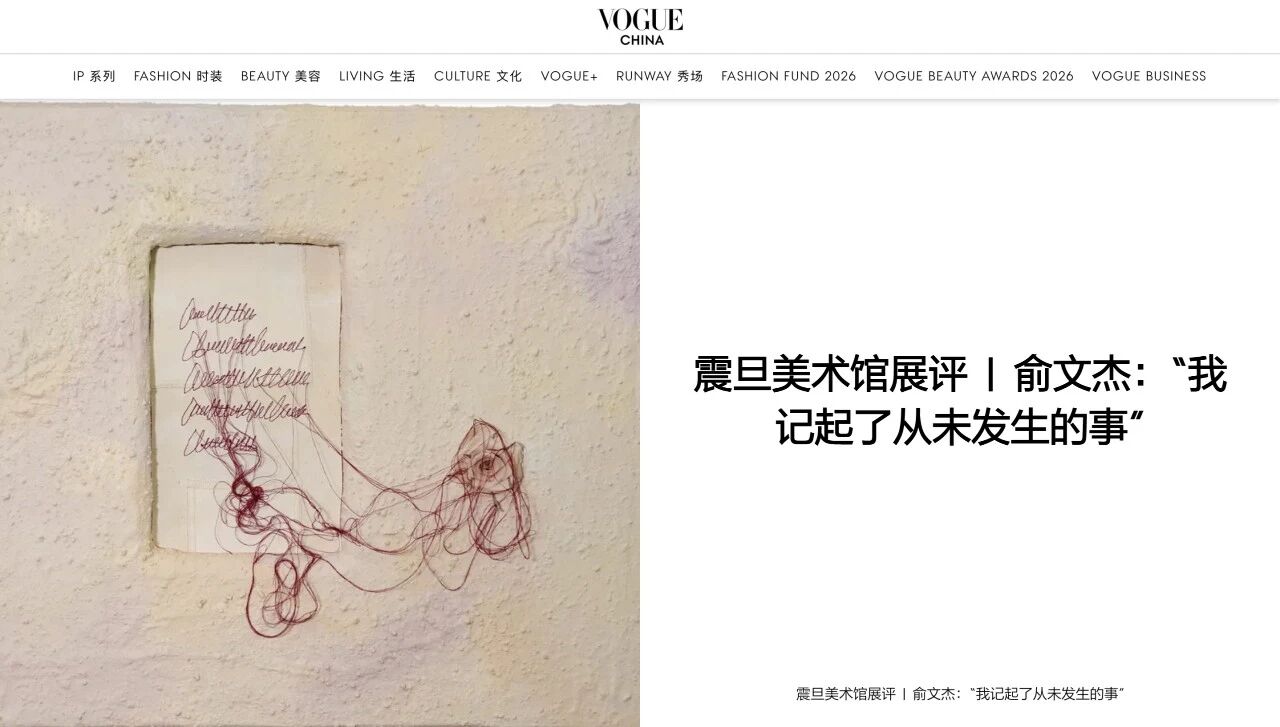
https://www.vogue.com.cn/fashion/brand_news/news_1543c3fe6d3c3000.html
A needle passes through fabric, drawing the thread into view on the other side. In an ordinary act of sewing, this movement repeats until two separate pieces of cloth gradually come together, the seam tightens, the loose ends are trimmed, and the needle is removed. Afterwards, the fabric can be touched and used; one might even forget that it was ever torn. In Wenjie Yu’s work, however, the needle remains. Still attached to the unfinished threads, it hangs between words and flowers, as though a task has yet to be completed, or a connection has been made without either side being able to let go.
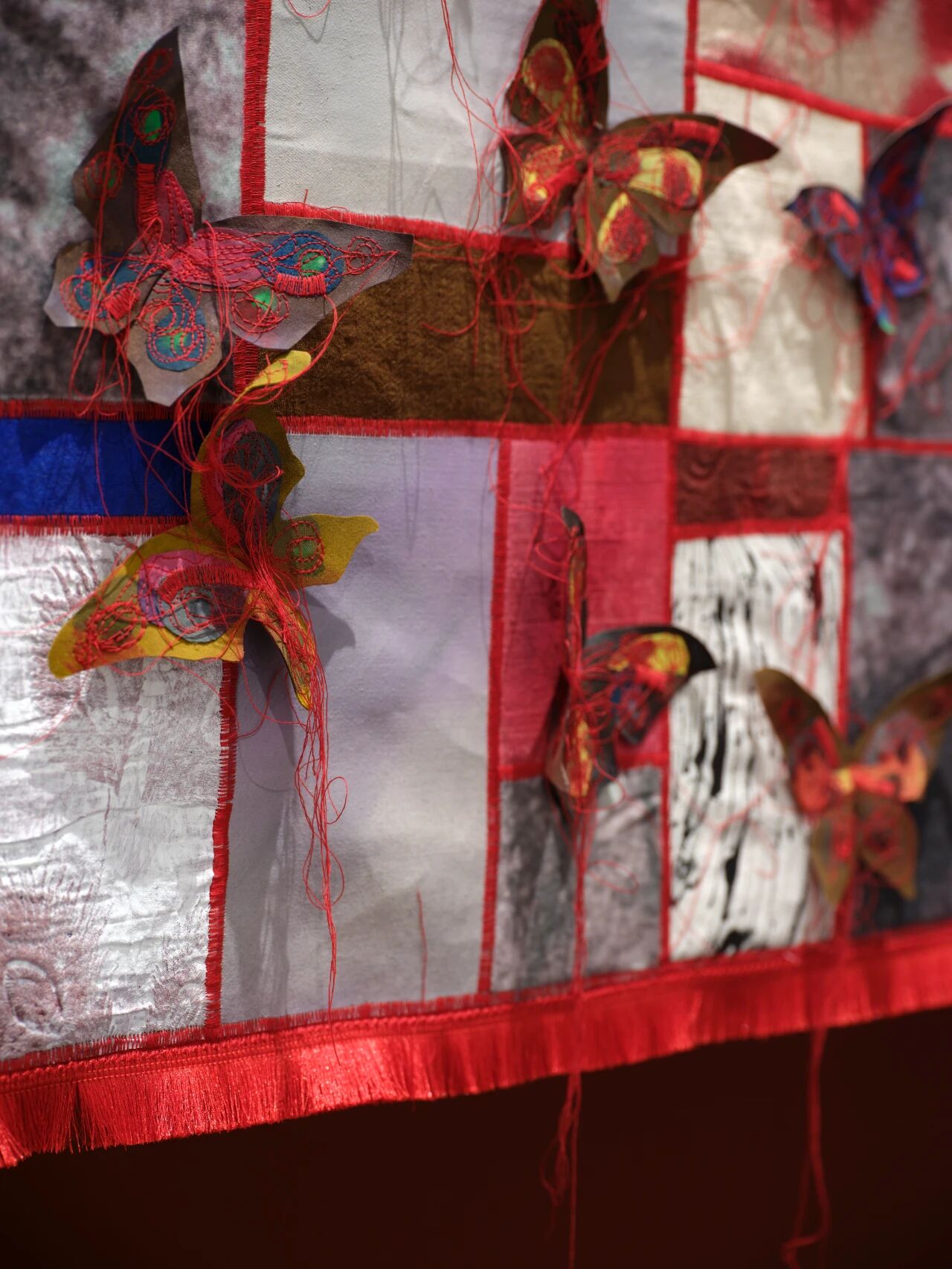
Installation view of Aleph, Sept.25, 2026 - Oct.25, 2026, Aurora Museum, Shanghai © Courtesy of Nan Ke Gallery
In I Don’t Know Where Eternity Grows, the words of love letters are stitched by hand. Threads extend from the fabric, each attached to a needle whose tip pierces the bud of a preserved rose. Soft fabric, slender threads, and sharp needles form a structure in which each element is held in relation to the others. The closeness that needle and thread bring about is inseparable from the act of piercing: to draw separate things together, a hole must first be made in them. As long as the needle remains, the connection retains the tension of its making.
This tension runs through Aleph, Yu’s solo exhibition at the Aurora Art Museum in Shanghai. Different fabrics are cut and resewn; butterflies emerge from ruptures; balls of yarn curl beneath the translucent fabric covering wooden boxes. Materials associated with bodily contact and everyday life are rearranged, gradually departing from their recognisable uses. They remain familiar, yet difficult to identify precisely, like events we can no longer recount: we remember the feelings they brought, the warmth of an afternoon, but cannot determine where the story began or where it ended.

Wenjie Yu
I don't know where eternity grows #1, 2026
Cotton cloth, linen, cotton sewing thread, sand, eternal rose, needle, wood, soft pastel, resin, and wood paint
50h x 60w cm
© Courtesy of the artist
The exhibition takes its title from the Aleph in Jorge Luis Borges’s story, which reveals everything in the universe simultaneously. Within that small luminous sphere, all places and all moments overlap, as though vision could finally escape the limits of the body and time. Yu places this vision of infinity among materials that are finite, partial, and partly obscured. Fabric has its front and reverse; a thread can extend only so far; a translucent covering admits the gaze while keeping what lies beneath indistinct. We can only follow these limited clues, slowly approaching a feeling that once existed.
The act of approaching also changes what is being approached. Fragments acquire new relationships through stitching: the colour of one piece of cloth begins to respond to the texture of another, and previously unrelated elements are brought onto the same surface. Here, remembering and making begin subtly to converge. We return to the past through what remains before us, while giving that past a new shape with each return.
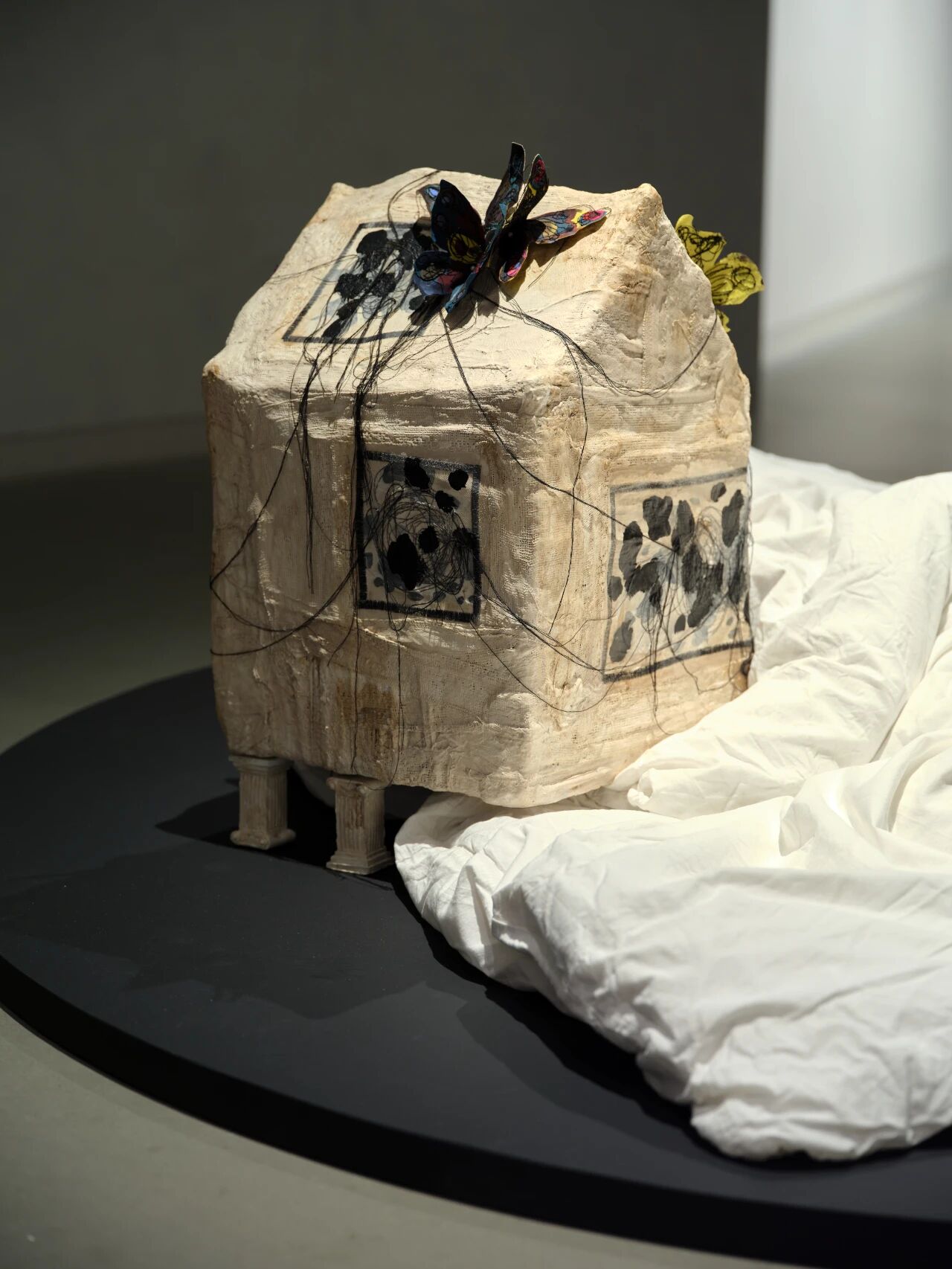
Installation view of Aleph, Sept.25, 2026 - Oct.25, 2026, Aurora Museum, Shanghai © Courtesy of Nan Ke Gallery
In 2002, Louise Bourgeois made the fabric book Ode à l’Oubli from her own old clothes and household textiles. Its pages were fashioned from linen hand towels saved from her wedding in 1938, while garments were cut, arranged, and stitched into fabric collages. These materials had been part of her life, touching her body and passing through cycles of wearing, washing, and storage. Once incorporated into the work, their personal histories remained, even as their original forms became increasingly difficult to recognise.
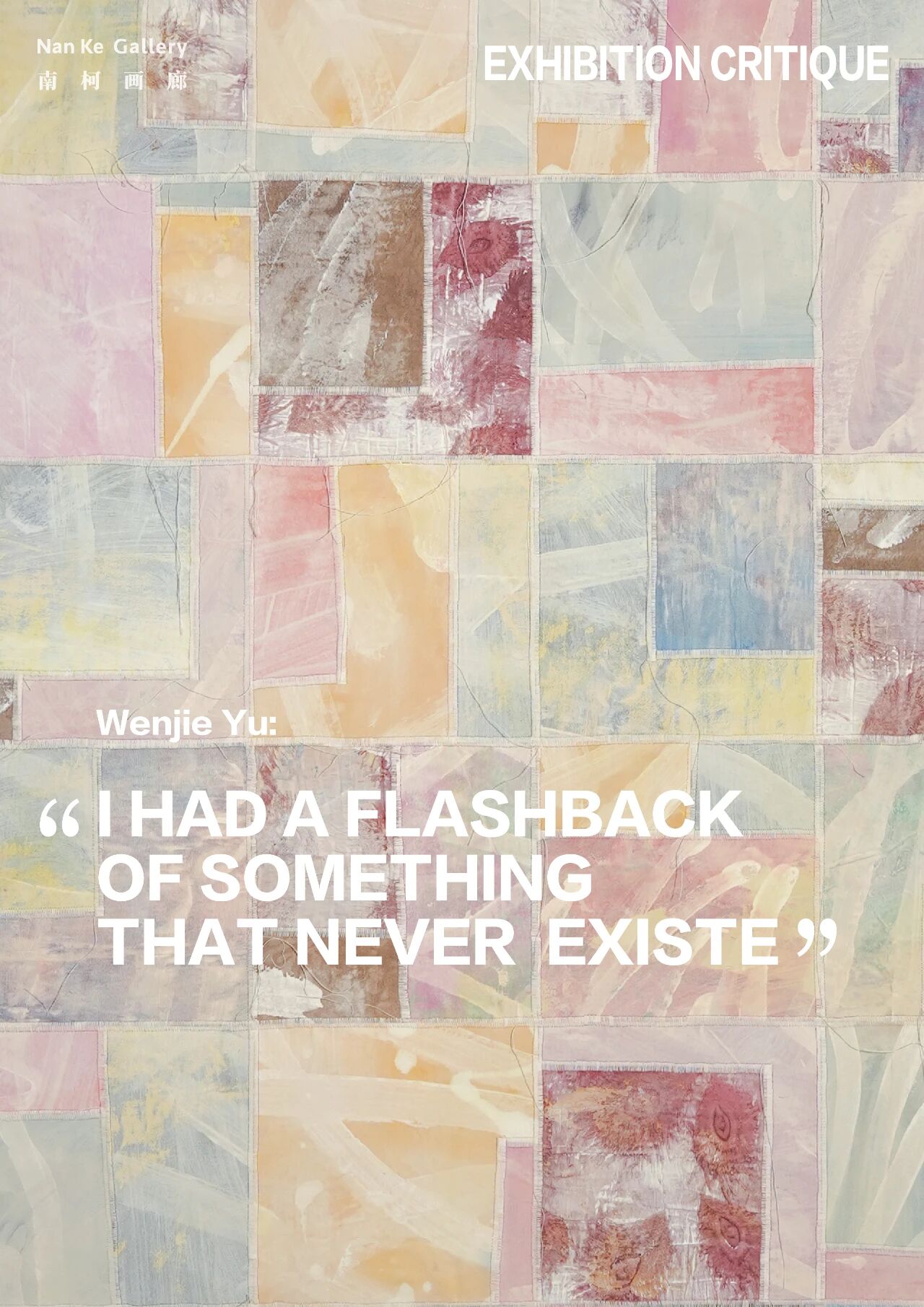
“I had a flashback of something that never existed.” This sentence, which Bourgeois included in the book, makes the relationship between fabric and memory more ambiguous. A garment can be preserved for decades, but the life surrounding it does not endure in the same way. The texture, fading, and creases of cloth may recall an actual moment, or awaken a sense of familiarity with no identifiable source. Between the survival of materials and the return of experience, imagination continually enters, filling in what can no longer be verified.
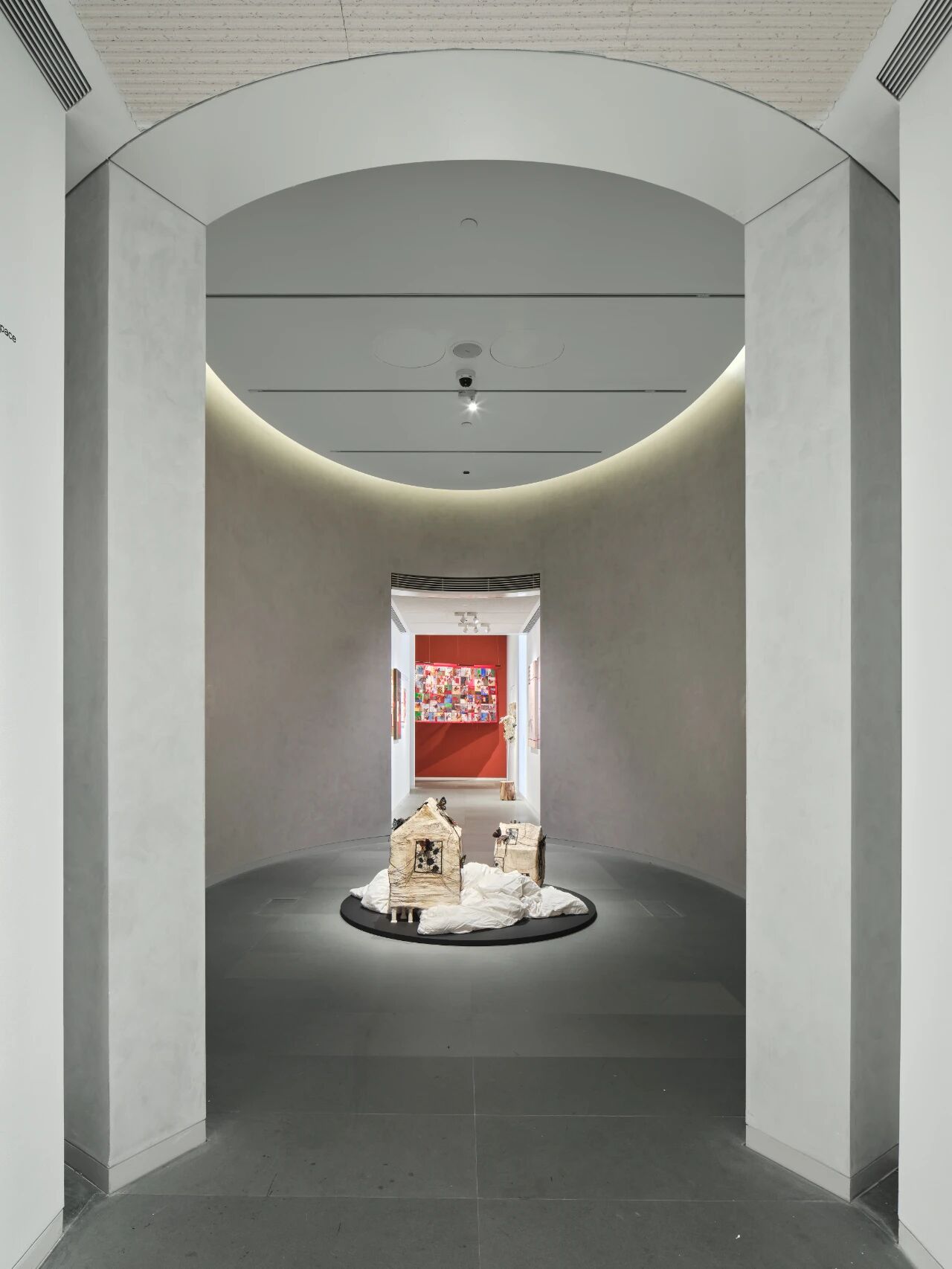
Installation view of Aleph, Sept.25, 2026 - Oct.25, 2026, Aurora Museum, Shanghai © Courtesy of Nan Ke Gallery
This also offers a way into Yu’s Sow. Beneath translucent fabric, scattered balls of yarn curl like seeds yet to unfold. Their colours, volume, and softness are faintly visible, while their origins remain concealed beneath the covering. A ball of yarn may once have belonged to a garment, or it may never have become anything at all. Before it, we might readily imagine an old sweater, a pair of knitting hands, or an afternoon passing slowly through repetitive labour. The material has yet to speak, but a story has already begun.
These stories emerge from the viewers’ own lives. Before the same hazy covering, one person may feel a sense of closeness, another may recall a loss. Private feelings become available to others while retaining something that cannot be exchanged or substituted. Shared memory may itself reside in such limited encounters: we need not have lived through the same events to recognise a similar feeling in a colour or the curve of a thread.
In Touching Feeling, Eve Kosofsky Sedgwick describes the reparative impulse as an additive and accretive practice, assembling resources from cultural fragments, margins, and remnants that might sustain the self. Through this lens, stitching can be understood as an attempt to allow feeling to endure. Fragments find ways to support one another, and the past acquires a temporary place to rest. Such repair still bears its seams, along with the distances between its different parts that cannot quite be overcome.
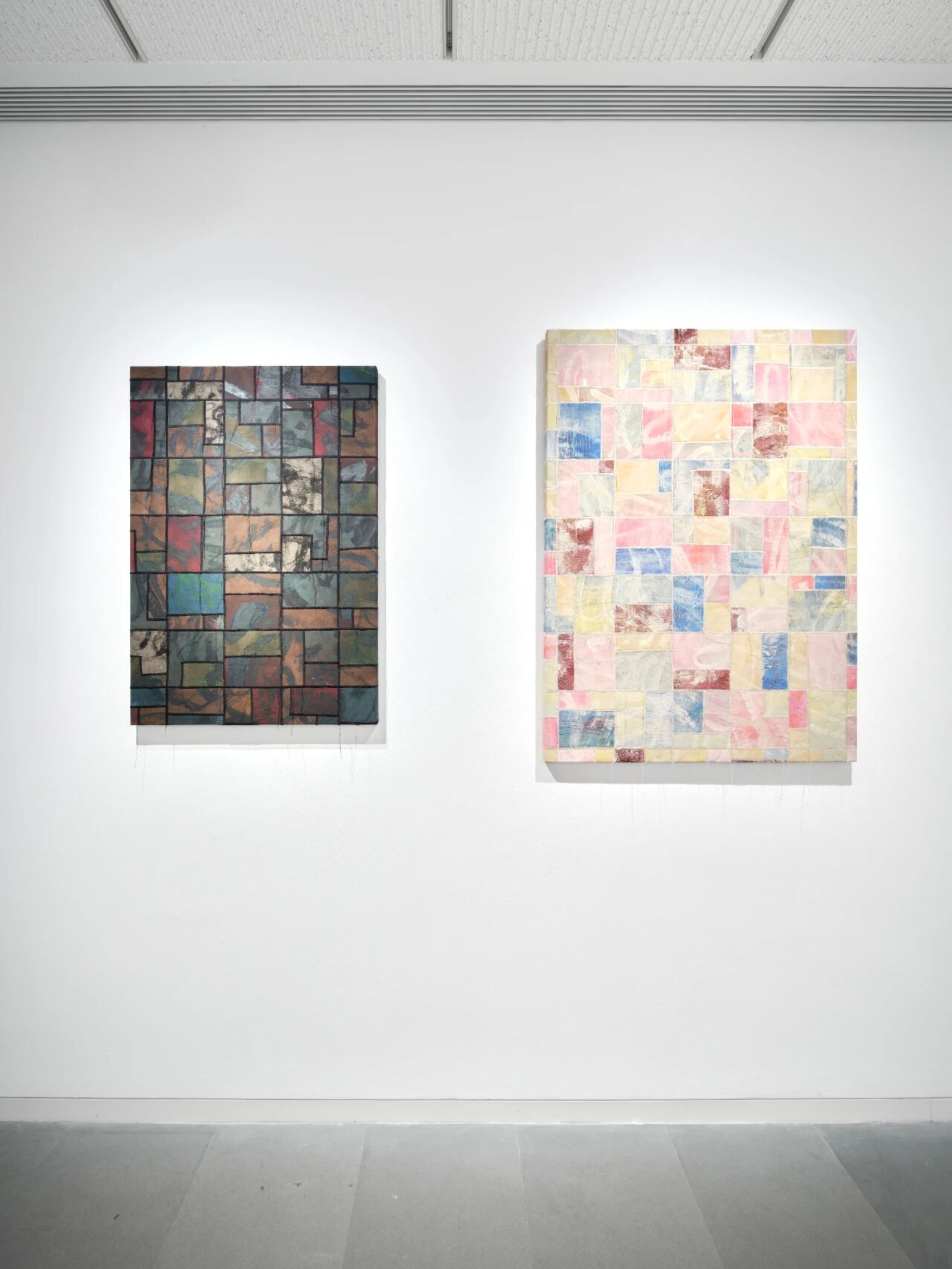
Installation view of Aleph, Sept.25, 2026 - Oct.25, 2026, Aurora Museum, Shanghai © Courtesy of Nan Ke Gallery
Yet the needle left within the work unsettles this resting place. Having helped the thread pass through the material, it continues to occupy the point of penetration. As long as it remains, the connection holds the possibility of pulling and restraint. The patience, care, and mending evoked by needlework coexist here with another force: the wish to hold on to something, to keep it from leaving, even to stop it from changing.
I Don’t Know Where Eternity Grows places this wish between love letters and roses. A letter is addressed to someone, awaiting opening, reading, or a reply; a flower, through its blooming and withering, situates the act of giving in a moment that cannot be repeated. Within the work, these temporal processes are suspended. Words are stitched into fabric, their delivery brought to a halt, while roses extend their existence in a preserved form. They have finally been made to remain, yet each is held midway through its own unfolding.
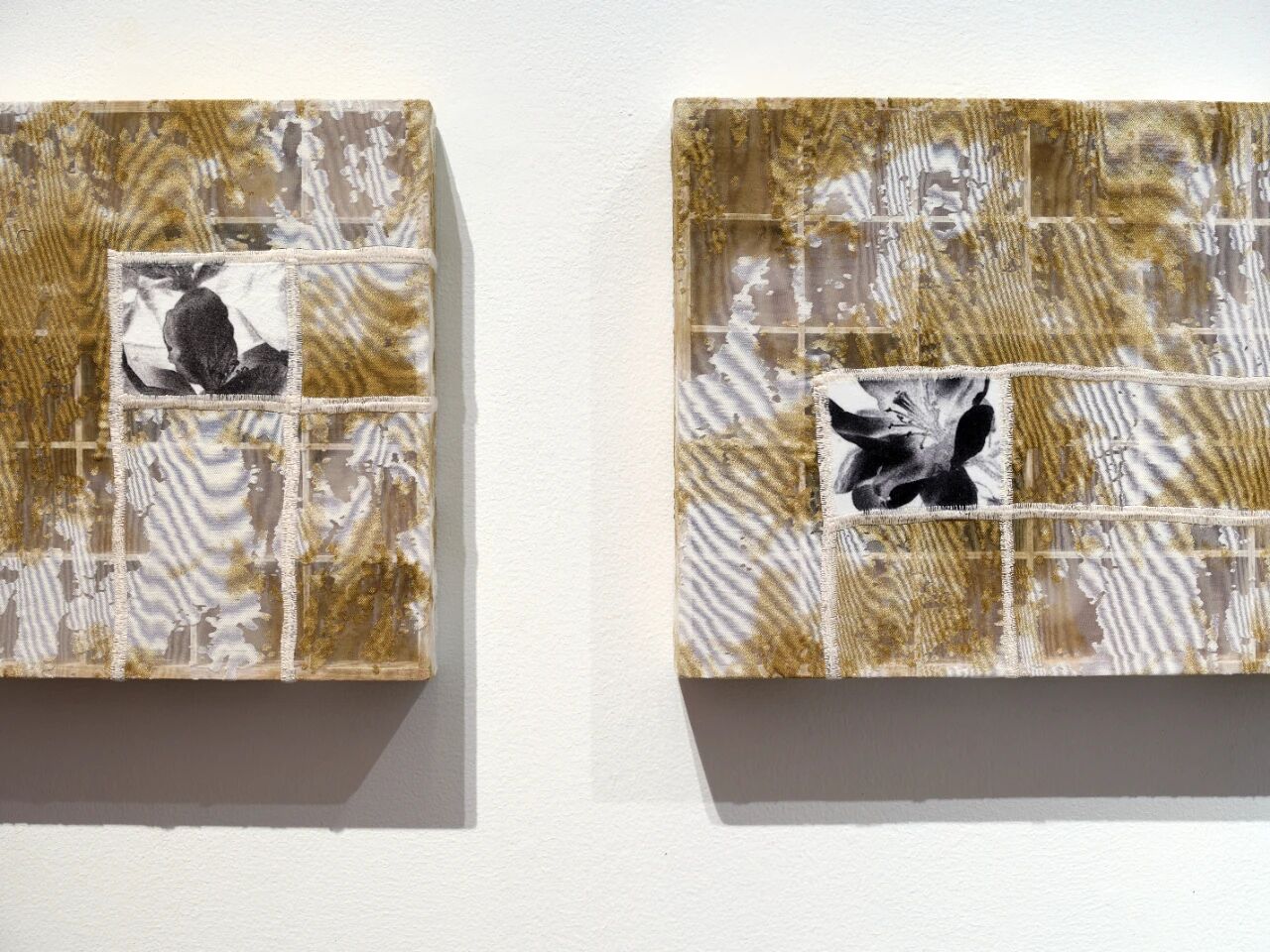
Installation view of Aleph, Sept.25, 2026 - Oct.25, 2026, Aurora Museum, Shanghai © Courtesy of Nan Ke Gallery
The preserved rose thus carries a particular sadness. It maintains the shape of a flower, temporarily keeping decay at bay, while the relationships surrounding it continue through time. People change, leave, and gradually forget the contents of a letter; the objects they preserve may stay where they are, holding the meaning once conferred upon them by a particular moment. As the needle tip enters the bud, affection becomes entangled with the desire not to let go. In trying to preserve a feeling, we may also be trying to preserve our own place within a relationship.
Structured around seven days, the exhibition moves from the first to the seventh before returning to its beginning. Seen through its threads, coverings, and preserved flowers, this cycle carries an inevitable change: when we encounter the same thing again, we bring everything that has happened since. A detail may suddenly emerge; a certainty may begin to loosen. Through these repeated approaches, the past continues to grow, gradually absorbing the wishes, hesitations, and imaginings of the present.
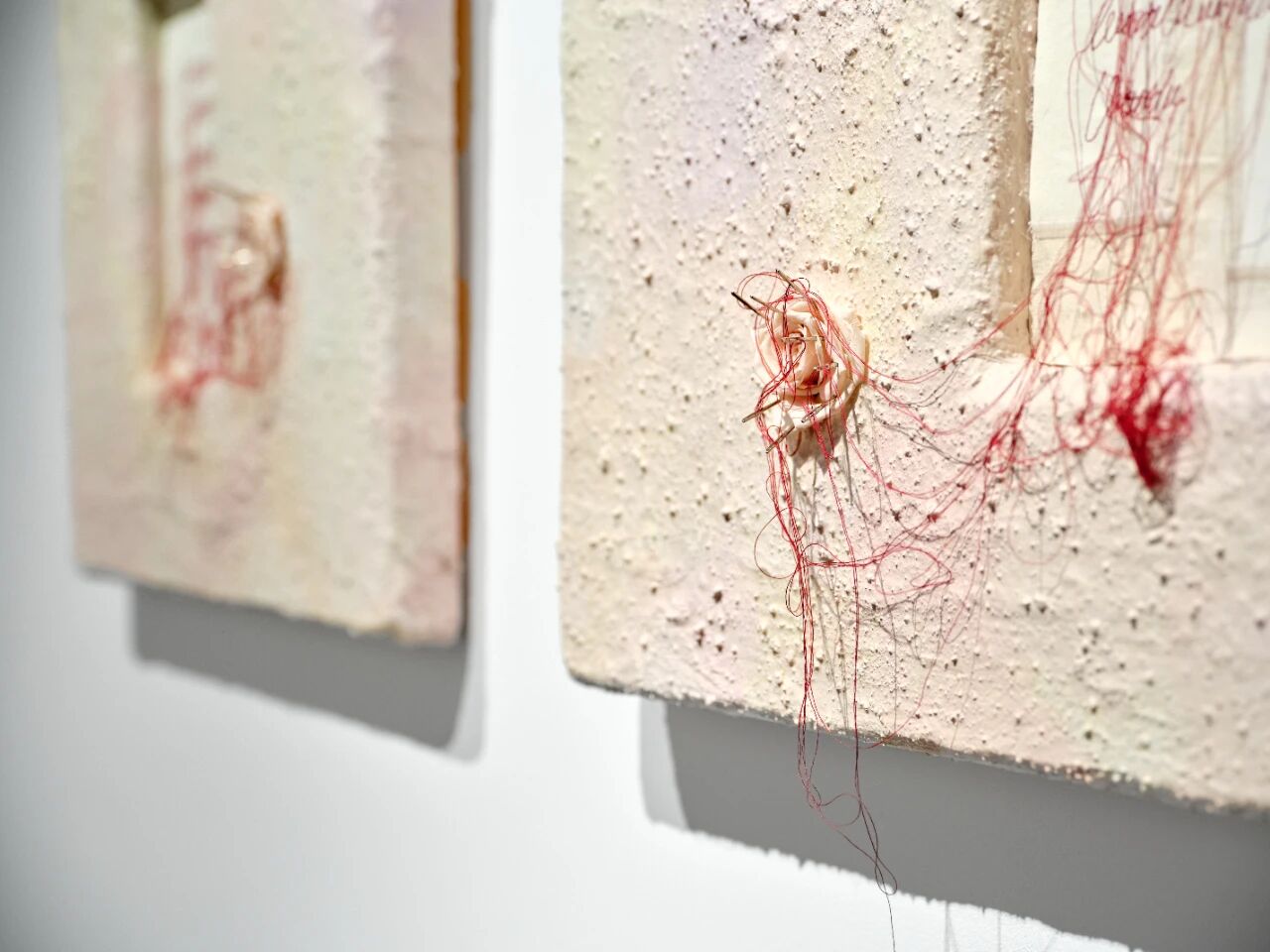
Installation view of Aleph, Sept.25, 2026 - Oct.25, 2026, Aurora Museum, Shanghai © Courtesy of Nan Ke Gallery
The affective qualities of Aleph must also be discerned within these particular changes. Translucent coverings, loose threads, and unfinished surfaces can readily merge into a hazy atmosphere of memory. What warrants closer attention is why a particular connection is necessary, how a covering changes the act of looking, and what, precisely, the needles left in place are holding on to. The small, specific relationships between materials give weight to the “unsayable,” allowing viewers to move a little further into the work, beyond its familiar symbols.
The needle has still not been removed. It connects words and flowers, keeping an unfinished gesture before us. Following the thread, we try to approach a particular past, only to begin seeing how we cut, piece together, and sustain our imaginings of it. Some parts have already blurred; some details may never have happened. Yet the thread continues through the fabric, drawing these uncertain things, little by little, into the present.
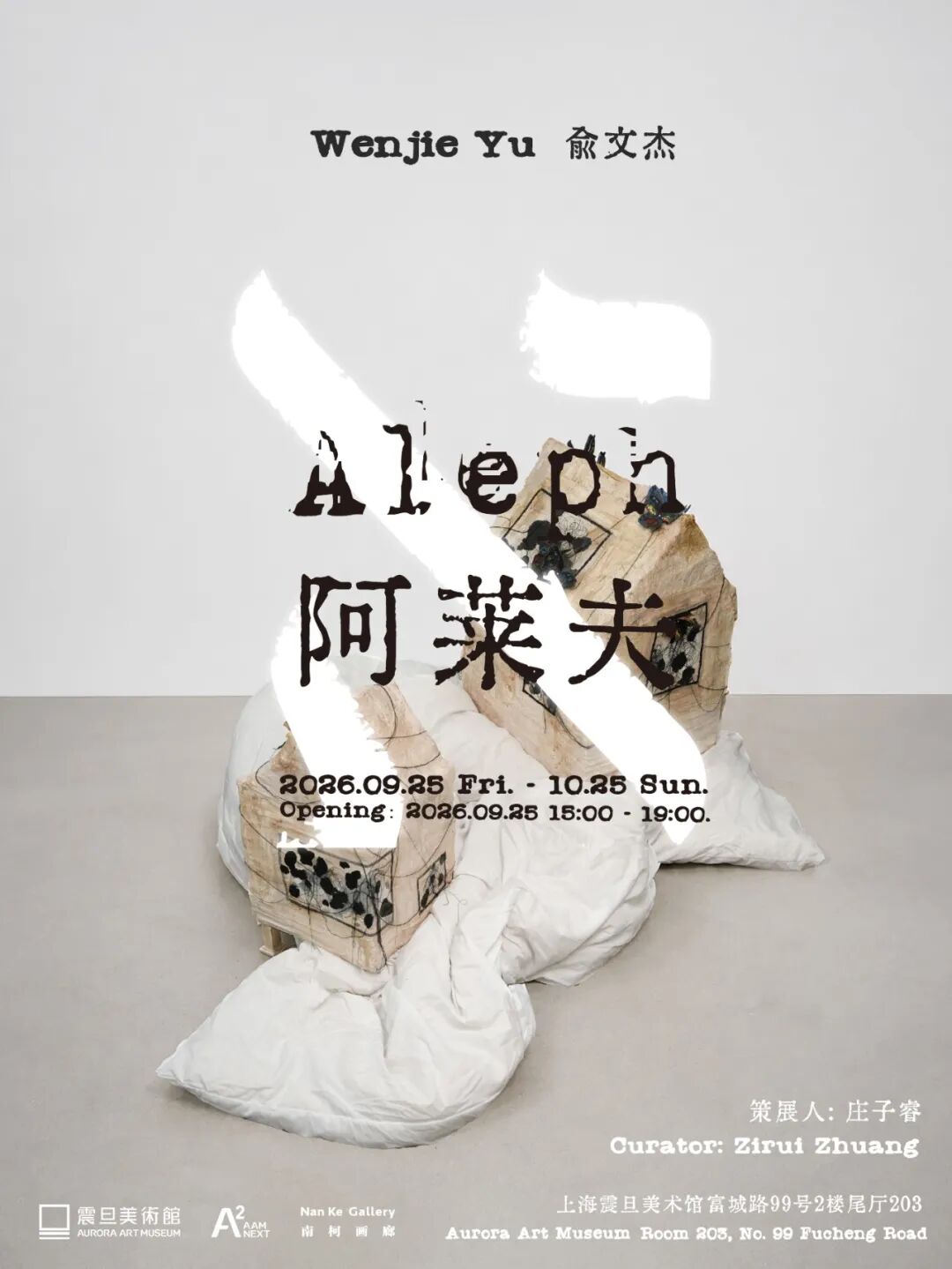
Aleph
Duration: 2026.9.24-2026.10.25
Artist: Wenjie Yu
Curator: Zirui Zhuang
Add: Aurora Art Museum Room 205, No.99 Fucheng Road
