

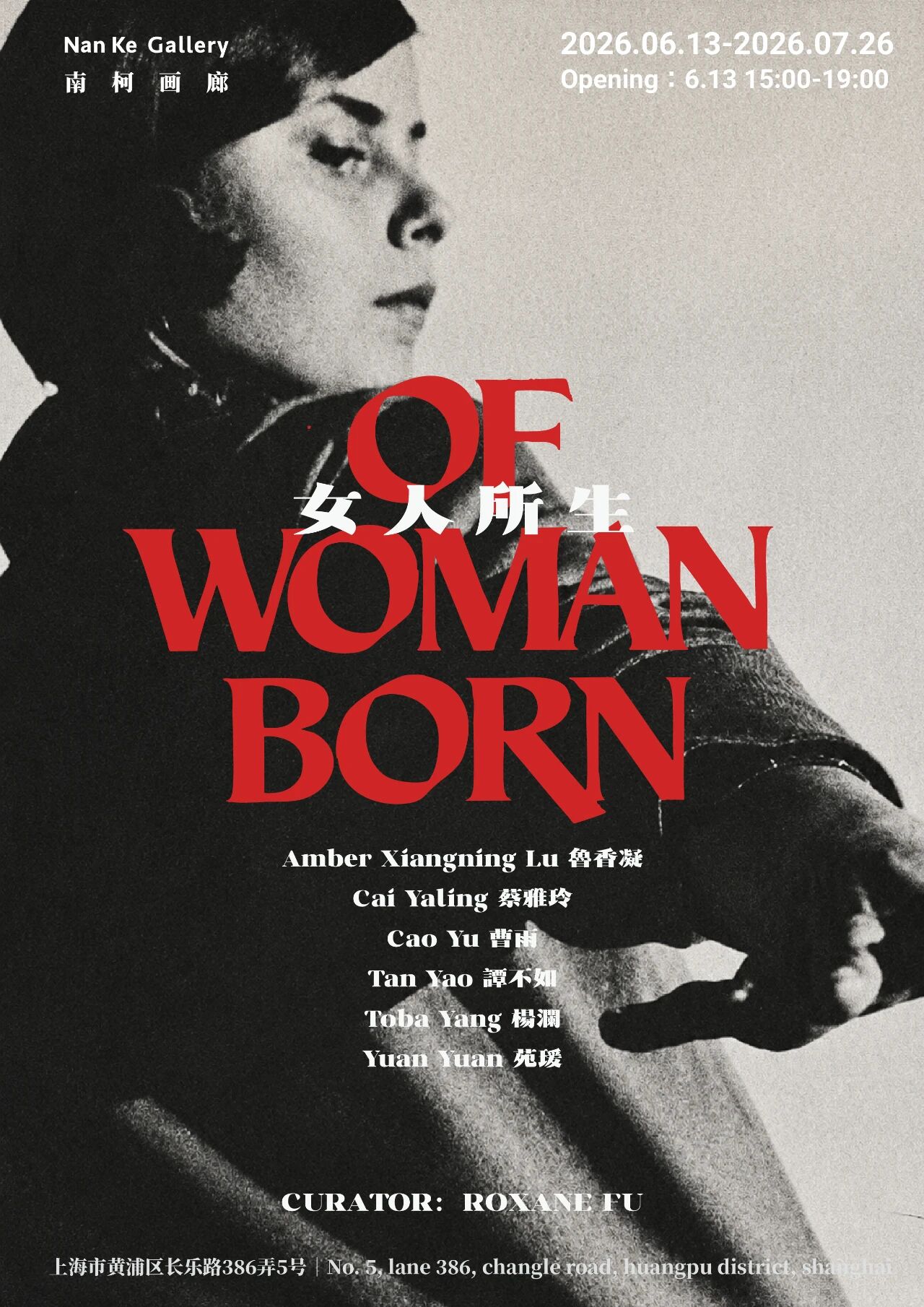

Nan Ke Gallery is pleased to present Of Woman Born, a group exhibition bringing together the works of six artists who have experienced motherhood. Through their practices, the exhibition considers the tangible ways in which becoming a mother reshapes an individual life. The exhibition takes its title from Adrienne Rich’s 1976 book Of Woman Born. It was America in the 1970s. Soap operas and automobile commercials flickered endlessly across television screens. Second-wave feminism was taking shape in universities and on city streets. The future seemed to arrive daily, propelled by technological optimism, consumer abundance, and the promise of progress. Yet many women—more precisely, many mothers—remained absent from these narratives of advancement. They stayed in suburban houses through the long afternoons, caring for children, preparing meals, and inhabiting forms of labor so ordinary as to become nearly invisible.
Adrienne Rich married in 1953 and gave birth to three sons. As a pioneering scholar and an introspective poet, she often found herself caught between her own sense of self and the role of “mother” as it was understood in her time. In photographs from her early marriage, she appears with thick dark curls, deep-set eyes, and a straight nose, carrying something of the composure associated with old European families. Knee-length skirts, pearl earrings, and sensible shoes made her look like the wife of a university professor from the years before Mad Men. It was beneath this seemingly familiar image that she began to think. There, she wrote the opening words of the book: “All human life on the planet is born of woman.”


As a phrase built from the simplest of facts, of woman born almost immediately calls to mind the witches’ prophecy in Shakespeare’s Macbeth: “...for none of woman born shall harm Macbeth.” Yet outside Dunsinane Castle, when Macduff finally confronts Macbeth, he reveals the loophole upon which the prophecy depends. Raising his sword, he declares himself not “of woman born,” but “untimely ripped” from his mother’s womb. The epic hero emerges through an act of separation. The price, however, is that the mother recedes from view: no longer a subject in her own right, she becomes little more than the site through which the hero enters the world.
The echo is distant, yet persistent. Again and again, cultural narratives seem to suggest that individuality is achieved through departure from the maternal body, that history belongs to those who sever the tie, who step beyond it, who leave it behind. Why has human culture so often sought to forget the body from which it came? Writing the introduction to Of Woman Born, Rich punctures this illusion with language that is almost startling in its simplicity, nearly devoid of personal sentiment. She returns instead to a fact: “of woman born”, and so it is.
Reflecting on the intertwined experiences of her three pregnancies, Rich wrote: “As soon as I was visibly and clearly pregnant, I felt, for the first time in my adolescent and adult life, not guilty.” Every pause, every moment of idleness, every instance of doing nothing at all; every delay, every struggle, every perceived lack of accomplishment suddenly became permissible. Once pregnancy was known, these concerns seemed ordinary, eclipsed by the greater task of carrying a new life.
The boundaries that separate one human being from another—those formed by clothing, skin, and cellular membranes—grow less certain. The self becomes shared with another independent existence. Tan Yao’s Egg echoes this process. Gathered quietly together, the cluster resembles a miniature altar of sorts. It calls to mind seasonal offerings, ceremonial accumulations, and ancient imaginings of fertility and abundance. The crocheted eggs remain connected to one another, extending softly outward, recalling how every human life once unfolded slowly over the course of months within a woman’s body.
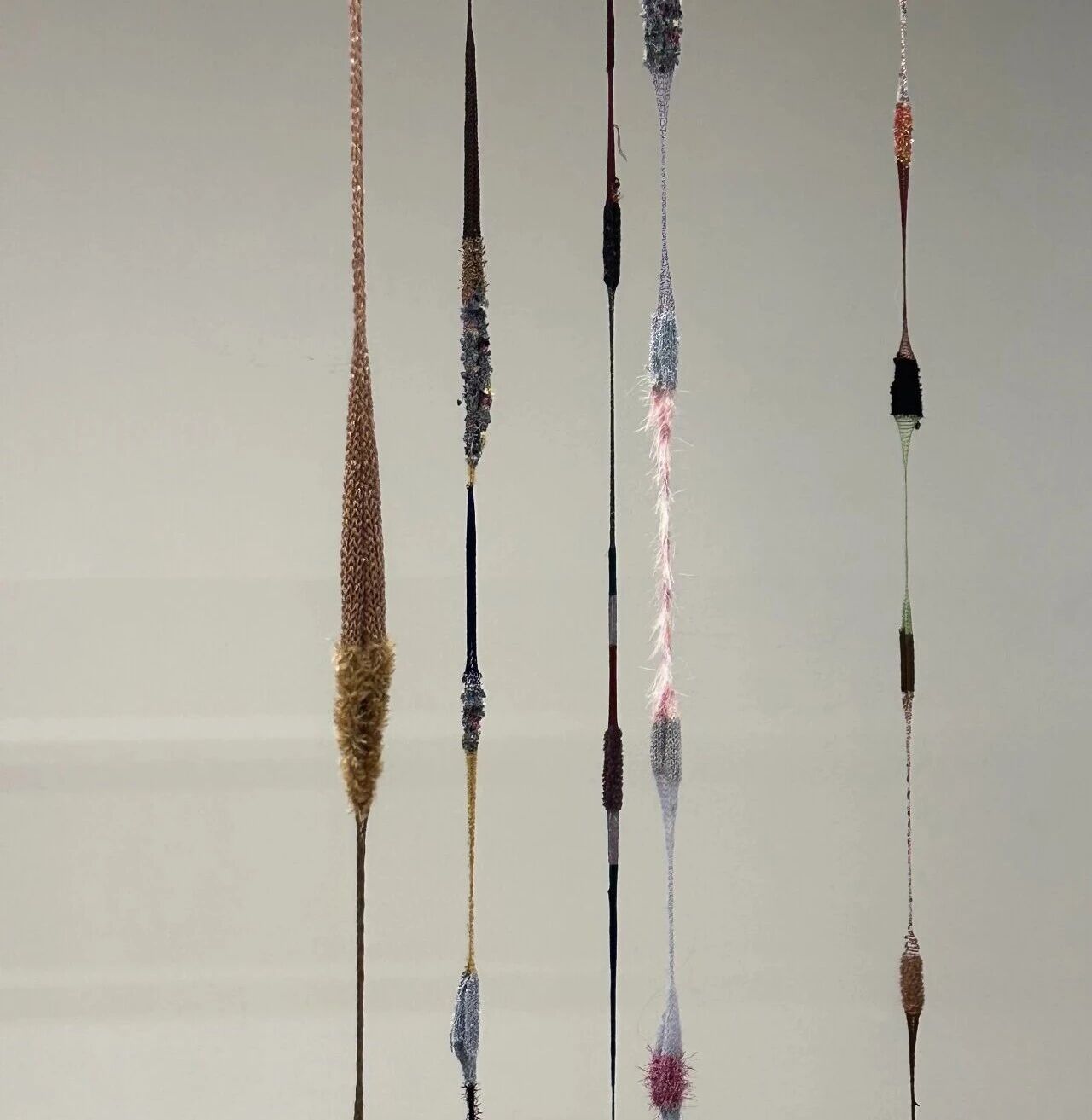

The kitchen is always full of things left unfinished. Empty milk bottles. Damp towels. Half a cup of cold coffee. Each small task seems negligible on its own. Love is not scarce, but precisely because it is so abundant, it can no longer be held in isolation. So she writes, “I love them, but the pain lies exactly in this vast and inescapable love.”
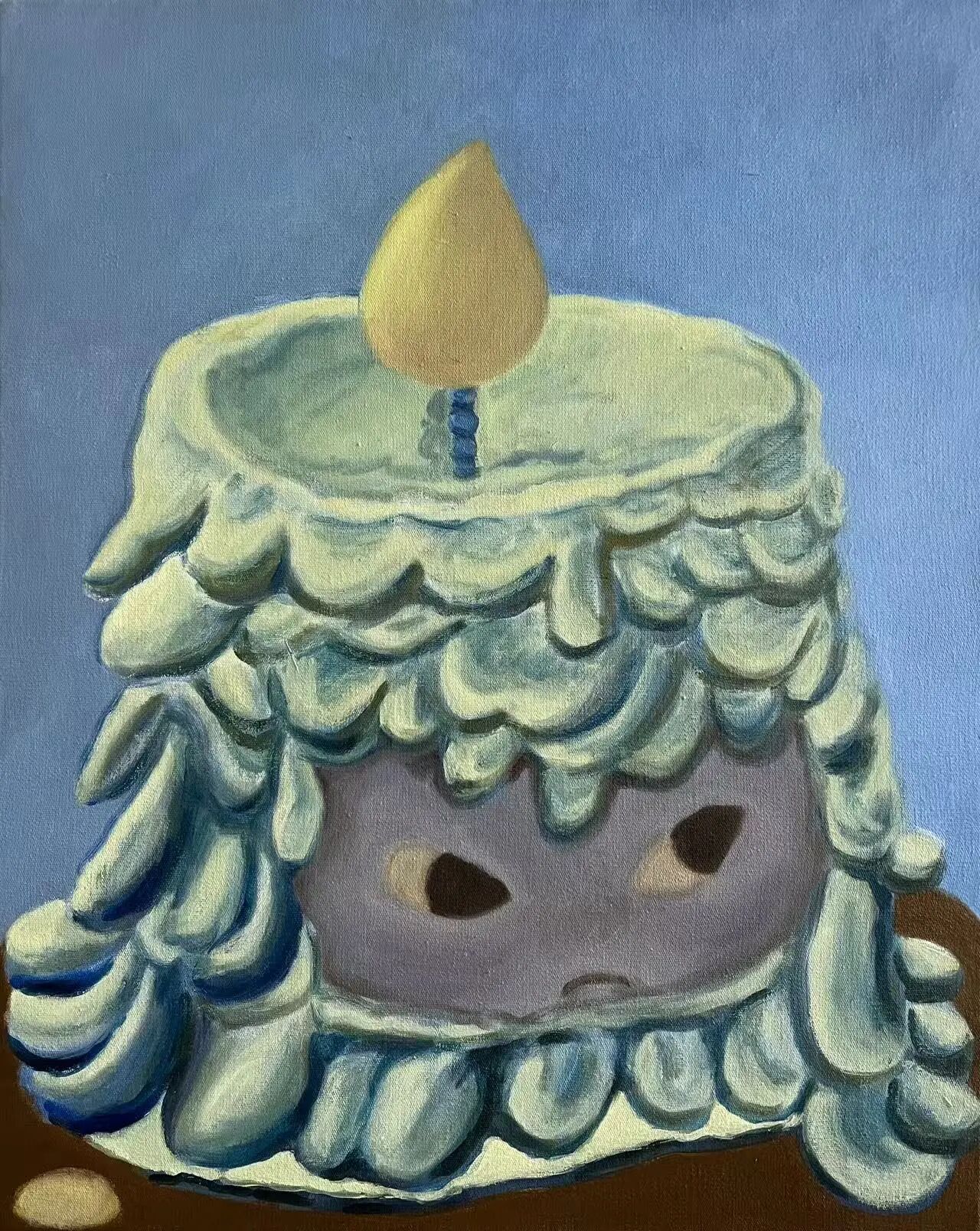
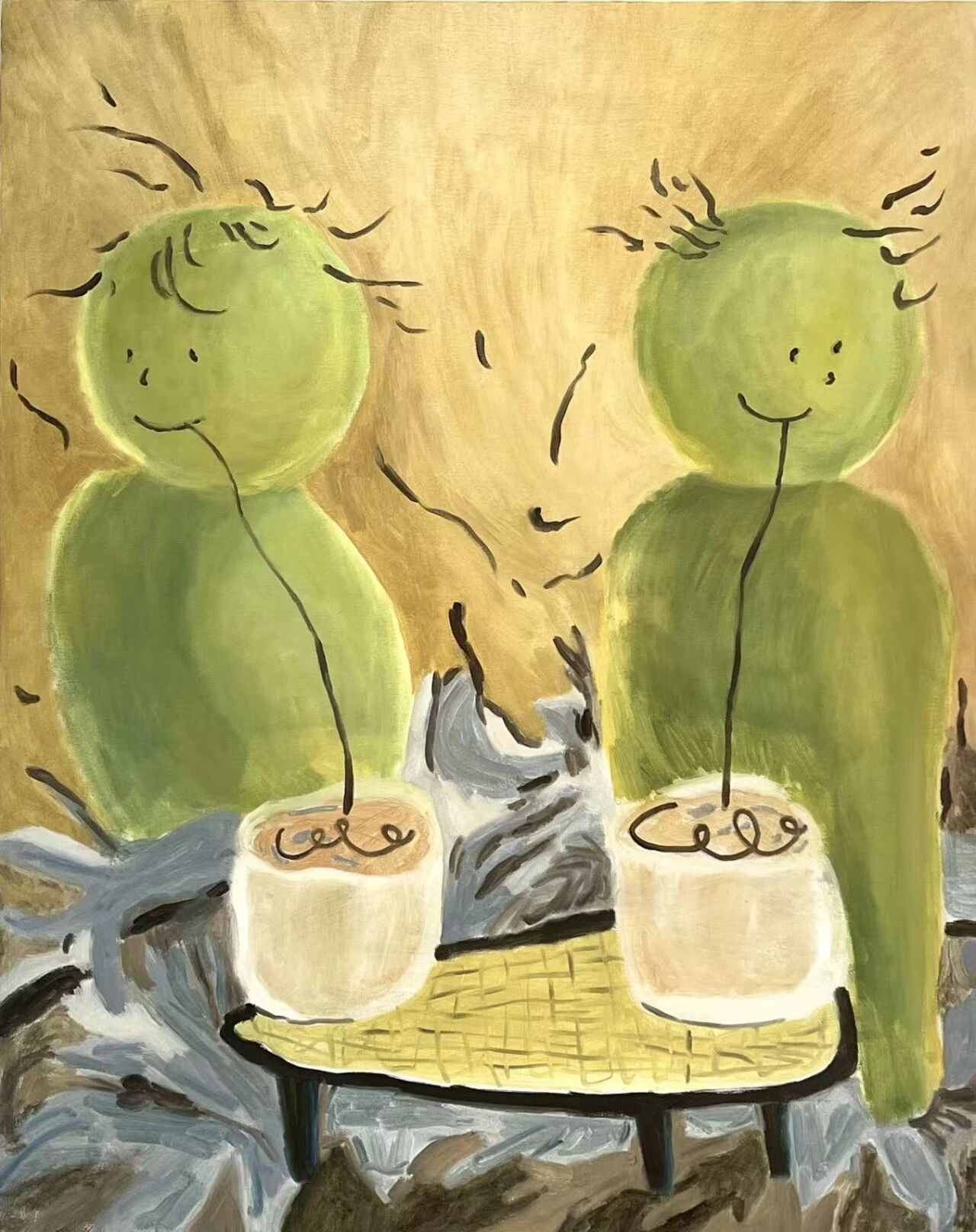
Toba Yang builds a world saturated with fantasy. Bright, candy-like colors fill the surface of the paintings, recalling the easy happiness of mothers and children together, the quiet warmth of bedtime stories read at night. And yet in Cake iii, as cream accumulates on the cake, gradually covering the body beneath it, duty itself becomes a kind of enclosing substance. The work remains playful at first glance, almost childlike, but underneath it carries a suffocating absurdity—being inside something that should be celebratory, and still finding it difficult to breathe. Conversely, Jus depicts a moment in which energy is restored through companionship. Constraint and delight become intertwined, much like two lives bound together.


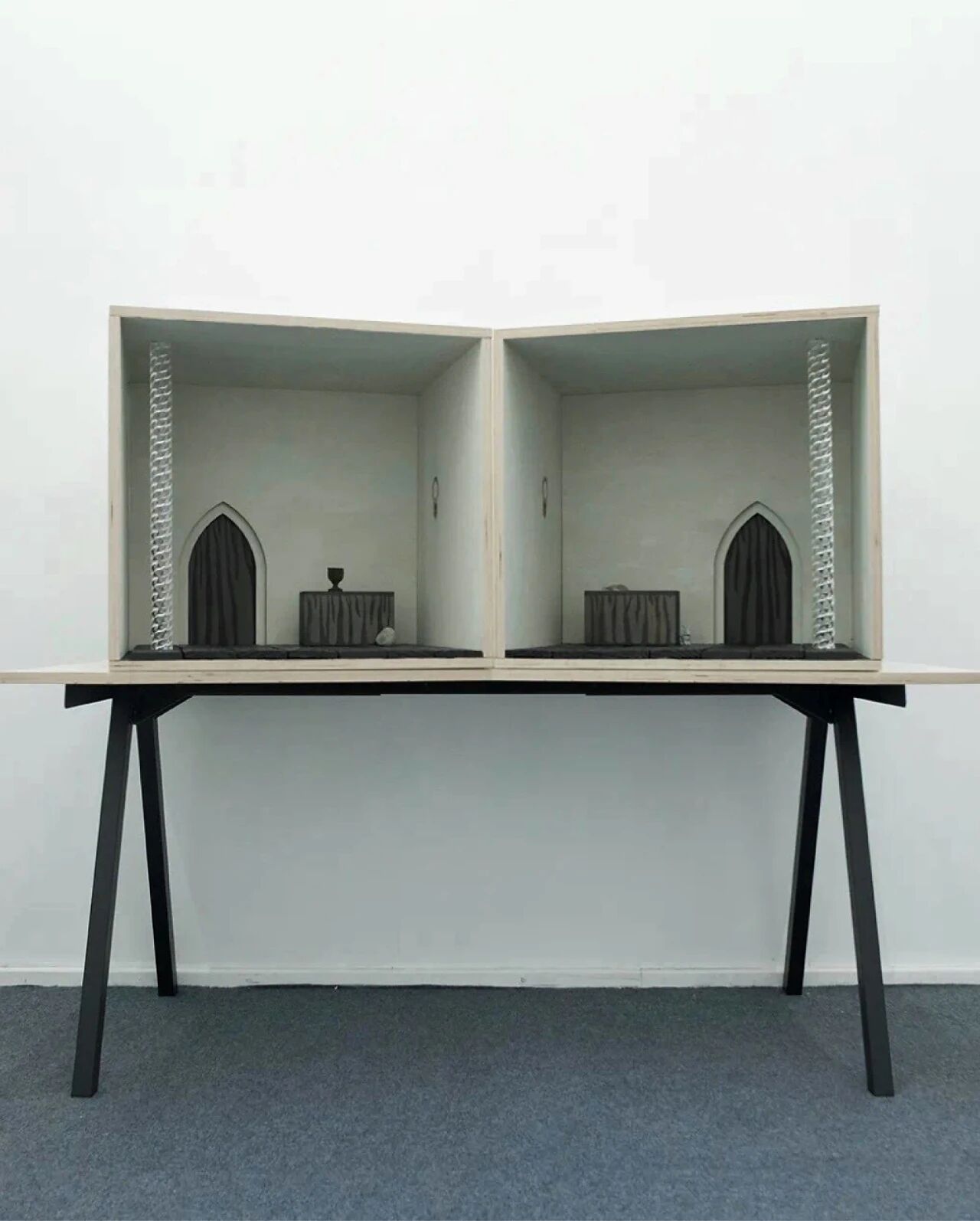
Amber Xiangning Lu’s practice opens up another mode of imagining. In Pair, she renders ceramic animal toys with a delicate precision, set within wooden frames that resemble window views—so that one might almost look through them into a carefully arranged, seemingly perfect domestic structure, only to sense the waiting and uncertainty embedded within it. Unsolved pushes the Gothic fiction of Edgar Allan Poe into a suspended, imaginary enclave. Through a system of symmetry, she constructs a narrative of her own making, a kind of speculative suspense held in balance. When the box-like structure is placed upon a plinth, it immediately calls to mind Virginia’s idea of “a room of one’s own.” The isolated tabletop becomes an enclave of maternal imagination, and at the same time, perhaps, the only form of freedom that can be fully claimed.

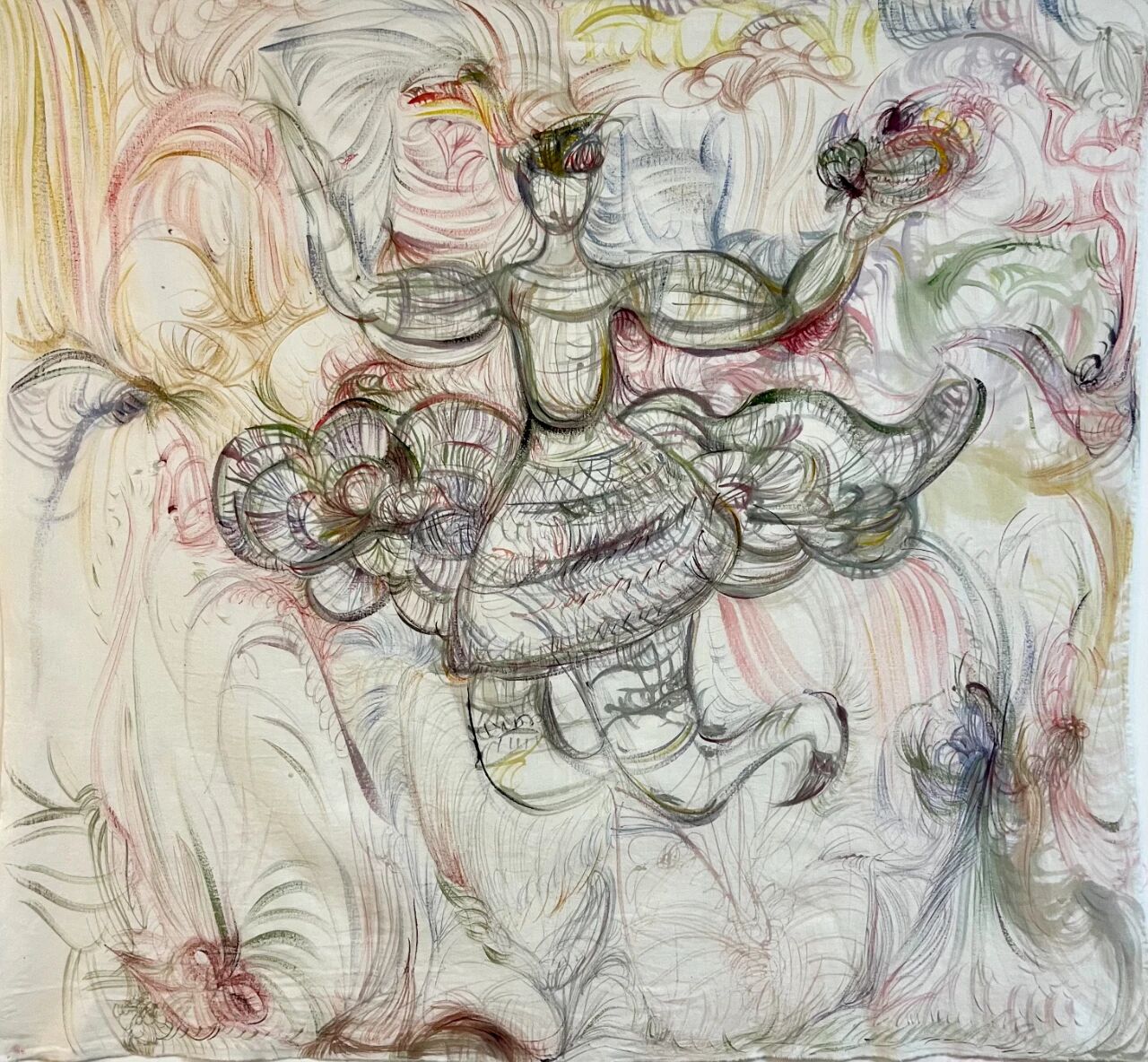
In recalling her mother, Adrienne writes, “Watching her scrub the floors, polish the silver, I understood both devotion and confinement. If I did not find my own path, I too would be swallowed by the same pattern.”Tan Yao’s series drawings Blade Blade Blade reads as another way of refracting the labour of motherhood. The materials she uses are drawn from the worn, used, and discarded textiles of domestic life: bedsheets, bath towels, handkerchiefs, mourning cloths left from funerals, cotton passed down from a grandmother, and various everyday fabrics marked by time. These textiles once wrapped bodies, absorbed sweat, participated in care and farewell; and she turns her brush into a blade, cutting into them again and again, rendering—through a manuscript-like drawing gesture—the myths embedded in the everyday: death and survival, memory and separation, fate and a kind of quiet sublimity.


Twenty years later, as Adrienne’s husband has died, her children have grown, and the collected essays she has written are on the verge of publication, a change in her appearance has become impossible to ignore. In old photographs, her hair is slightly disheveled, her gaze gentle yet firm. The carefully tailored suits of her earlier years have gradually given way to loose knitwear and corduroy jackets. The classic image of the American middle-class wife has fallen away, leaving her looking, as she herself once put it, “walking into a room as yourself, not as someone’s mother, or someone’s wife.”


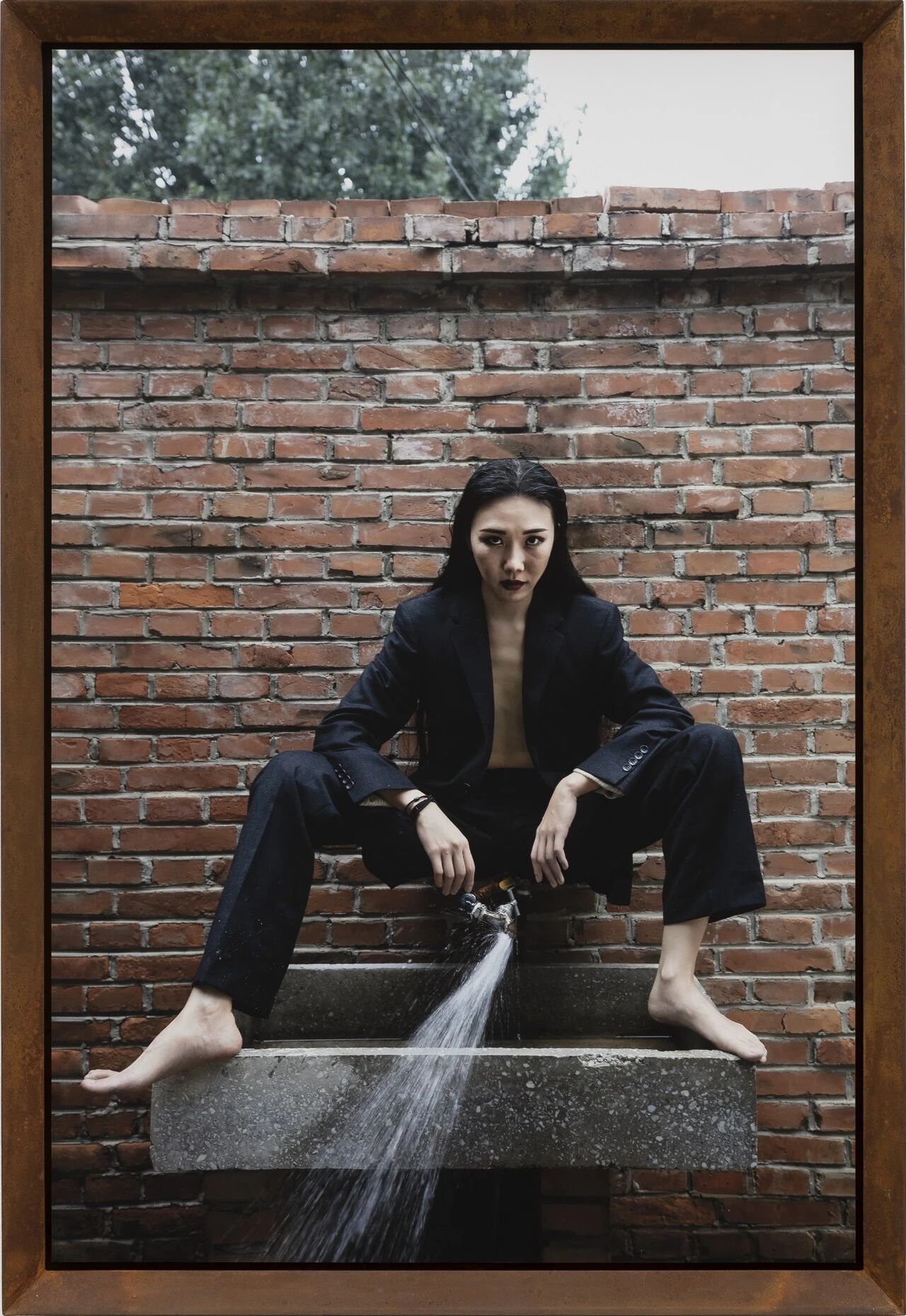
For a mother, the body is both a temple of creation and a projection of the self; in the absence of greater support or restraint from the outside world, it becomes the most direct and instinctive site of resistance. This same spirit flickers through the work of Cao Yu. Her photographic work Dragon Head occupies almost an entire room of its own, generating an overwhelming sense of pressure and confrontation. In the image, she sits proudly atop a faucet, dressed in a tailored suit. The strictness of her attire is undone by the unruliness of her posture. With her head lowered yet her gaze cast upward against the expected direction, she looks at the viewer with cool scrutiny, reversing her position from one who is admired and objectified to one who observes and judges. Beneath the damaged faucet, water bursts forth in every direction, erupting with a primordial vitality—surging recklessly forward, toward the faces of all who stand before it, and outward into the distance.

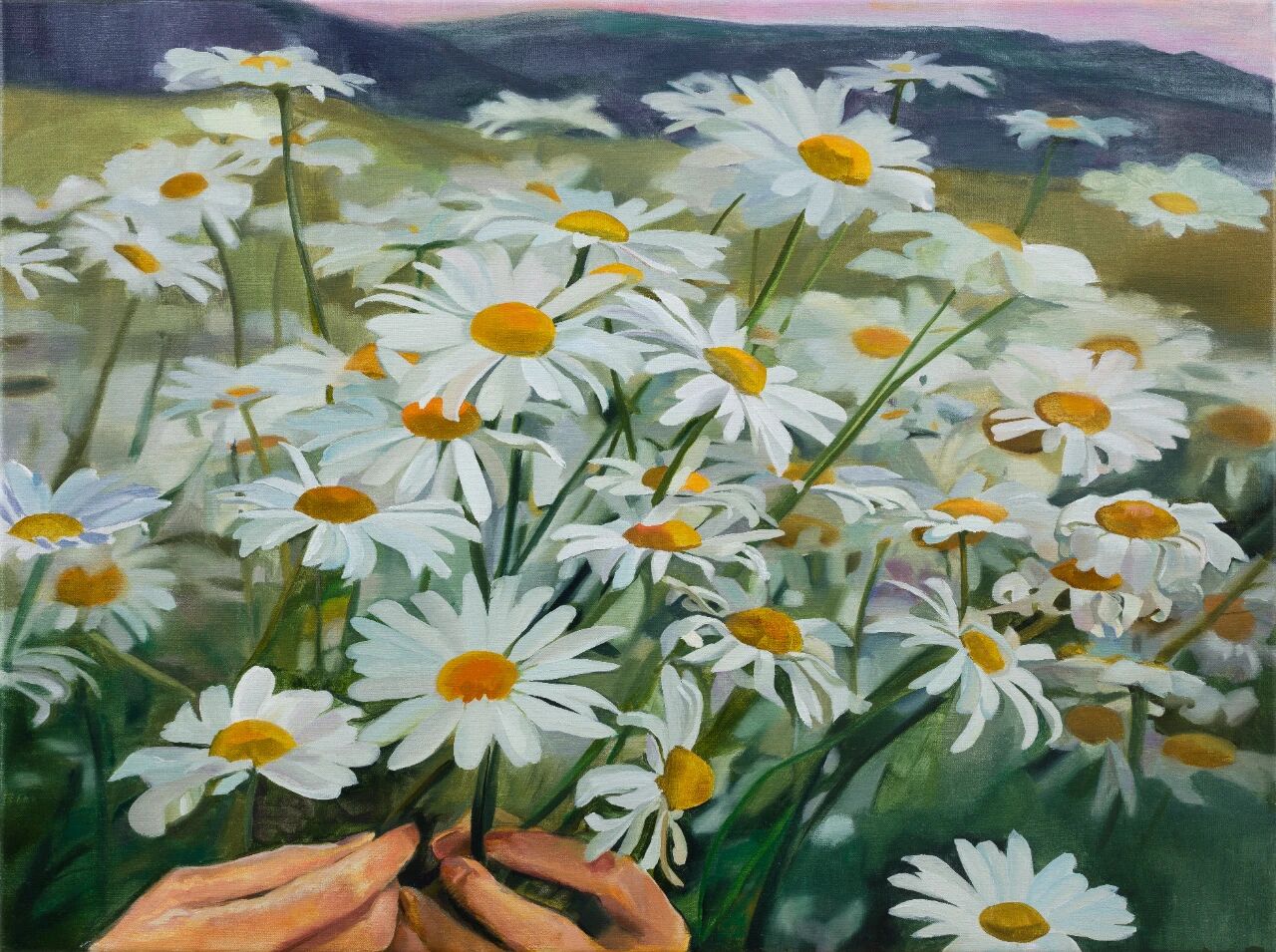
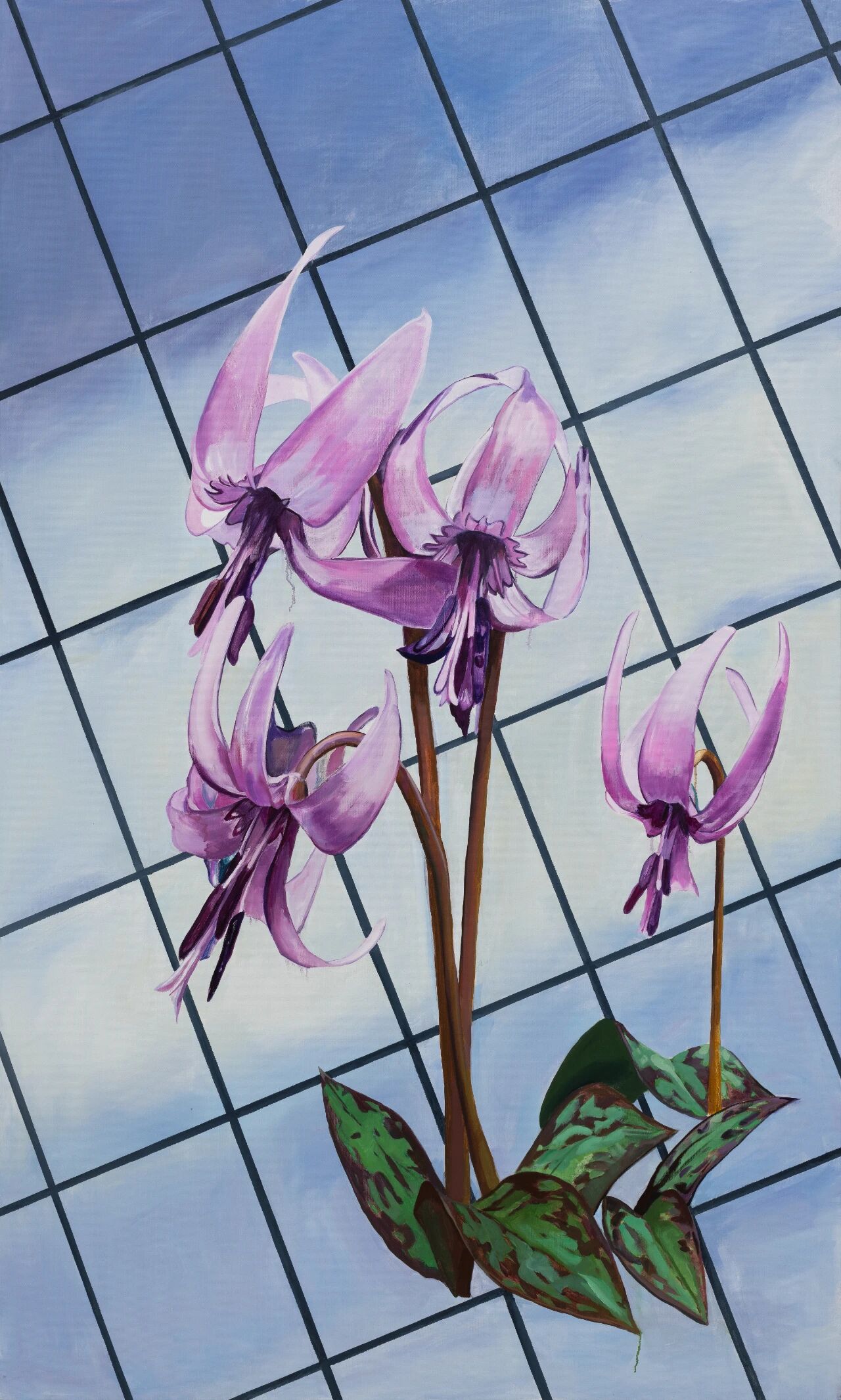
Water is both the source of life and the ground of self-creation. In this sense, what Adrienne calls “mothering” is no longer simply interchangeable with “Motherhood,” but instead foregrounds the convergence of an instinctual love and the individual drive toward self-realization. Yuan Yuan’s paintings similarly return to the question of the self. In External, a bouquet of vivid yet fragile flowers is confined within a sleek, modern glass façade, while a cold, mirror-like light fractures the surface, suggesting socially imposed roles suspended within invisible structures. In contrast, Flower Shadow and Daisy Mountain soften the register: she carefully traces the drifting forms of delicate petals in air, using the projection of a torso or the gesture of a hand in the corner to propose an image of co-existence with life, and an upward-striving hope of the self.



In recalling her own experience of pregnancy, Adrienne inevitably turns to the figure of her mother. She is Helen Jones Rich, a pianist who, after marriage, relinquished her career in order to devote herself to family; her father, by contrast, is a celebrated physician and scholar. This lineage leaves Adrienne’s feelings toward her mother deeply conflicted—an ocean of love and identification scattered with reefs of anger and fear. Later, she would name this tension matrophobia: the fear of becoming one’s mother, the fear that a highly gifted woman might once again be swallowed by the roles of “wife” and “mother.”
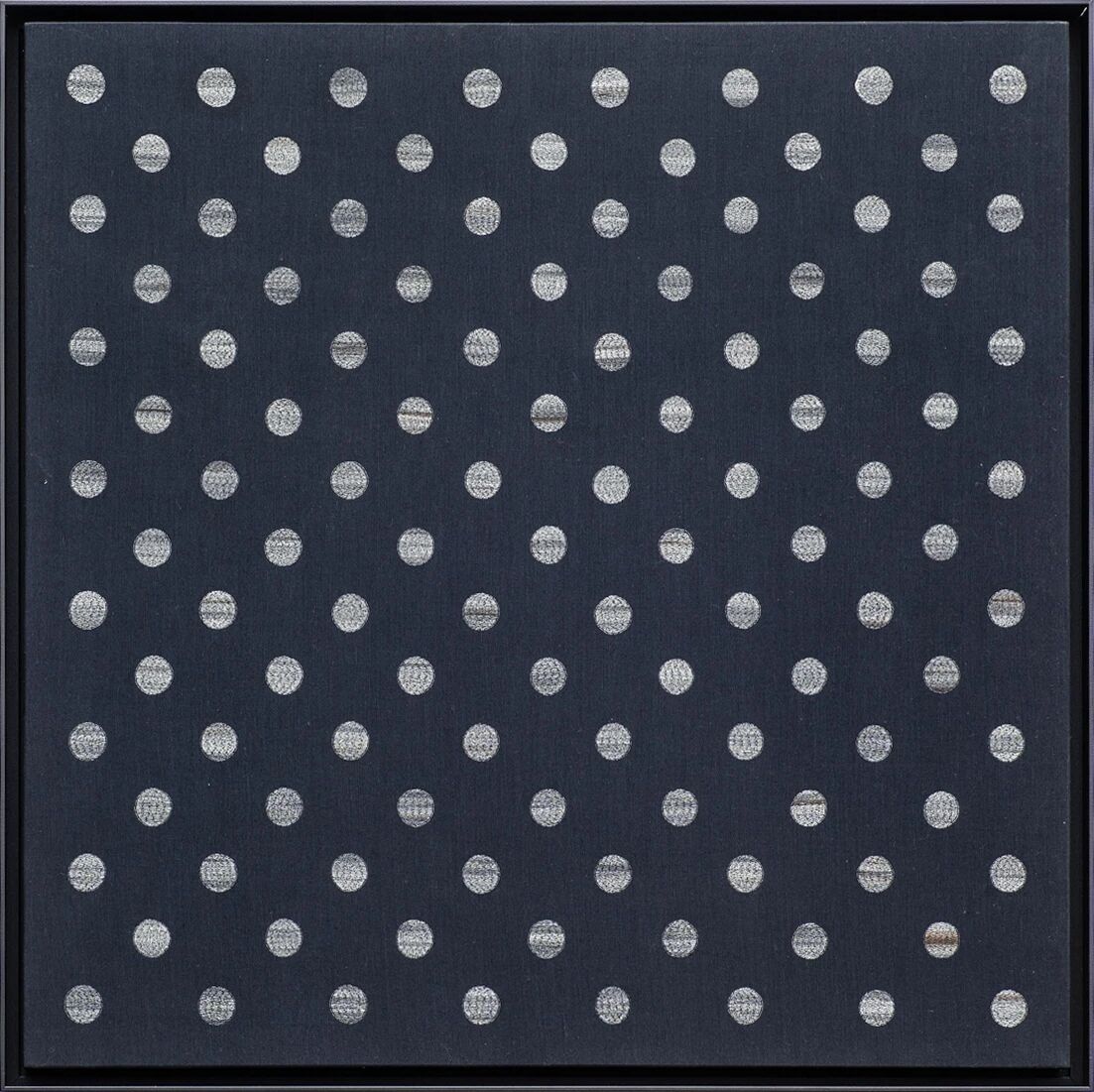
“None of us between us is only mother or daughter; we are both.” In Cai Yaling’s Polka Dot-White, she collects the strands of white hair her mother habitually pulls out and stitches them onto black fabric in the form of polka dots. The motif itself comes from a shirt her mother once brought back from Shanghai in her youth—a garment that once signified anticipation and the aesthetics of growing up. Now, however, the pattern is filled with the glint of silver hair, marking the passage of time within the mother’s body.

A mother’s mother—or, put differently, the previous mother. There is perhaps nothing in human experience more charged than the energy that circulates between two biologically mirrored bodies: one once resting safely within the other, the other having labored to bring it into being. Here, intimacy and estrangement are not opposites but coextensive conditions. As Adrienne moves through pages saturated with progressive thought, she remembers thinking, “I must become another kind of woman.” And yet, inevitably, understanding arrives with time, and she comes to admit, “Every woman carries her mother, even in rebellion.”


“What we know is in fact far more than what we are allowed to know.” In the final chapter of her collected essays, Adrienne writes of how the book was composed in fragments—between the hours when her children were at school or asleep, in the corners of kitchens, studies, and living rooms. It was there that she completed her first work devoted to “the mother” as its central subject.
In 1976, when Of Woman Born was published, Adrienne Rich was forty-six years old, and her three sons were entering adolescence and young adulthood. Half a century later, this exhibition seeks to recall that pivotal moment—not as a form of triumphant celebration, but as a quiet confrontation with the realities of motherhood. It offers a way of looking that is not driven by resolution or purpose, but instead attends, without agenda, to the lived conditions of mothers, and to the decision—at once ordinary and irreversible—to become one.
"To my own mother,
and all those who have bravely chosen to mother."
text by Roxane Fu
