
Muhan Wu’s installation practice begins with objects and structures, focusing on the shifting relationship between creation and production. Working with industrial products and everyday materials, she dismantles, reassembles, and repositions them so that objects originally designed for function and efficiency are removed from their prescribed roles and placed into states that invite renewed observation and interpretation. Through structure itself, her works reveal how production, order, and control operate within contemporary contexts.
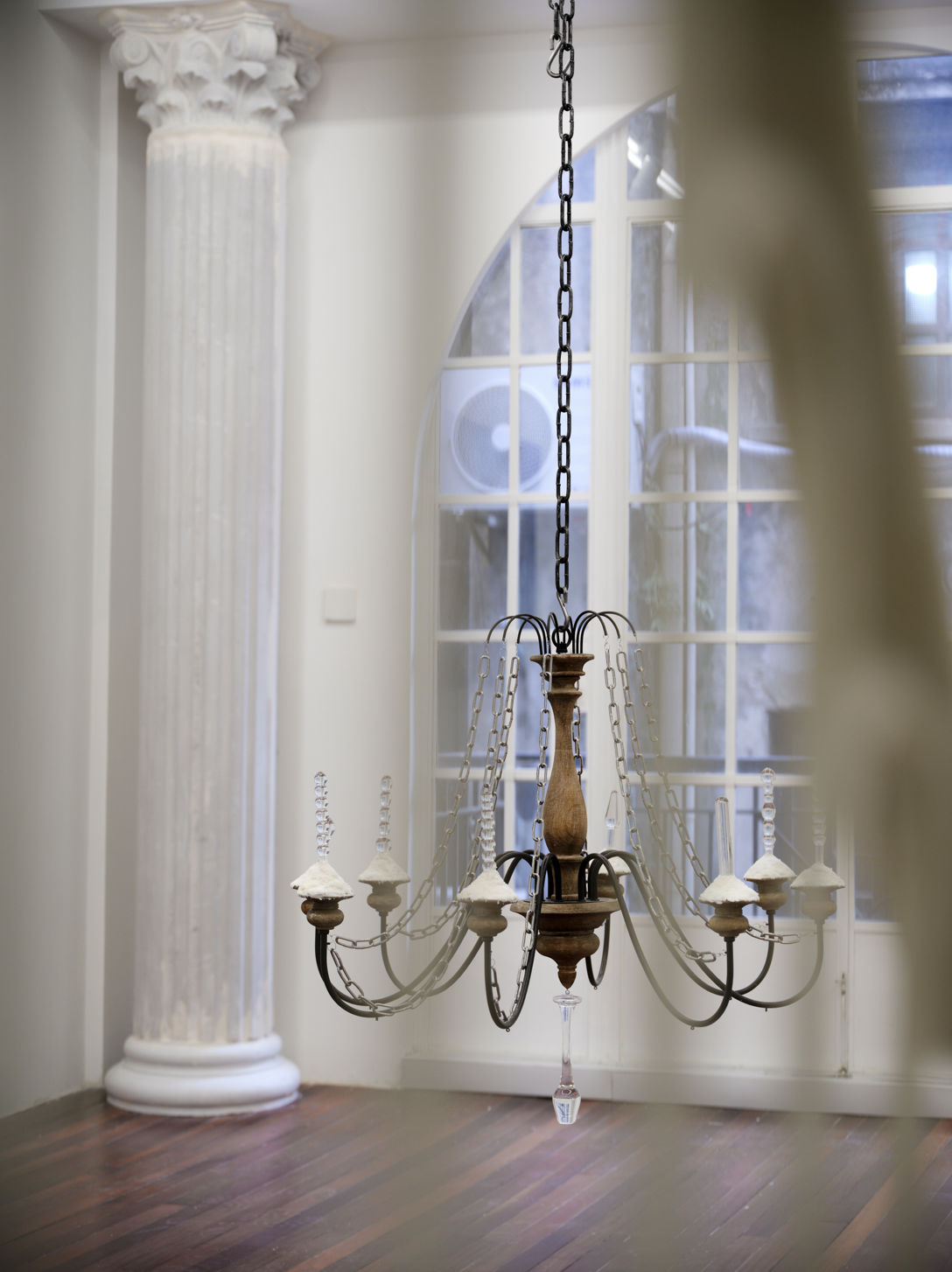
Installation view of 120 Days of Sodom, Jan. 10, 2026 - Mar. 8, 2026, Nan Ke Gallery, Shanghai, ©Courtesy of Nan Ke Gallery, Photographed by Runxin.
Wu graduated from the Public Art program at East China Normal University and currently lives and works in Shanghai. Her practice spans sculpture, installation, and spatial interventions. In recent years, she has exhibited in various galleries and institutions and has participated in projects such as the Annual Exhibition of Experimental Art in China and the Shanghai Jing’an International Sculpture Exhibition. Ongoing exhibition practice has shaped a body of work centered on structure, mechanics, and materiality, marking a gradual shift from a background in public art and design toward a more experimental language of contemporary installation.
Wu’s working method resembles a process of construction. Objects are moved, stacked, supported, or suspended in space, forming structures that appear stable yet remain on the verge of collapse. These configurations depend on the inherent weight, form, and mechanical properties of the materials, and therefore retain a fundamentally provisional character. For Wu, this dismantlable state is not a sign of incompleteness, but a deliberate loosening of the traditional sculptural ideal of permanence.
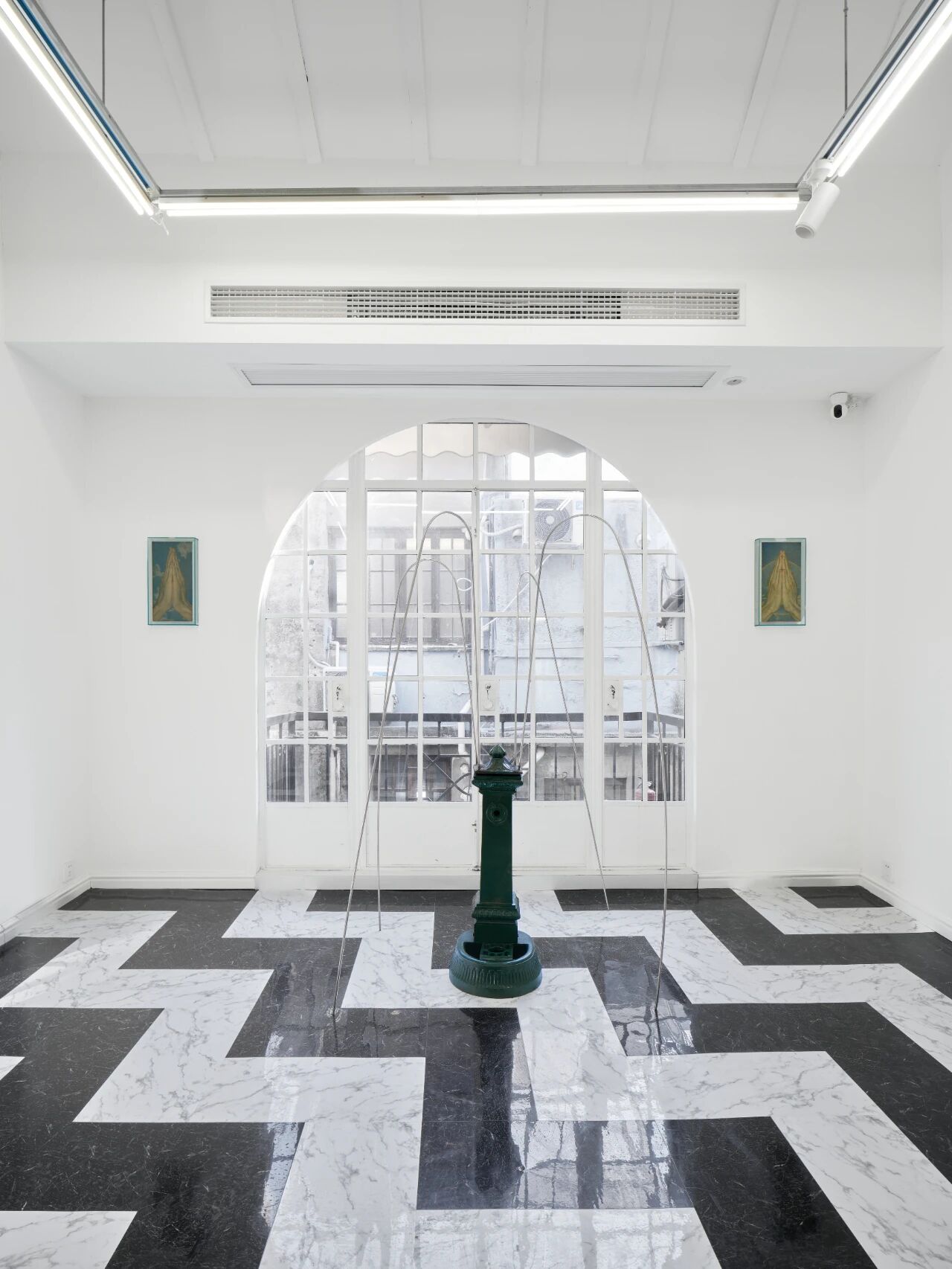
Muhan Wu
Myth,2025
Comprehensive material
200h x 100w x 100d cm
©Courtesy of the artist
作品探索了消费文化中“美”破裂的时刻,是悬挂在厅堂之眼的尖锐诘问。标题《修女》暗示了作品内在的戏剧性:一个从被规训的身体中“解放”或“剥离”出来的器官。它从不可见的规训中逃逸,转而以一种挑衅的姿态,进入公共视野的中心。一件形式上如同“献祭”或“供奉”的展示,其内容却是彻底的“亵渎”。这种张力精准地捕捉了作品批判的本质:那些被社会奉为神圣的秩序(家庭、宗教、高雅审美),其建立基础可能正是对某些真实、基本生命需求的系统性压抑与贬低。
The work investigates moments in which “beauty” fractures within consumer culture, operating as a sharp interrogation suspended at the eye of the exhibition space. The title Nun alludes to the work’s inherent theatricality: an organ that appears “liberated” or “extracted” from a disciplined body. Escaping from an invisible regime of control, it enters the center of public visibility in a deliberately provocative posture. While its presentation formally resembles an act of offering or sacrifice, its content constitutes a radical act of profanation. This tension precisely captures the critical thrust of the work: the social orders held to be sacred—family, religion, and ideals of refined taste—may in fact be founded upon the systematic repression and devaluation of certain fundamental and embodied human needs.
Formally, her works often exhibit clear geometric relationships. Points, lines, and planes are repeatedly employed, visually echoing mechanical devices and industrial frameworks. Within this rational structure, however, the materials themselves often carry qualities of coldness, fragility, or latent danger. Discarded and aged found objects are reactivated, preserving traces of use and time, and placing the structure in a state of tension—unfinished, yet continuously operative.
March 3, 2026
Related Exhibition

Related artist

1
of 85