
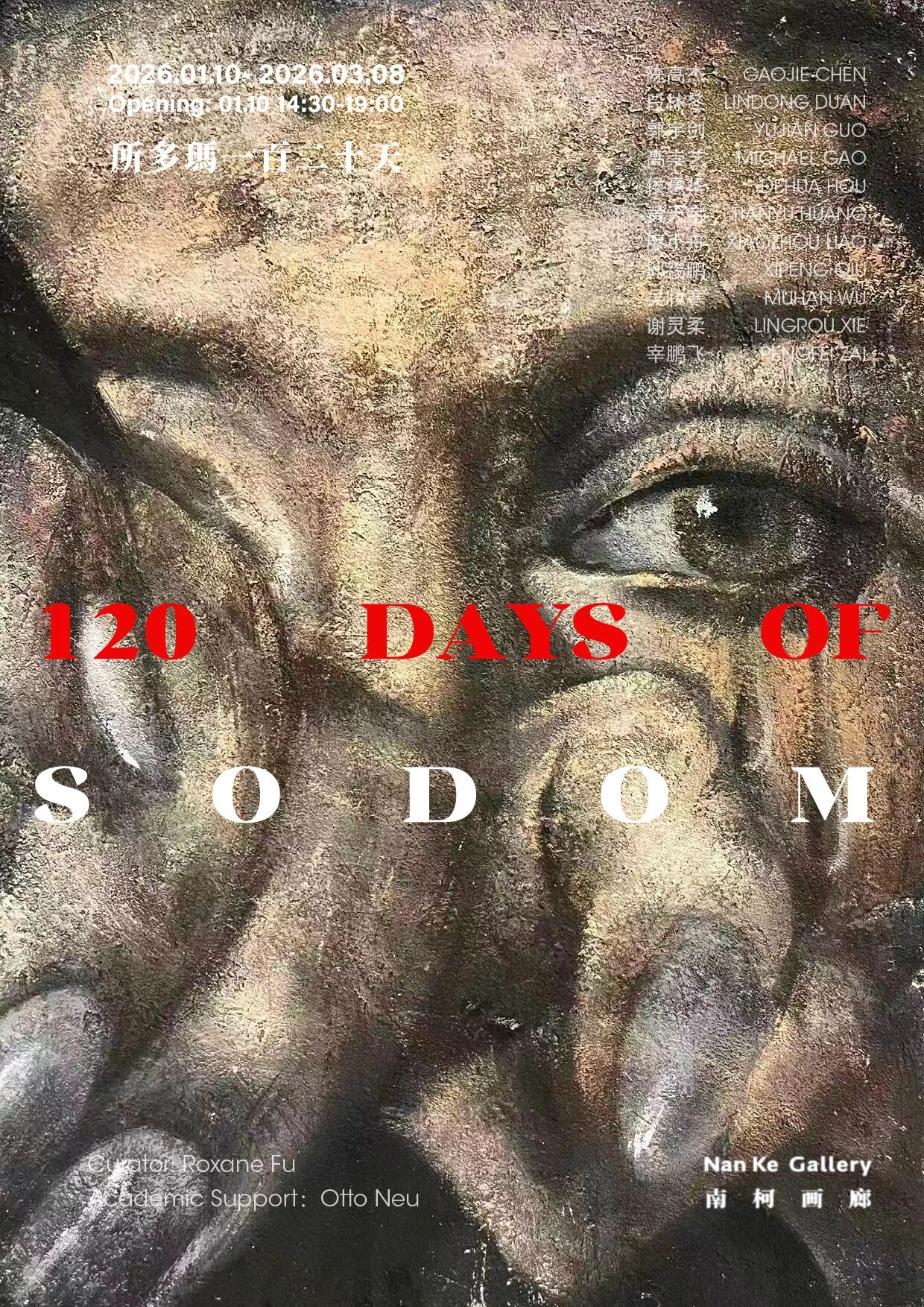
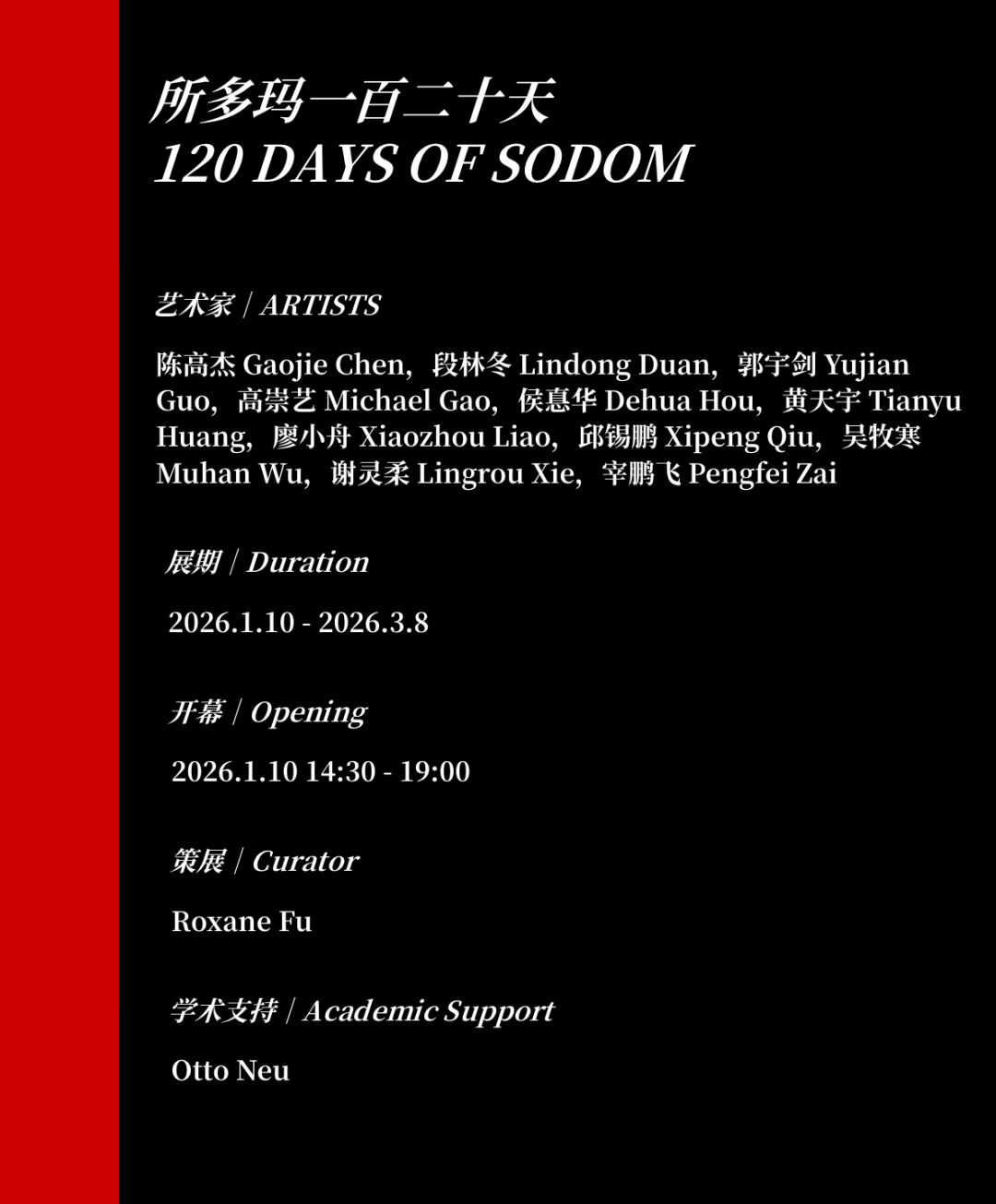
In the exhibition The 120 Days of Sodom, Xipeng Qiu’s paintings unfold through a gesture of inward return. His work shifts attention away from the surface narratives of desire and toward the low-frequency reverberations formed by time, mortality, and a sense of existence. As classical paradigms throughout the exhibition are pushed toward their extremes, becoming structures that bear power and impulse, Qiu’s paintings establish a counter-direction of viewing—one that draws the gaze back to layers of experience that have yet to be dissolved.
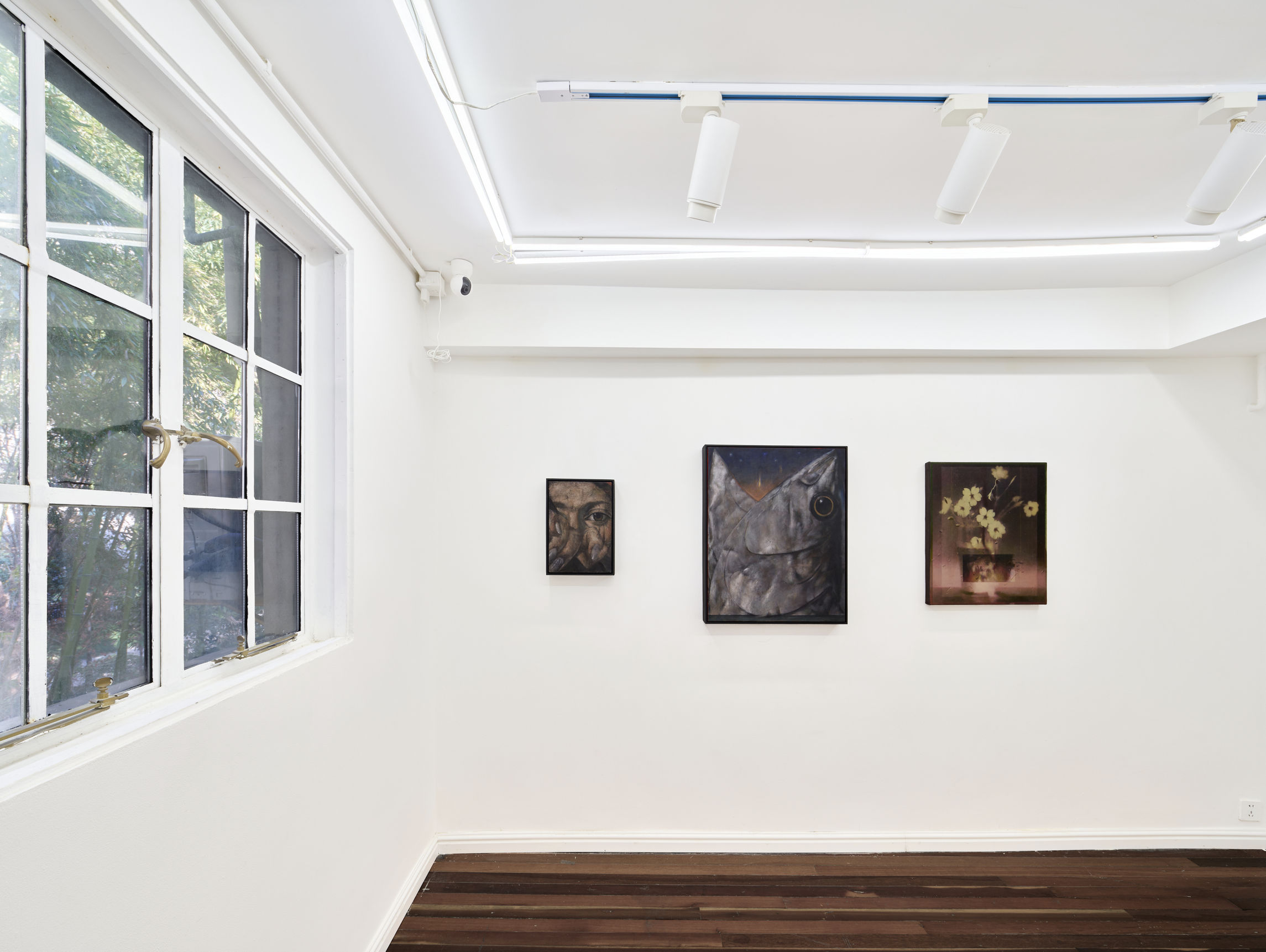
Installation view of 120 Days of Sodom, Jan. 10, 2026 - Mar. 8, 2026, Nan Ke Gallery, Shanghai, ©Courtesy of Nan Ke Gallery, Photographed by Runxin.
Xipeng Qiu was born in 1986 in Shandong. In a personal reflection, he recalls uncovering an ancient coin while digging in the soil of his hometown in Gaomi during childhood. The mottled rust and earth-stained patina of the object constituted his earliest aesthetic memory. In that moment, the surrounding world receded, and his body became fully absorbed in tactile contact with the object itself. This direct encounter with time formed an early point of orientation for his understanding of painting, remaining latent within his practice for many years.
This experience gradually resurfaced after his return to painting and led to a sustained engagement with tempera as a medium. As an image-making technique traceable to the first century, tempera carries within it accumulated layers of time and historical residue. Within a contemporary context, its slow and restrained process keeps images in a state of ongoing formation and sedimentation. For Qiu, tempera offers a way to work alongside history, allowing personal experience to be embedded within a longer temporal structure.
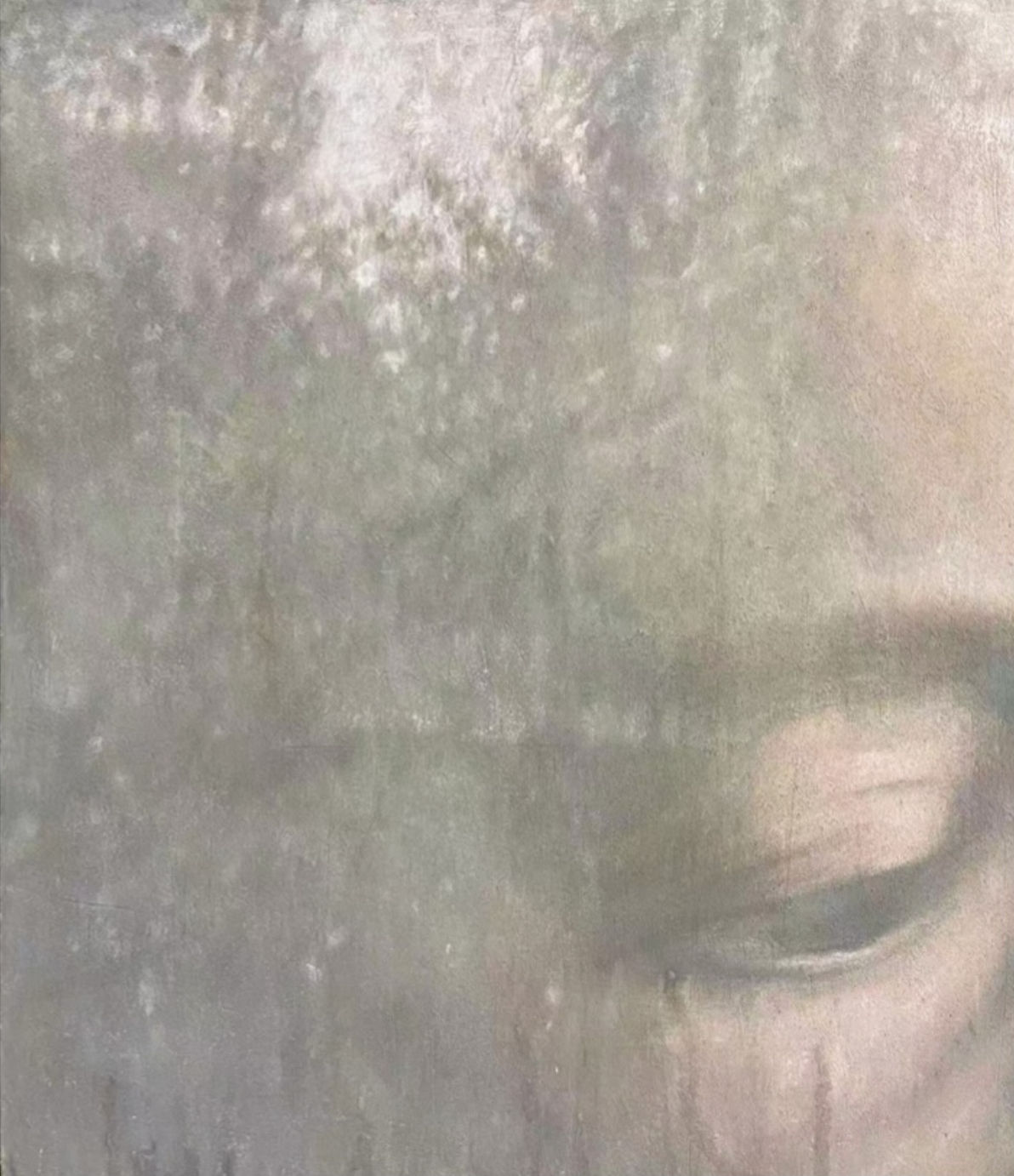
Xipeng Qiu
Myth, 2025
Tempera on wood panel
46h x 40w cm
©Courtesy of the artist
As a result, his paintings assume a composed and inward-looking presence. Figures, objects, and spaces are often held in a state of stillness, as if fixed within a fold of time. These images attend to the condition of remaining, of being present. Sensitivity to mortality and disappearance subtly shifts the scale of the everyday, guiding the act of viewing into a slow and sustained duration.
February 26, 2026

