
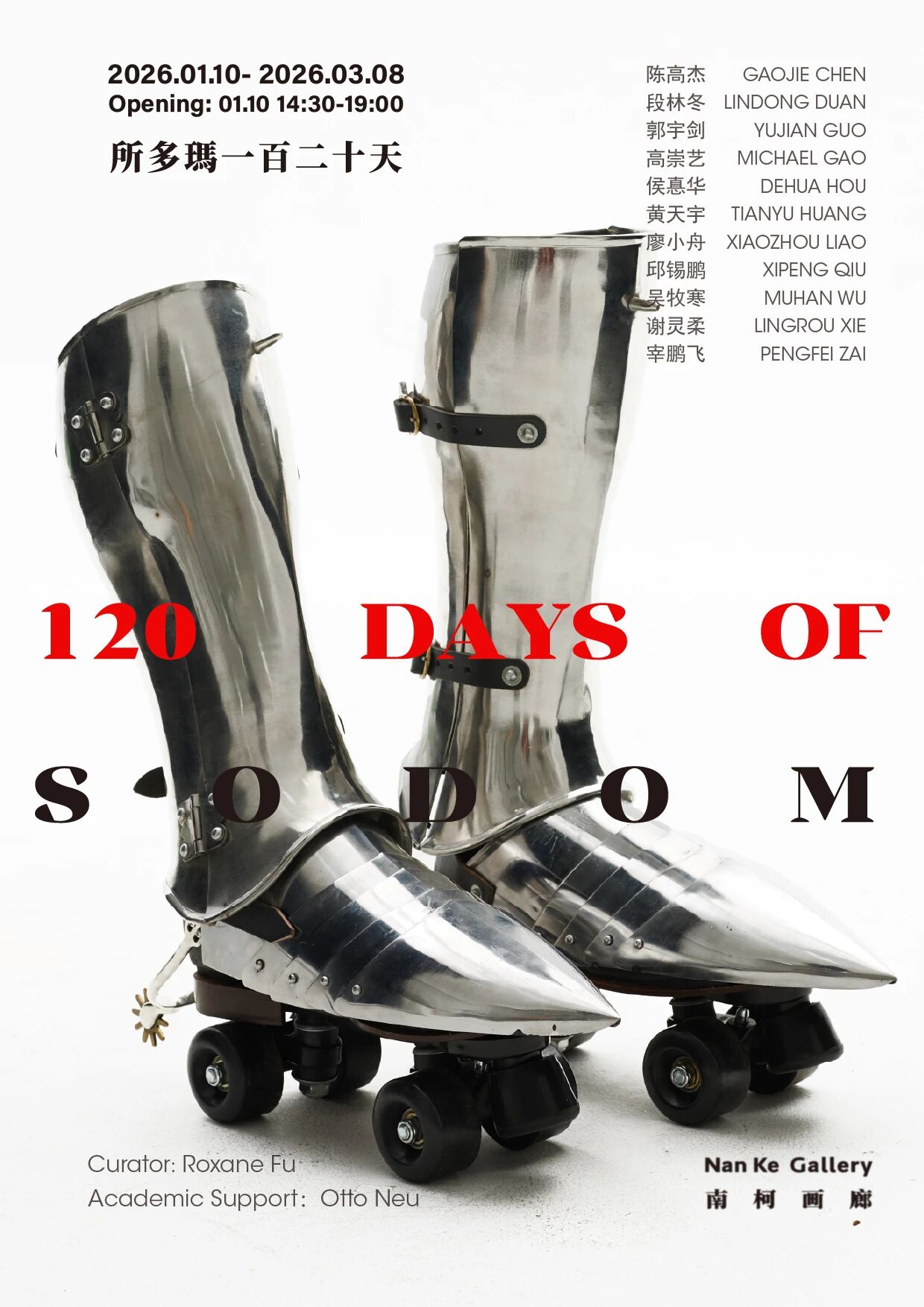
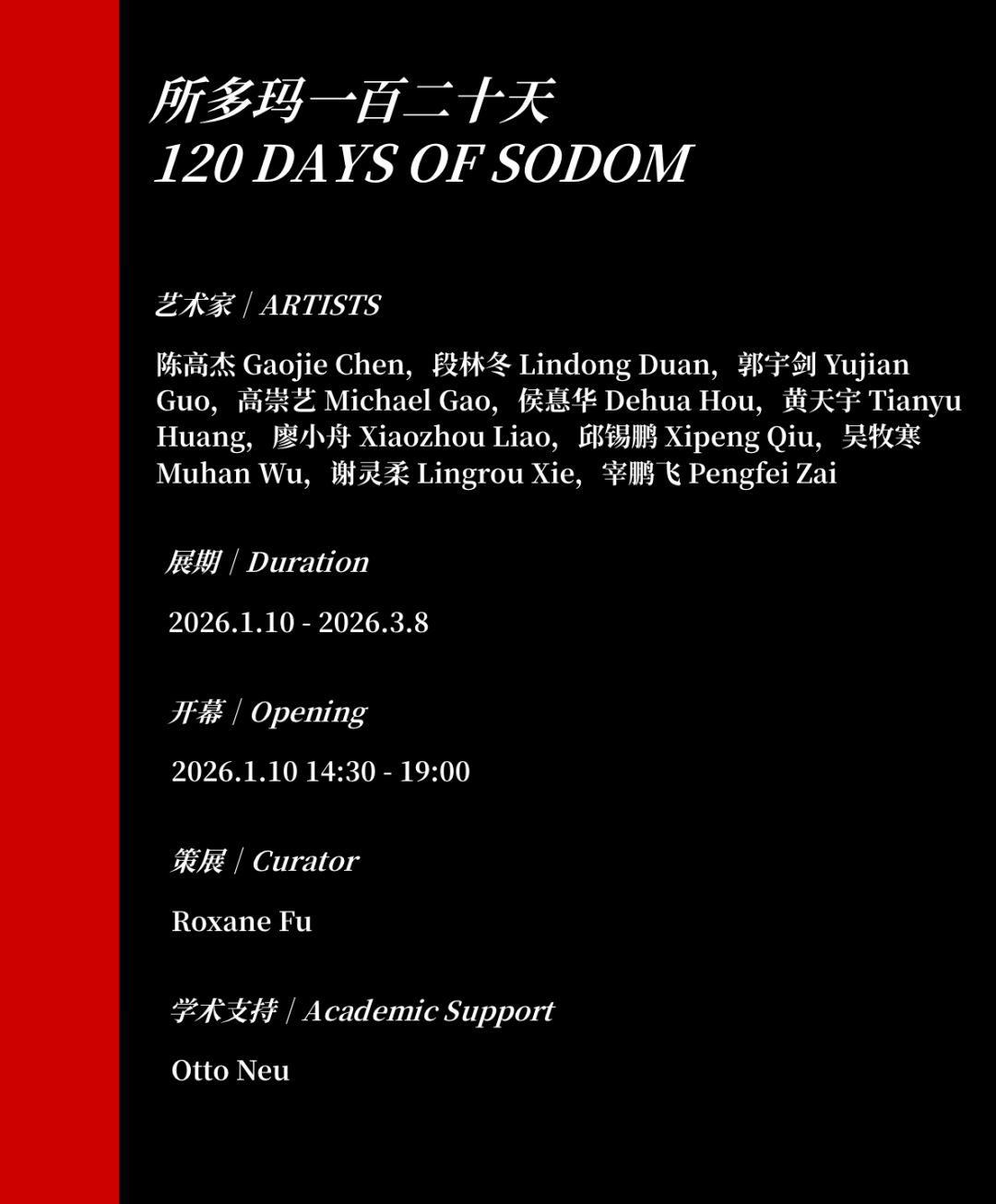
Xiaozhou Liao’s installation practice centers on how space is unfolded. Structure, objects, and pathways of viewing together constitute the work itself. Everyday materials are juxtaposed with theatrical language, forming spatial conditions that carry narrative tension while pointing directly to existing social and architectural structures. As viewers enter and move through the installations, their bodies become integral to the work; viewing is transformed into a process of being guided, constrained, and compelled to make judgments.
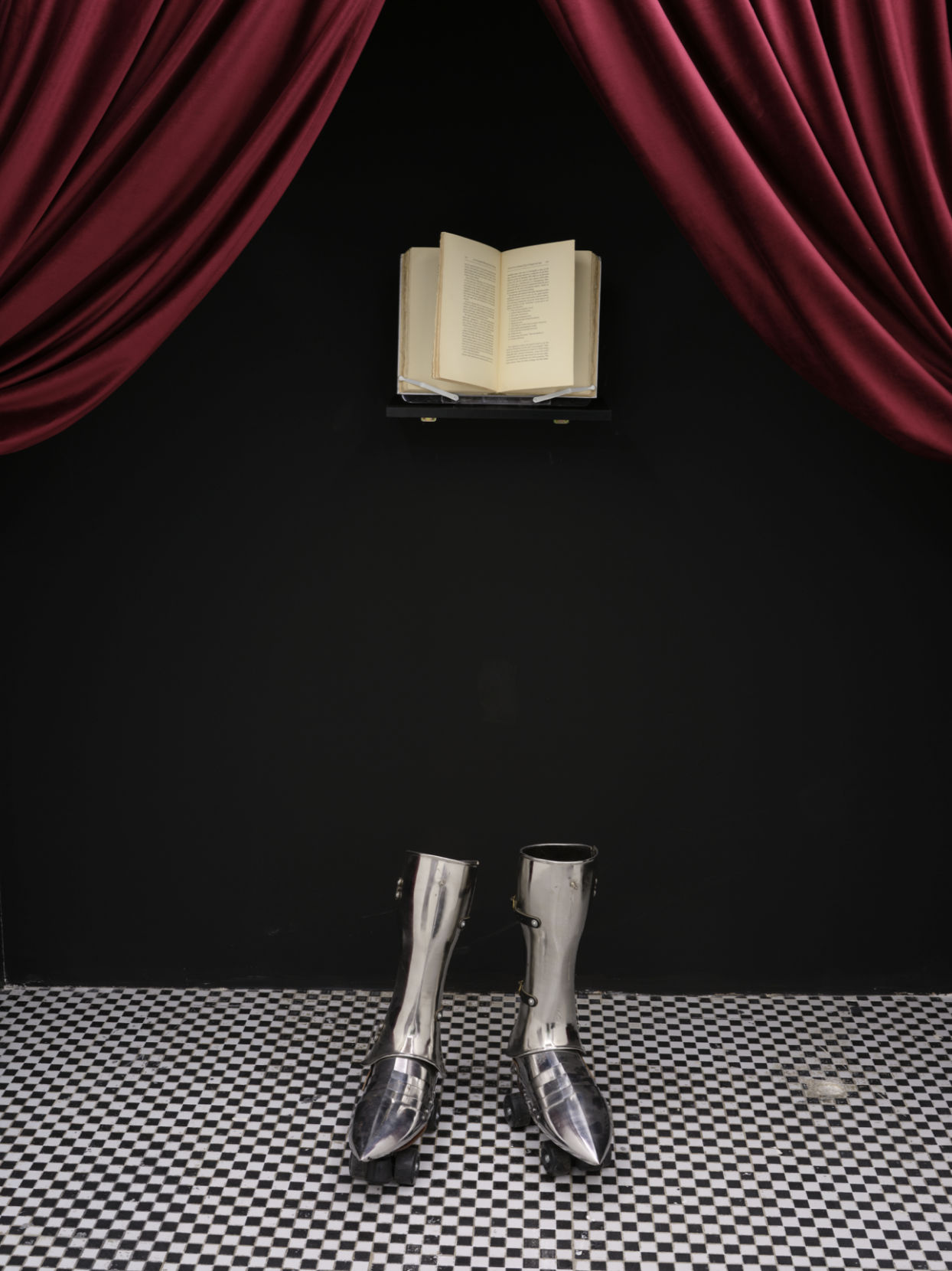
Installation view of 120 Days of Sodom, Jan. 10, 2026 - Mar. 8, 2026, Nan Ke Gallery, Shanghai, ©Courtesy of Nan Ke Gallery, Photographed by Runxin.
Born in Chengdu, Sichuan, in 1995, Xiaozhou Liao received his undergraduate training in stage design at the Central Academy of Drama and is currently studying sculpture at the Kunstakademie Düsseldorf under Alexandra Bircken. His early experience growing up within a cultural performance troupe fostered a sustained sensitivity to performative mechanisms, spatial orchestration, and the position of the body within constructed systems. This background informs his understanding of contemporary space—not as a neutral container, but as a system that continuously shapes individual behavior through structure, order, and functional distribution.
In his work, the everyday and the political are not treated as separate layers. Liao frequently brings together urban elements that appear functionally fixed, theatrical structures, and symbolic installations within the same space. This approach draws both from his understanding of “staging” in theater and from his prolonged observation of urban environments shaped by neoliberal logic—how display, efficiency, and control are naturalized, and how their fractures emerge through bodily experience.
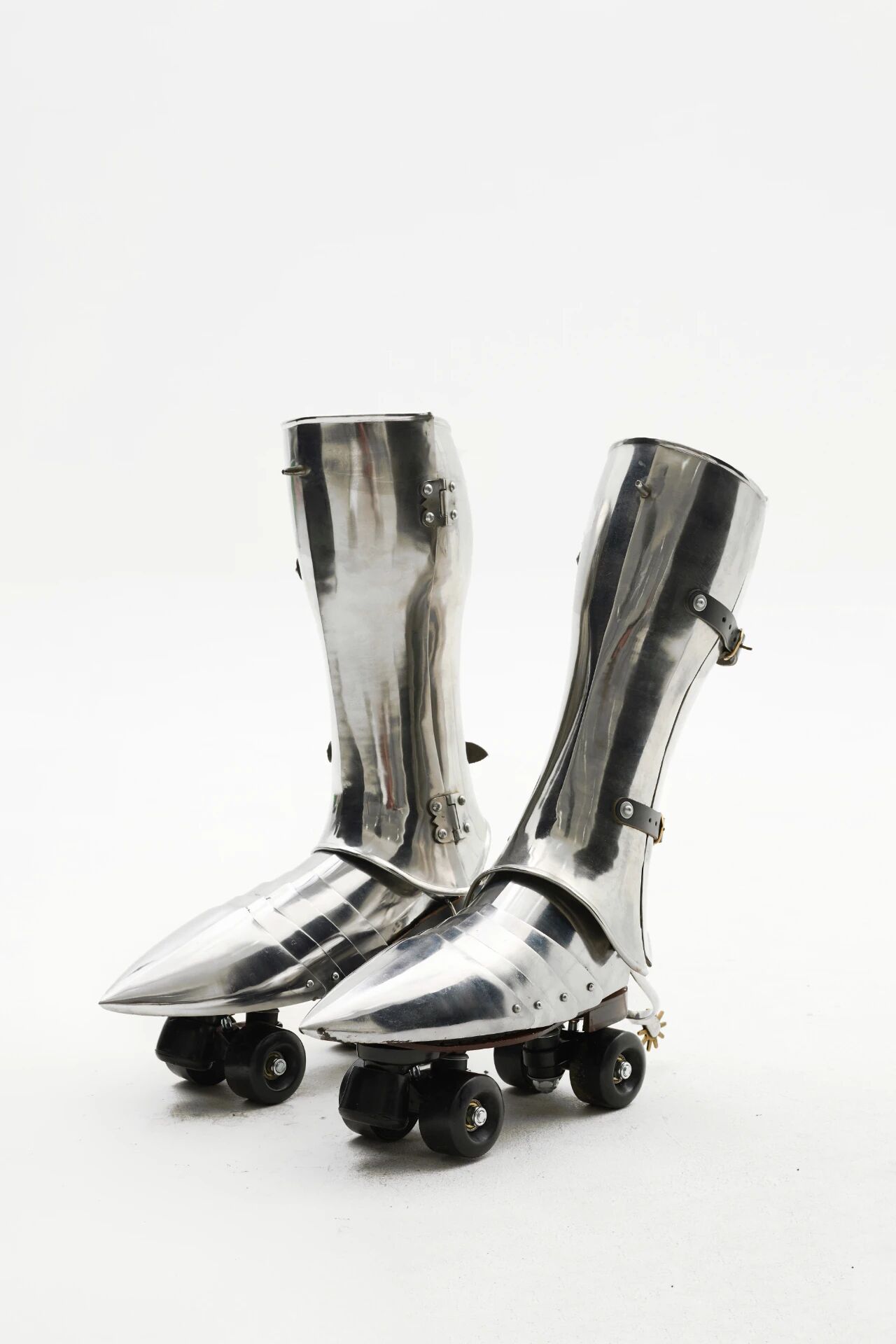
Xiaozhou Liao
The Spurs,2025
Stainless steel shoe armor, knight boots, roller skates, cowhide soles
50 x 50 x 40 cm
©Courtesy of the artist
Rather than pursuing visual chaos, his practice relies on precise structural arrangements to generate instability. As the relationship between installation and space gradually shifts during the act of viewing, seemingly stable orders reveal edges that can be unsettled. Theatricality thus appears as a restrained, delayed tension, allowing space itself to remain in a state of continuous operation.
February 8, 2026