

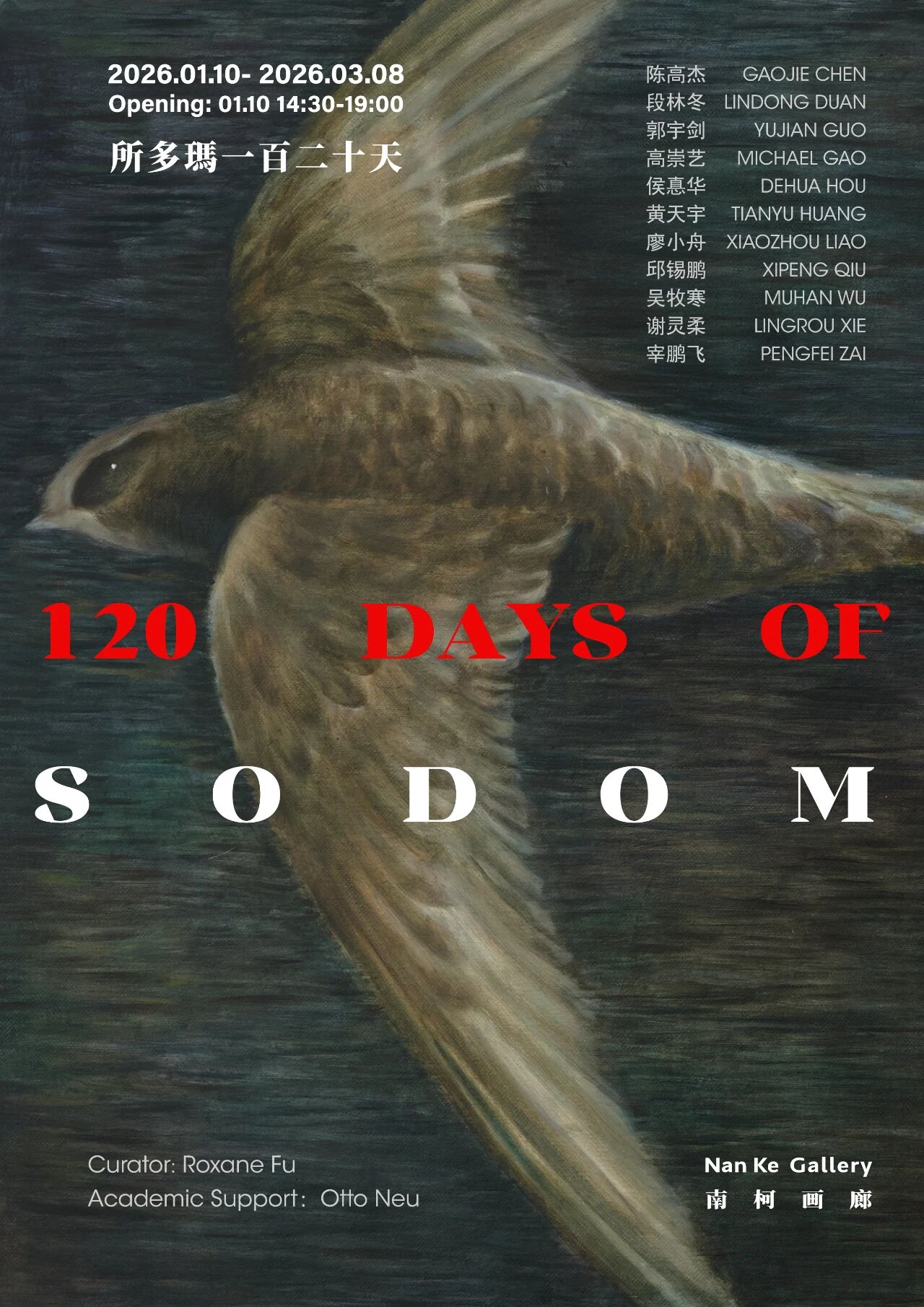
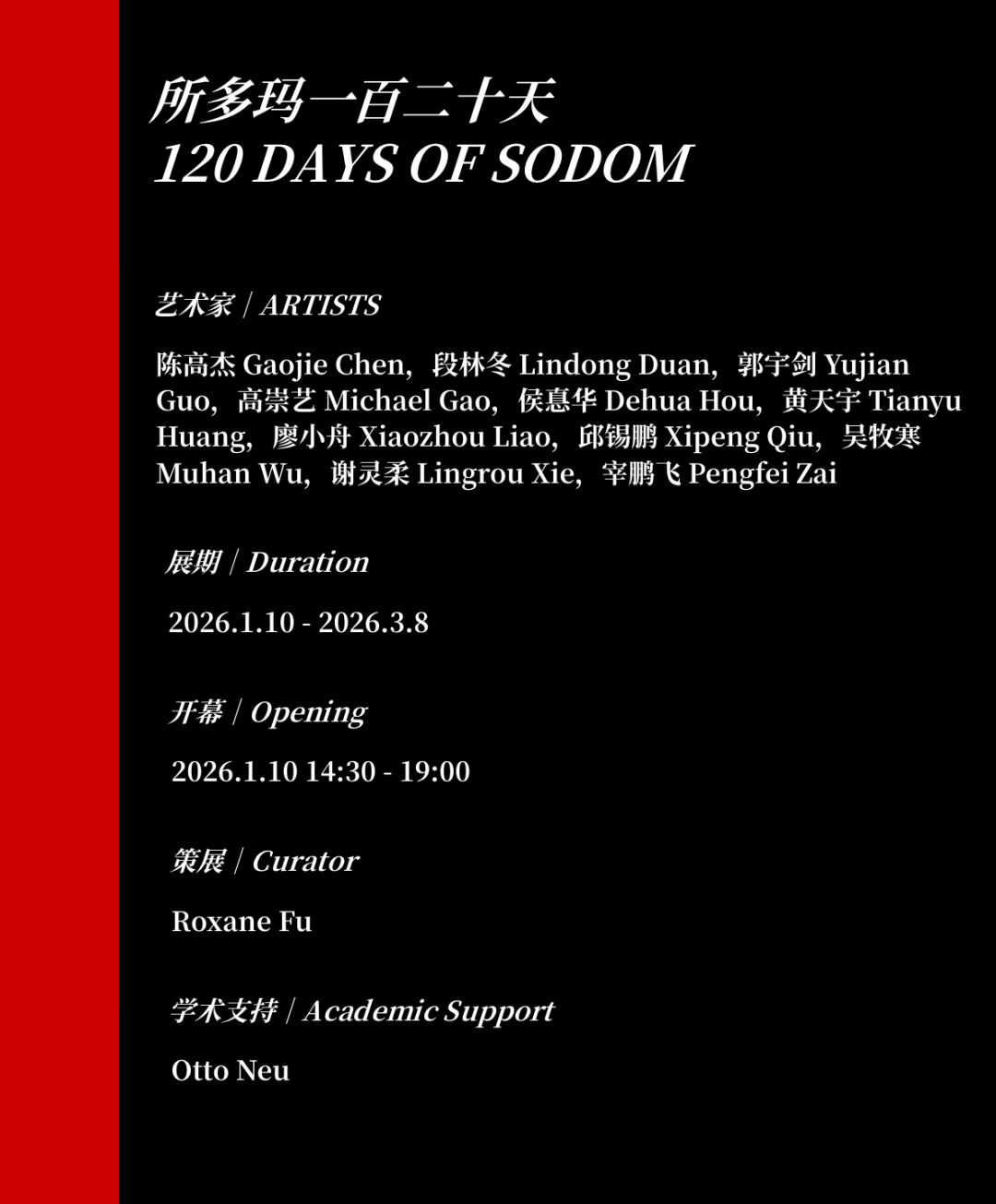
Tianyu Huang's paintings present a continuously shifting perceptual structure, moving between the inside and outside of the exhibition. Recurring motifs such as windows, bodies, and shells serve as interfaces for observation, marking the sites where perception occurs. Through symmetrical, radial, and encircling compositional arrangements, the images gradually establish an order that guides the viewer into a cyclical experience within the structure.
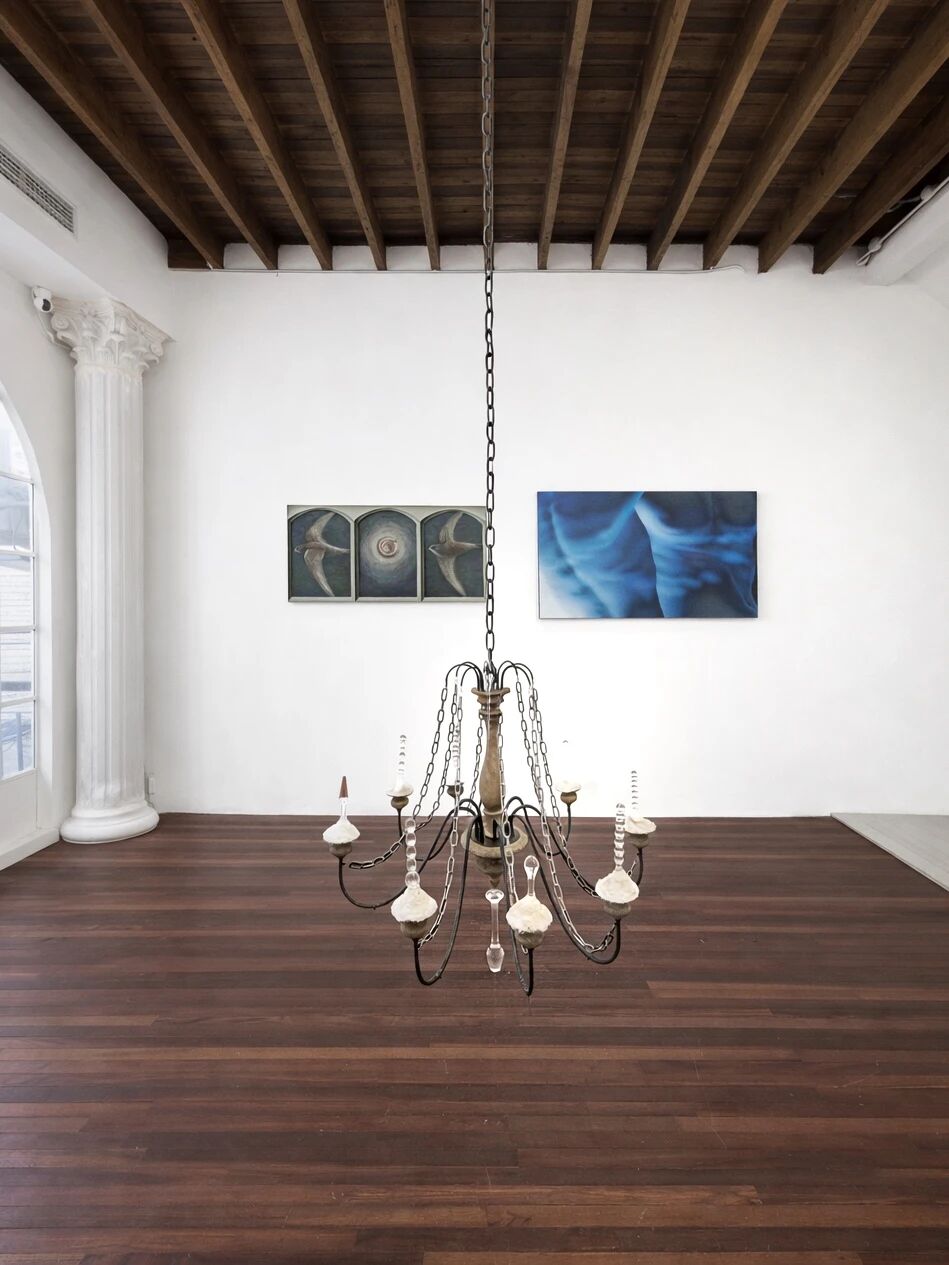
Installation view of 120 Days of Sodom, Jan. 10, 2026 - Mar. 8, 2026, Nan Ke Gallery, Shanghai, ©Courtesy of Nan Ke Gallery, Photographed by Runxin.
His work often draws on forms from the non-human world as clues: the growth cycles of plants, the metamorphosis and flight of insects, the spiral structure and enclosed nature of shells. These natural forms function both as vessels of time and as embodiments of their own inherent logic. Extracted from their original biological contexts, they are transformed into principles of rhythm and construction in painting. Thus, form becomes an internal force organizing the image, sustaining a tension between order and variation.
In Return in Rotation, the perceptual state generated by the structure itself takes precedence over the origins of its forms. The spiral symbolizes both generation and return, allowing time to linger in the image in a non-linear manner. The painting seems to continually construct itself while repeatedly folding back to its starting point, creating a simultaneous presence of order and instability. This emphasis on "rotation" turns the work into an exercise in how perception repeatedly confirms itself within boundaries, reinforcing the suspended state in Huang’s paintings—a space between interior and exterior, stillness and flow.
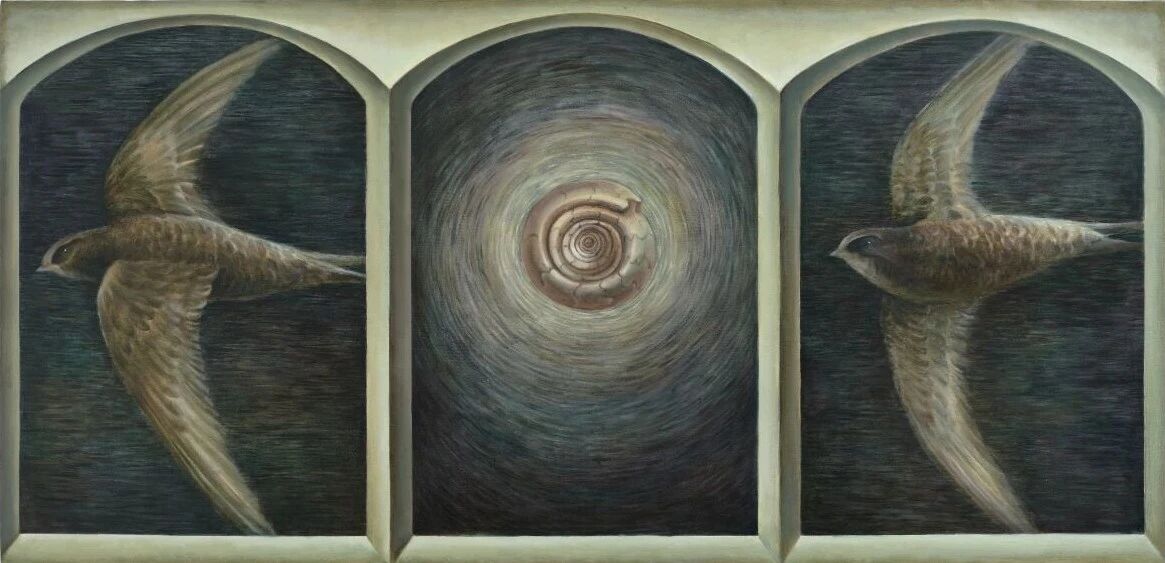
Tianyu Huang
Return in Rotation, 2025
Oil on canvas
62h x 128w cm
©Courtesy of the artist
In this exhibition, Return in Rotation further concentrates Huang’s reflections on the relationship between structure and perception. The composition unfolds in a nearly axis-symmetrical manner, with spiral forms continuously retracting toward the center while expanding outward, creating a sense of space that is both enclosed and perpetually in motion. Plant-like textures, shell-like structures, and radiating lines overlap, lending the image a rhythmic quality reminiscent of breathing or rotation.
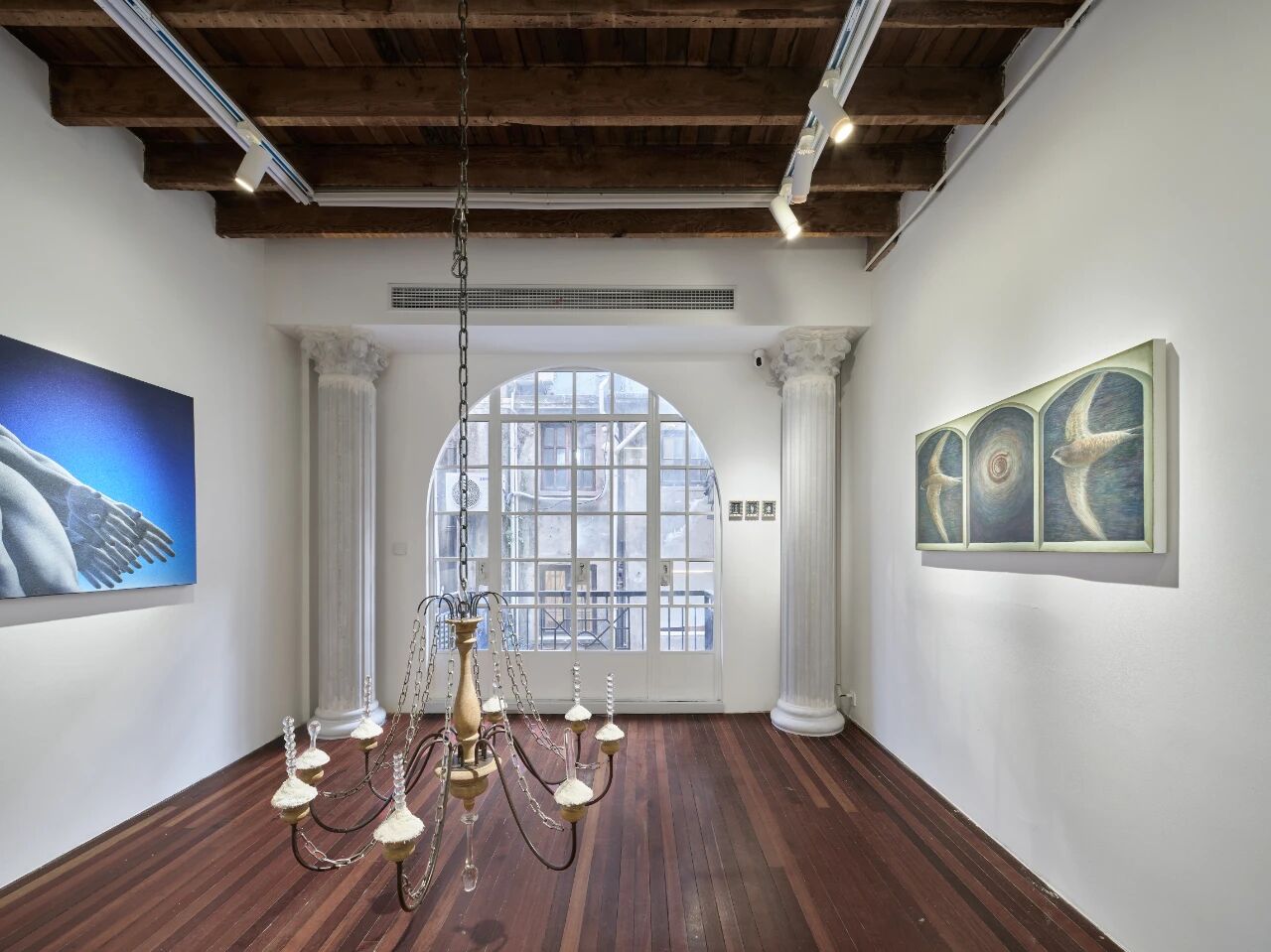
Installation view of 120 Days of Sodom, Jan. 10, 2026 - Mar. 8, 2026, Nan Ke Gallery, Shanghai, ©Courtesy of Nan Ke Gallery, Photographed by Runxin.
Visually, Huang’s paintings exude a calm and restrained sense of balance. Radial and encircling compositions guide the gaze into a recurring cycle of return. Within the broader context of the exhibition—where flesh, desire, and power are pushed toward externalized dramatic expression—Huang’s paintings offer a path of inward contraction. He focuses on how perception forms, lingers, and transforms at boundaries. As a result, his work reveals a state occurring in the interstices—between solidification and flow, maintaining structural stability while allowing time to slowly permeate.
February 3, 2026

