
Yujian Guo’s paintings unfold through myth and personal memory. The images appear as a constellation of interrelated fragments, through which viewers move as if within an ongoing mental drift. The monumentality traditionally associated with myth, rooted in historical narrative, is deliberately dissolved here, allowing literature, philosophy, and private experience to coexist on the same plane.
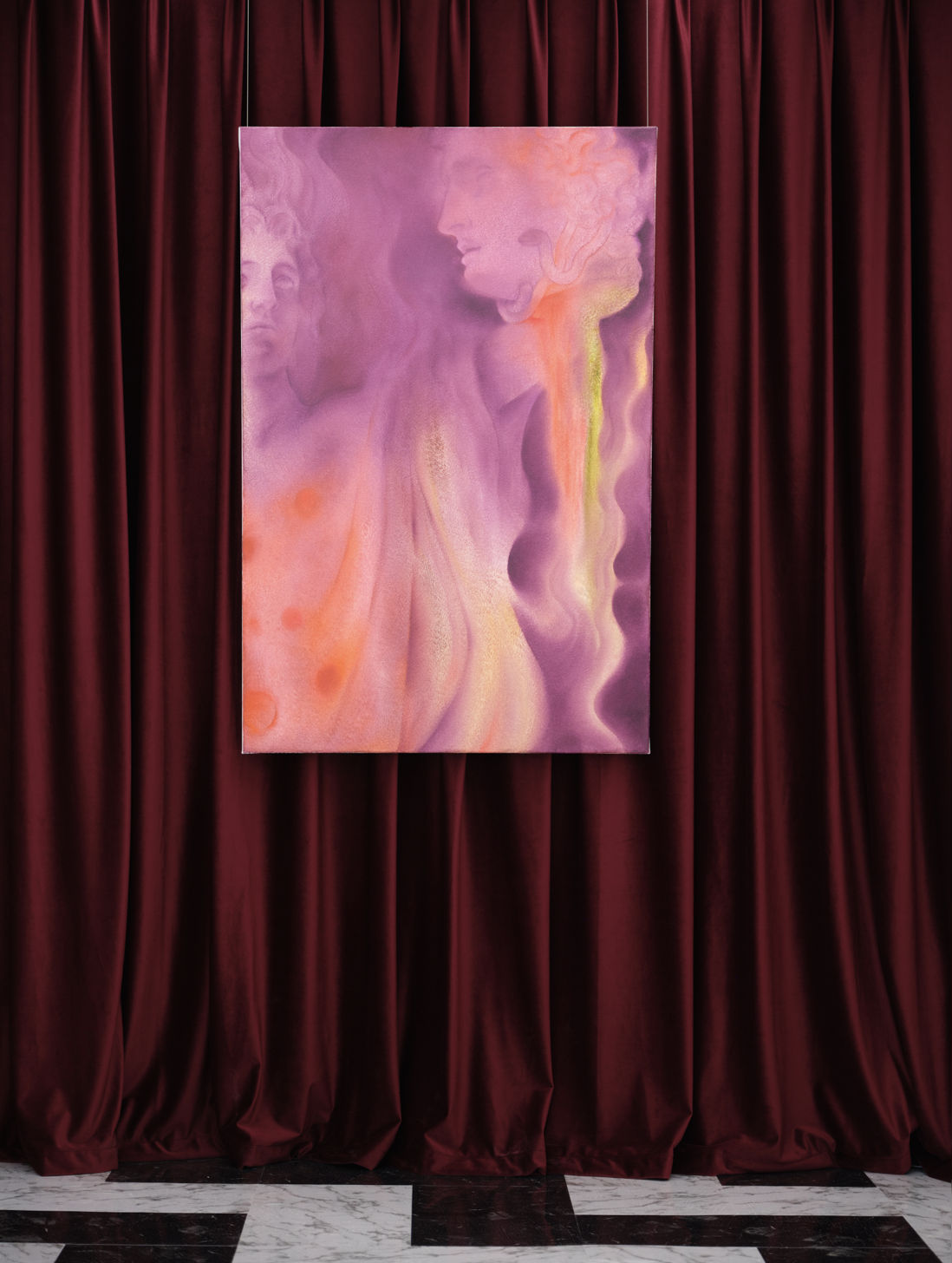
Installation view of 120 Days of Sodom, Jan. 10, 2026 - Mar. 8, 2026, Nan Ke Gallery, Shanghai, ©Courtesy of Nan Ke Gallery, Photographed by Runxin.
Yujian Guo was born in Changsha, Hunan, in 1992, and graduated from the Painting Department of the Accademia di Belle Arti di Firenze in 2015. Due to his academic training, his work is often associated with so-called “classical techniques.” In the artist’s own understanding, however, this categorisation stems more from visual impression than from method. For Guo, painting is less a reenactment of historical styles than a direct bodily act—holding a brush, repeatedly pressing pigment mixed with oil into the canvas, and responding to the sensations of the moment.
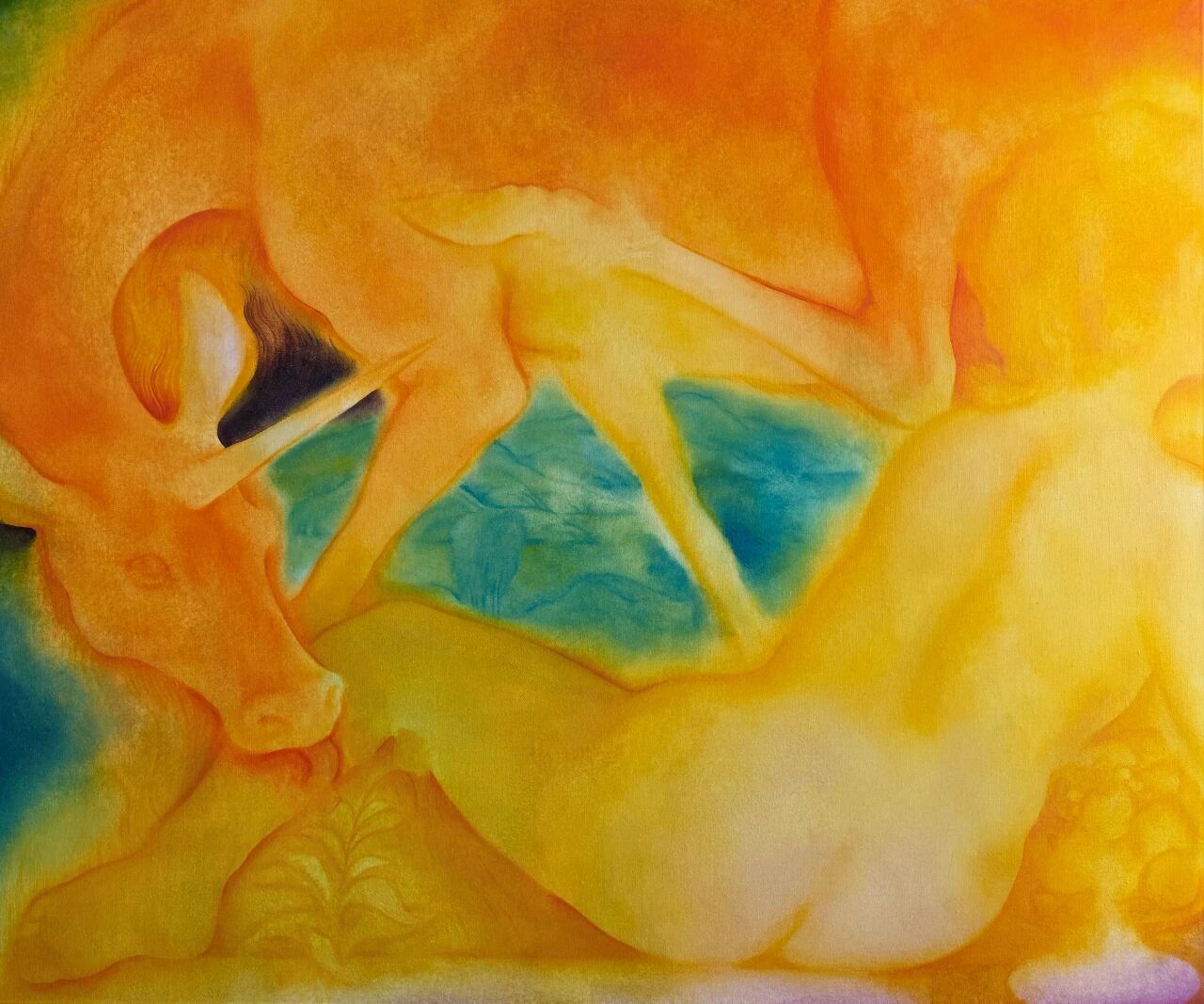
Yujian Guo
Unicorn and Child,2024
Oil on canvas
100h x 120w cm
©Courtesy of the artist
In his working process, Guo does not fully rely on predetermined imagery. He sometimes produces sketches in advance to establish the direction of a phase or the overall structure of a series, yet in the execution of each individual painting, the image frequently deviates from its initial plan, moving instead toward a tactile engagement with the unknowable nature of the divine. Improvisation here is not arbitrary, but a continuous calibration of the present state: the thickness of layers, the emergence and dissolution of forms, are constantly adjusted as the painting unfolds.
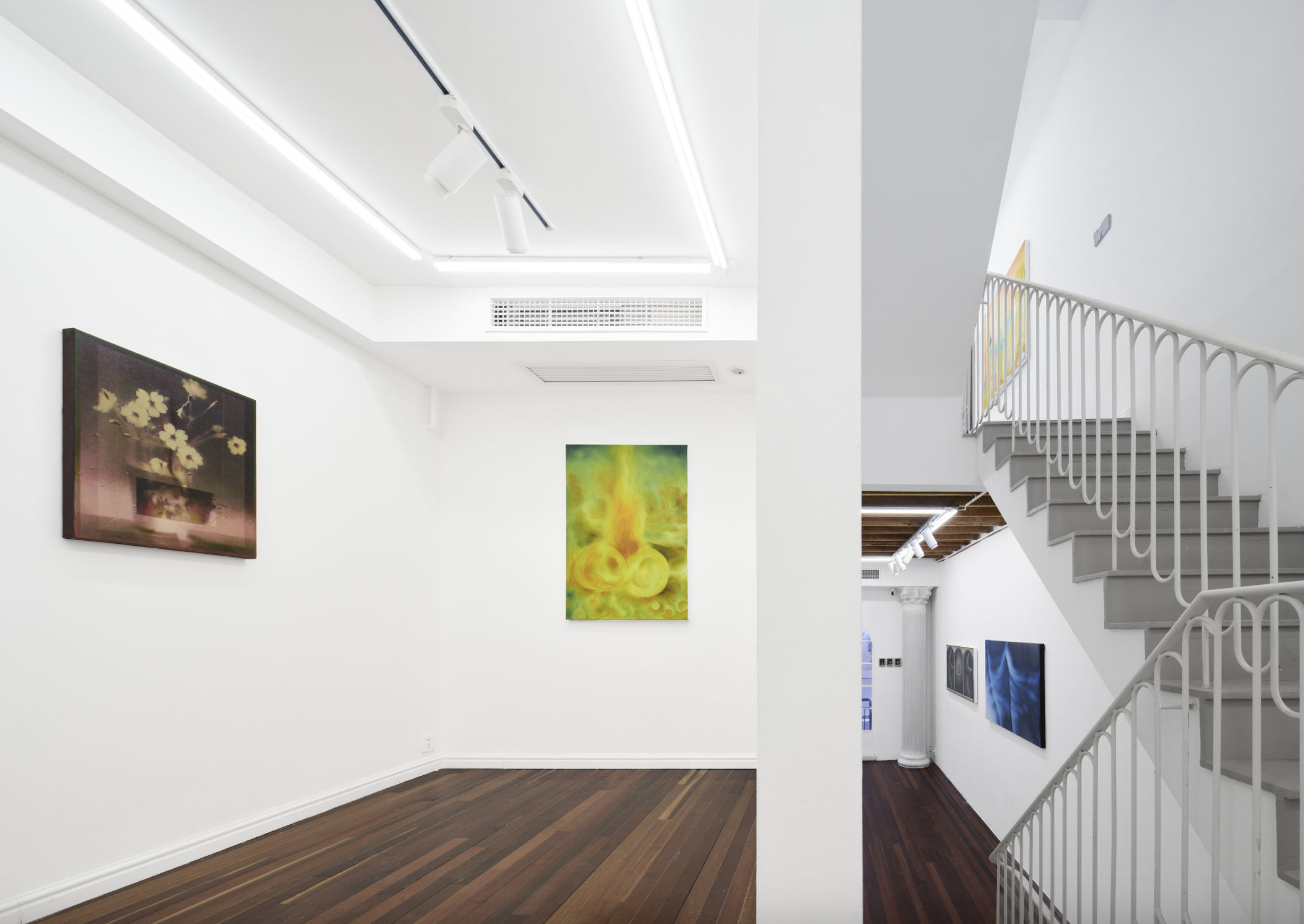
Installation view of 120 Days of Sodom, Jan. 10, 2026 - Mar. 8, 2026, Nan Ke Gallery, Shanghai, ©Courtesy of Nan Ke Gallery, Photographed by Runxin.
Visually, Guo favours light and delicate handling. Colours remain loosely connected, allowing the pictorial atmosphere to extend without closure. This rhythm weakens the certainty of the image, placing figures, natural elements, and symbolic motifs in a suspended state. Constellations, plants, and mythological figures recur throughout the works, yet resist fixed meanings. They function instead through a revelatory structure, akin to the logic of tarot, where meaning emerges through juxtaposition and tactile contemplation. Viewing thus becomes a slow perceptual process, in which significance gradually surfaces through lingering.
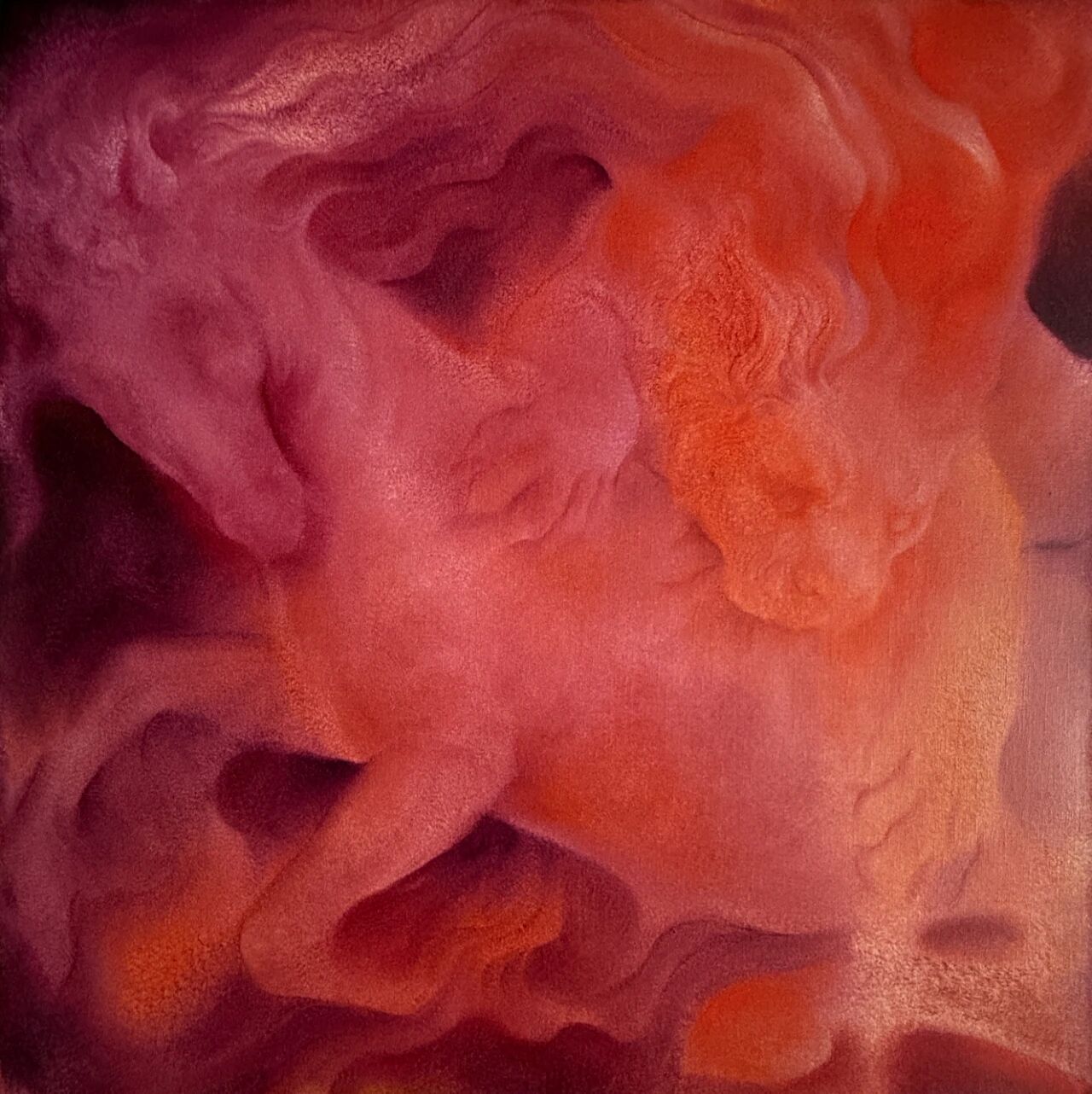
Yujian Guo
Metempsychosis,2025
Oil on canvas
60h x 60w cm
©Courtesy of the artist
Within the context of The 120 Days of Sodom, where classical paradigms are mobilised to hold tensions of order, desire, and power, Guo’s paintings offer a more fluid trajectory. His works articulate the exhibition’s dramatic intensity through explicit imagery—rising flames, coiling serpents, beasts, and divine visages—while simultaneously employing hazy painterly techniques that open perception to ambiguity and uncertainty. Myth and memory continue to return in fragmented form, allowing painting to operate not as a site of resolution, but as a field in which experience repeatedly re-enters and remains unsettled.
January 22, 2026

